- Home
- Plant guide
- Golden Currant

Golden Currant
Ribes aureum
Yellow spring flowers that smell of cloves, black fruit birds strip in a week, and red foliage in the fall.
Native to: the Pacific Northwest · the Great Basin · the Mountain West · the Great Plains · the desert Southwest · California
Growing Golden Currant
The widest-ranging currant in the West and the easiest in a garden. It suckers gently into a thicket, which birds prefer to a single specimen.
Where it belongs
Golden currant is the most widely distributed currant in the West, native from the Pacific Northwest through the Great Basin and Rockies, down into the Southwest and out onto the western Great Plains. It grows along streambanks, draws, canyon bottoms and fence lines, usually where there is a little more moisture than the surrounding country.
It is an upright, arching shrub of four to eight feet, thornless, with small lobed leaves and clusters of bright yellow tubular flowers in spring. The scent is distinctly of cloves, and it carries.
Growing it
Undemanding is the honest description.
It takes full sun or part shade, ordinary or sandy soil, and once established it handles real drought, though it fruits better with occasional summer water. It suckers gently into a loose thicket over the years, which is easy to control with a spade and which birds prefer to a lone shrub.
Prune only to remove the oldest stems at the base. It flowers on older wood, so shearing costs the display.
One regional note worth checking before planting: Ribes species are alternate hosts for white pine blister rust, and a few states and counties restrict planting them near commercial or forest white pine. Local rules change without notice, and none of this is legal advice, so check with your state agriculture office or extension service if you live in white pine country.
What it feeds
The long yellow tubes are shaped for hummingbirds, which arrive in much of the West about when it opens, and long-tongued bumblebees work them as well.
The fruit ripens black or amber in summer and is taken quickly by robins, waxwings, thrashers and finches. It is edible for people too, tart rather than sweet, and better cooked than raw.
Living with it
Use it as an informal hedge, in a border with room to spread, or along a fence where the suckering is an advantage rather than a nuisance.
Fall color is a genuine bonus in a region where few native shrubs turn red.
It’s fragrant, drought-tolerant, deer-resistant, good fall color, and easy to grow.Where it grows
Golden Currant is native to the Pacific Northwest. In the wild you’ll find it across Arizona · Arkansas · California · Colorado · Idaho · Illinois · Iowa · Kansas · Minnesota · Missouri and 12 more states. Always confirm it suits your specific county with your state native plant society before planting.
Regional Garden has written state guides covering Golden Currant in 22 of them so far.
Good for
Where to buy Golden Currant
Some links here are affiliate links and we may earn a small commission at no extra cost to you.
What a first-year Golden Currant planting needs, from a pH kit to mulch.
Companions & kin.
Natives that share Golden Currant’s range and conditions.

Blue Elderberry
Sambucus cerulea
Fast, big, and covered in flat cream flower heads, then dusty blue fruit that draws every fruit-eating bird in the county.
- Full–part sun
- Average–wet
- 8–20 ft
- Blooms Jun–Jul
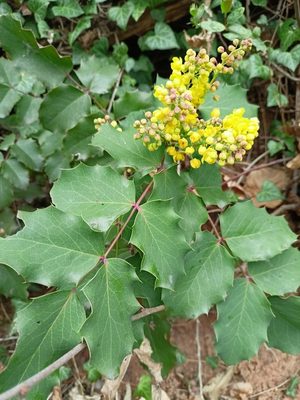
Oregon Grape
Berberis aquifolium
Holly-like evergreen leaves, fragrant yellow spring flowers, and blue berries. It is Oregon's state flower.
- Sun to shade
- Dry–average
- 3–6 ft
- Blooms Mar–Apr

Saskatoon Serviceberry
Amelanchier alnifolia
White flowers before the leaves, then fruit that tastes like a sweet blueberry, then orange fall color.
- Full–part sun
- Dry–average
- 6–15 ft
- Blooms Apr–May
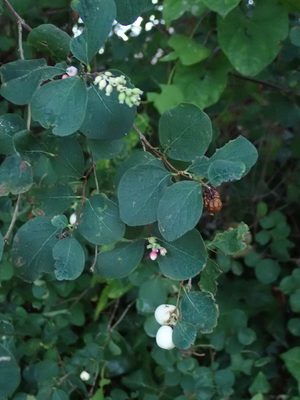
Common Snowberry
Symphoricarpos albus
The shrub that will grow where nothing else will, and hangs white berries on bare stems all winter.
- Sun to shade
- Dry–average
- 3–6 ft
- Blooms Jun–Jul