- Home
- Plant guide
- Saskatoon Serviceberry

Gavin Slater (CC BY)
Saskatoon Serviceberry
Amelanchier alnifolia
White flowers before the leaves, then fruit that tastes like a sweet blueberry, then orange fall color.
Native to: the Pacific Northwest · the Great Basin · the Mountain West · the Great Plains · the Midwest
Growing Saskatoon Serviceberry
Hardy to the far north and drought-tolerant once established, which is a rare combination. Birds usually reach the fruit before people do; net a branch if you want any.
Where it belongs
Saskatoon grows from Alaska and the Yukon south through the interior West and east across the northern plains, on open slopes, forest edges, streambanks and prairie coulees. Few shrubs combine that cold hardiness with real drought tolerance, and this one does.
It flowers early, white and five-petaled, before or just as the leaves open, which makes it one of the first substantial nectar sources of the year in cold country. The fruit follows in midsummer, purple-black with a bloom on it.
Growing it
It grows as a suckering shrub of six to fifteen feet, occasionally as a small multi-stemmed tree, and it is not fussy.
Full sun gives the heaviest flowering and fruiting; part shade is acceptable. Ordinary soil, rocky soil or sand all work, and drainage matters more than fertility. Once established it takes drought, and it is hardy well beyond the range of most fruiting shrubs.
Thin the oldest stems at the base every few years to keep it open. It will sucker into a colony if allowed, which suits a hedge or a windbreak and needs cutting back in a border.
What it feeds
The early flowers matter out of proportion to their size, because they open when queen bumblebees and mason bees are foraging and little else is available.
The fruit is one of the most heavily used bird foods in its range: waxwings, robins, thrushes, grosbeaks and grouse all take it, usually before people get any. It is also a larval host for several butterflies and moths.
Saskatoon berries have been a staple food across the northern plains and interior for a very long time, dried alone or pounded with meat and fat, and named varieties are grown commercially today.
Living with it
Use it as a hedge, a windbreak, a screen or the shrub layer at a woodland edge. A single plant in a lawn works too, but a group fruits better and looks less lonely.
If you want fruit for the kitchen rather than for the birds, net one branch about a week before it ripens. Otherwise expect to watch it disappear.
It’s good fall color, drought-tolerant, showy, easy to grow, and fast-growing.Where it grows
Saskatoon Serviceberry is native to the Pacific Northwest. In the wild you’ll find it across Arizona · Arkansas · California · Colorado · Idaho · Illinois · Indiana · Iowa · Kansas · Kentucky and 21 more states. Always confirm it suits your specific county with your state native plant society before planting.
Regional Garden has written state guides covering Saskatoon Serviceberry in 31 of them so far.
Good for
Where to buy Saskatoon Serviceberry
Some links here are affiliate links and we may earn a small commission at no extra cost to you.
What a first-year Saskatoon Serviceberry planting needs, from a pH kit to mulch.
Companions & kin.
Natives that share Saskatoon Serviceberry’s range and conditions.

Blue Elderberry
Sambucus cerulea
Fast, big, and covered in flat cream flower heads, then dusty blue fruit that draws every fruit-eating bird in the county.
- Full–part sun
- Average–wet
- 8–20 ft
- Blooms Jun–Jul

Golden Currant
Ribes aureum
Yellow spring flowers that smell of cloves, black fruit birds strip in a week, and red foliage in the fall.
- Full–part sun
- Dry–average
- 4–8 ft
- Blooms Apr–May
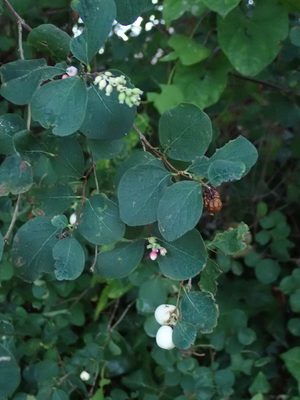
Common Snowberry
Symphoricarpos albus
The shrub that will grow where nothing else will, and hangs white berries on bare stems all winter.
- Sun to shade
- Dry–average
- 3–6 ft
- Blooms Jun–Jul
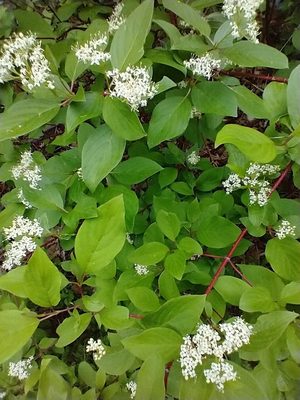
Red-Twig Dogwood
Cornus sericea
Grown for its fire-engine-red winter stems, with white spring flowers and berries birds devour.
- Full–part sun
- Average–wet
- 6–9 ft
- Blooms May–Jun