- Home
- Collections
- Full sun
Native Plants for Full Sun
Sun-loving native wildflowers, grasses, and shrubs for the hot, bright, open parts of the yard that bake all afternoon.
Measure before you plant
Full sun means six or more hours of direct sunlight. Part sun is roughly four to six. Anything less is shade for planting purposes.
Two refinements matter. Afternoon sun is considerably more intense than morning sun, so a spot with four hours of west exposure behaves closer to full sun than a spot with five hours of east. And the light changes across the season as trees leaf out and the sun's angle shifts, so a bed measured in April may be quite different in July.
Spend a day checking at two-hour intervals before committing. It is the cheapest step in the entire process and the one most often guessed at.
The mistake is treating them well
Sun-loving prairie and dry-country natives evolved in poor, unimproved, unirrigated soil. Almost every failure with them traces to a gardener supplying what those conditions lack.
Rich soil and fertilizer produce tall soft growth that falls over after the first storm. Regular irrigation shortens the life of drought-adapted species and can kill western natives outright through root rot. Heavy mulch against the crowns holds moisture where the plant does not want it and blocks the bare ground that self-sowing species need.
The instruction is genuinely to do less. Do not amend, do not fertilize, water only through the first season, and use a thin gravel mulch or none at all on lean plantings.
If a plant here is flopping, the answer is almost never staking. It is poorer soil, more sun, or a June cutback.
Grasses hold the planting up
The tallgrass prairie species did not stand alone in the wild; they grew through a dense matrix of grass that supported them physically and shaded out weeds.
A planting of flowers in mulch has neither. Adding little bluestem, prairie dropseed, sideoats grama, or switchgrass between the flowers reproduces the structure, and the difference in how upright a bed looks in September is substantial.
Grasses also carry the planting through winter, when the flowers are done.
The heat gap
Full sun beds in most of the country go quiet in late July and August, when spring and early summer perennials have finished and the fall species have not started.
Plan for it deliberately. Blanketflower, chocolate flower, anise hyssop, and mountain mint flower straight through the heat. In the Southwest, flame acanthus and autumn sage bloom hardest exactly then. Adding two or three of these turns the worst stretch of the year into a functioning one.
Then let the fall species close it: asters, goldenrods, and the grasses coming into seed.
Sources: Lady Bird Johnson Wildflower Center, University of Texas at Austin (species profiles and cultural requirements); US Department of Agriculture Natural Resources Conservation Service (prairie planting establishment); Mt. Cuba Center (native perennial trials on habit, longevity, and soil fertility effects).
90 native species in this collection.
A spot with six or more hours of direct sun is prime real estate for the prairie and meadow natives that evolved in the open. Most want exactly that much light to bloom hard and stand up straight. Give them lean, well-drained soil rather than rich and pampered, skip the fertilizer, and they will reward the tough love with more flowers and sturdier stems.
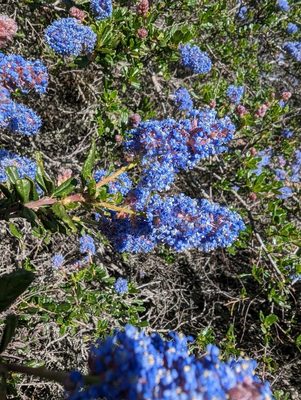
California Lilac
Ceanothus thyrsiflorus
Sheets of true-blue spring flowers on an evergreen shrub that hums with bees on the West Coast.
- Full sun
- Dry
- 6–20 ft
- Blooms Mar–May
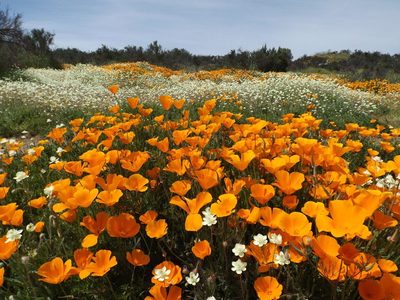
California Poppy
Eschscholzia californica
The silken orange state flower of California, painting dry hillsides every spring.
- Full sun
- Dry
- 8–18 in
- Blooms Mar–Jun
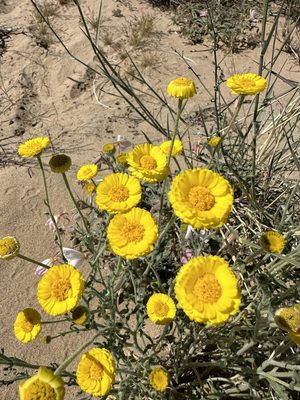
Desert Marigold
Baileya multiradiata
A silver-leaved desert daisy that blooms almost year-round on rainfall alone.
- Full sun
- Dry
- 12–18 in
- Blooms Mar–Oct
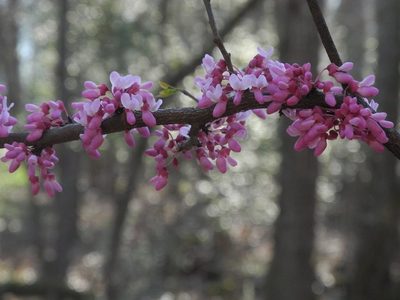
Eastern Redbud
Cercis canadensis
Bare branches erupt in rose-magenta in early spring, and the flowers feed the season's first bees.
- Full–part sun
- Dry–average
- 20–30 ft
- Blooms Mar–Apr
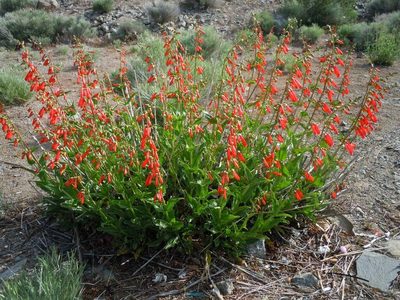
Firecracker Penstemon
Penstemon eatonii
Scarlet tubular flowers timed to the spring hummingbird migration through the desert Southwest.
- Full sun
- Dry
- 1.5–3 ft
- Blooms Mar–May
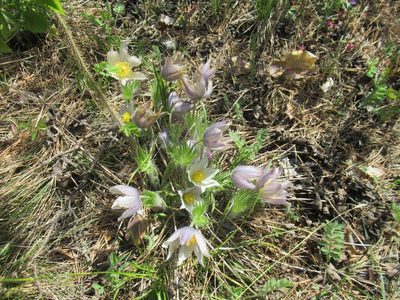
Pasque Flower
Pulsatilla patens
One of the very first prairie flowers, silky purple cups pushing up through cold early-spring ground.
- Full sun
- Dry
- 6–12 in
- Blooms Mar–Apr
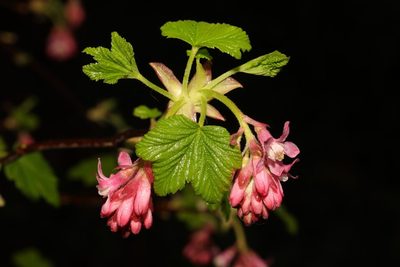
Red-Flowering Currant
Ribes sanguineum
Cascades of rose-pink tassels timed exactly to the return of the rufous hummingbird each spring.
- Full–part sun
- Dry–average
- 5–9 ft
- Blooms Mar–Apr
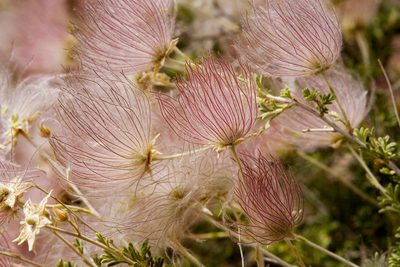
Apache Plume
Fallugia paradoxa
White rose-like flowers and feathery pink seed plumes together on one airy desert shrub.
- Full sun
- Dry
- 3–6 ft
- Blooms Apr–Sep
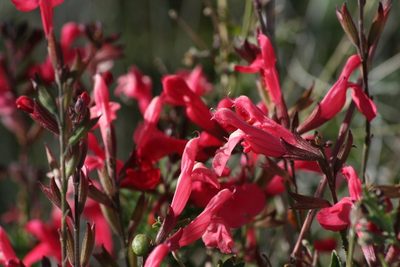
Autumn Sage
Salvia greggii
A tough little evergreen sage that feeds hummingbirds from spring to frost in Texas and the Southwest.
- Full–part sun
- Dry
- 2–3 ft
- Blooms Apr–Oct
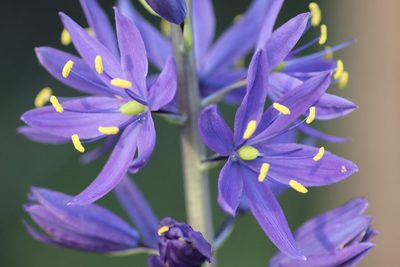
Common Camas
Camassia quamash
The blue that used to run across Northwest prairies in spring, and the one bulb that actually wants a wet winter.
- Full–part sun
- Average–wet
- 1–2.5 ft
- Blooms Apr–May
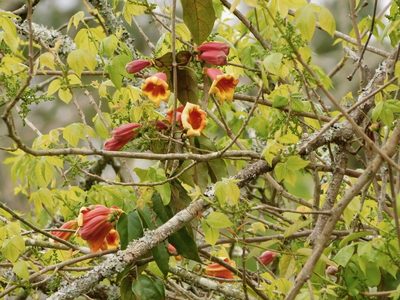
Crossvine
Bignonia capreolata
A vigorous, semi-evergreen climber that smothers a fence in orange-red trumpets each spring.
- Full–part sun
- Dry–average
- 25–50 ft
- Blooms Apr–May
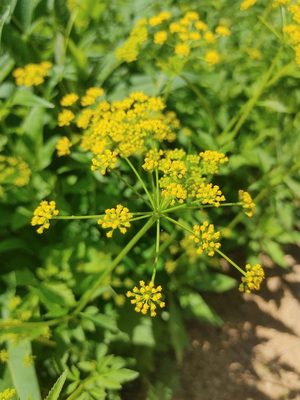
Golden Alexanders
Zizia aurea
Early flat gold heads that feed the first small bees and host the black swallowtail.
- Full–part sun
- Average–wet
- 1.5–2.5 ft
- Blooms Apr–Jun

Prairie Smoke
Geum triflorum
Nodding pink spring bells that turn into smoky, feathered seed plumes, the show after the flower.
- Full–part sun
- Dry
- 6–16 in
- Blooms Apr–May

Saskatoon Serviceberry
Amelanchier alnifolia
White flowers before the leaves, then fruit that tastes like a sweet blueberry, then orange fall color.
- Full–part sun
- Dry–average
- 6–15 ft
- Blooms Apr–May
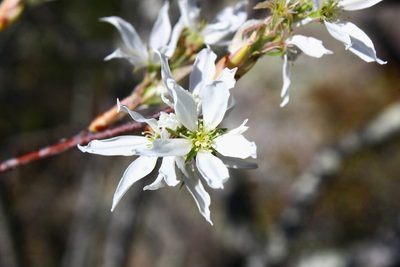
Serviceberry
Amelanchier canadensis
A small four-season tree: white spring flowers, June berries for the birds, and fiery fall color.
- Full–part sun
- Average–wet
- 15–25 ft
- Blooms Apr–May
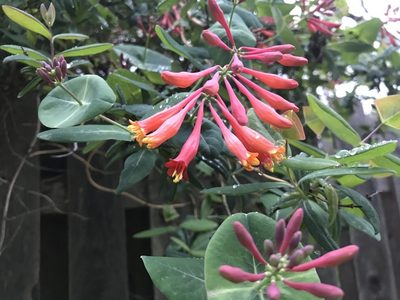
Trumpet Honeysuckle
Lonicera sempervirens
A well-mannered native vine that pours out coral-red hummingbird trumpets from spring to frost.
- Full–part sun
- Dry–average
- 8–15 ft
- Blooms Apr–Sep

Arrowwood Viburnum
Viburnum dentatum
A bulletproof hedge shrub with white spring flowers, blue fall berries, and burgundy autumn leaves.
- Sun to shade
- Average–wet
- 6–10 ft
- Blooms May–Jun
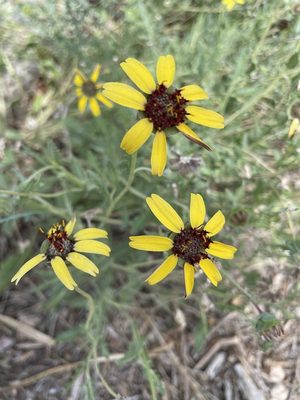
Chocolate Flower
Berlandiera lyrata
Yellow daisies that genuinely smell of chocolate each morning, and bloom all summer in heat.
- Full sun
- Dry
- 1–2 ft
- Blooms May–Sep

Common Yarrow
Achillea millefolium
A near-continental native with flat flower heads that feed tiny beneficial insects, tough as a weed.
- Full sun
- Dry–average
- 1.5–3 ft
- Blooms May–Aug
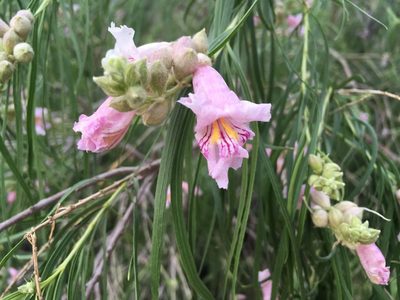
Desert Willow
Chilopsis linearis
A graceful desert tree hung with orchid-like trumpets all summer, fueled by nothing but heat.
- Full sun
- Dry
- 15–25 ft
- Blooms May–Sep
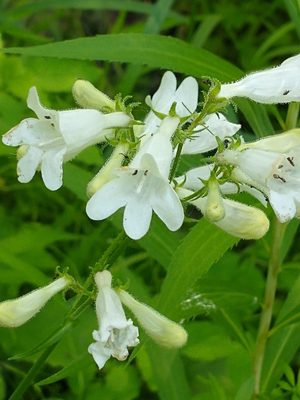
Foxglove Beardtongue
Penstemon digitalis
Airy white bells in early summer, a bridge bloom between spring ephemerals and the summer prairie.
- Full–part sun
- Dry–average
- 2–4 ft
- Blooms May–Jun
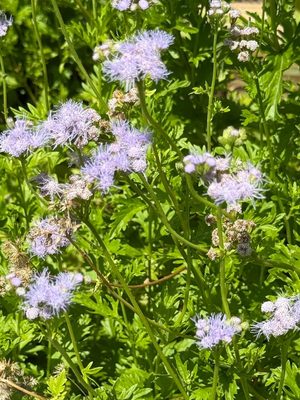
Gregg's Mistflower
Conoclinium greggii
Fuzzy blue flowers that act like a magnet for queen and monarch butterflies in the Southwest.
- Full–part sun
- Dry–average
- 1–2 ft
- Blooms May–Oct
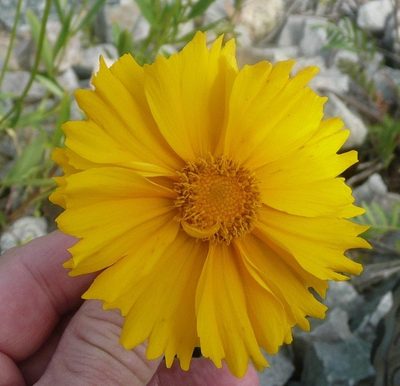
Lanceleaf Coreopsis
Coreopsis lanceolata
Sunny gold daisies for weeks in early summer on the leanest, driest soil you can offer.
- Full sun
- Dry–average
- 1.5–2 ft
- Blooms May–Jul
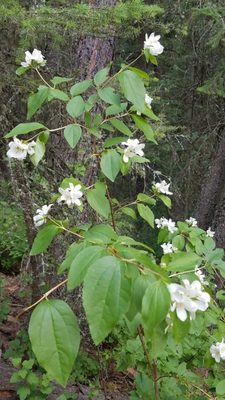
Lewis's Mock Orange
Philadelphus lewisii
Two weeks in early summer when the whole shrub smells of orange blossom, and the rest of the year asking for nothing.
- Full–part sun
- Dry–average
- 5–10 ft
- Blooms May–Jun
Full sun, near you.
Whether a species belongs in your yard depends on where you garden. These state guides cover it.
Where to find full sun plants
Some links here are affiliate links and we may earn a small commission at no extra cost to you.
What a first-year Full sun planting needs, from a pH kit to mulch.