- Home
- Plant guide
- Red-Flowering Currant
Red-Flowering Currant
Ribes sanguineum
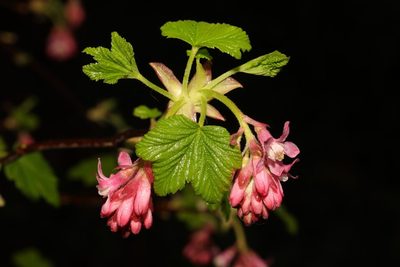
Cascades of rose-pink tassels timed exactly to the return of the rufous hummingbird each spring.
Native to: the Pacific Northwest · California
Growing Red-Flowering Currant
The signature spring shrub of Northwest gardens and a hummingbird lifeline. Tolerates summer drought and light shade with ease.
Where it belongs
Red-flowering currant is native to the Pacific Northwest and northern California, growing on dry open slopes, at forest edges, in clearings, and along roadsides west of the Cascades.
The reason it matters is a matter of timing. Rufous hummingbirds migrate north up the Pacific coast in late winter and early spring, arriving in the Northwest in March when very little is in bloom. This shrub flowers precisely then, and the relationship between the two is close enough that gardeners in the region use the first flowers as a signal to expect the birds.
Growing it
Full sun to part sun, dry to medium soil, in loam or rocky ground, zones 5 to 8. Five to nine feet tall and four to eight feet wide.
Straightforward by western native standards. It tolerates summer drought once established, takes light shade, and is not fussy about soil as long as it drains. It is more forgiving than manzanita or ceanothus, which makes it a good first native shrub for a Northwest garden.
It is deciduous and it goes summer-dormant in dry conditions, dropping leaves and looking sparse by August. That is normal for a plant adapted to a summer-dry climate, not a sign of trouble. Plant something in front of it if the late summer look bothers you.
Prune after flowering, removing the oldest stems at the base. It flowers on old wood, so a late-winter cutback removes the display.
What it feeds
The flowers hang in pendulous clusters of ten to twenty, ranging from pale pink to deep rose depending on the selection, and they open before or with the leaves.
Hummingbirds are the primary visitors, and in the Northwest this is one of the foundational plants for them. Anna's hummingbirds, which overwinter in the region in growing numbers, use it as well.
Bumblebee queens work it heavily in the same window, and native bees and early butterflies take nectar.
Blue-black berries follow in summer and are eaten by thrushes, robins, waxwings, and other birds. They are edible to people but dry and insipid.
Living with it
Deer generally leave it alone.
Selections such as King Edward VII and Pokey's Pink were chosen for deeper color and more compact habit, and they feed birds the same as the wild form.
Currants and gooseberries are alternate hosts for white pine blister rust, and a few states and counties have historically restricted planting them near commercial white pine. The rules vary and most have been relaxed. Check locally if you live in a white pine growing area.
Sources: USDA PLANTS Database (native range); Lady Bird Johnson Wildflower Center, University of Texas at Austin (species profile); Washington Native Plant Society and Oregon State University Extension (regional culture); Cornell Lab of Ornithology (rufous and Anna's hummingbird timing in the Pacific Northwest).
It’s deer-resistant, drought-tolerant, and showy.Where it grows
Red-Flowering Currant is native to the Pacific Northwest. In the wild you’ll find it across California · Idaho · Montana · Nevada · Oregon · Washington. Always confirm it suits your specific county with your state native plant society before planting.
Regional Garden has written state guides covering Red-Flowering Currant in 6 of them so far.
Good for
Where to buy Red-Flowering Currant
Some links here are affiliate links and we may earn a small commission at no extra cost to you.
What a first-year Red-Flowering Currant planting needs, from a pH kit to mulch.
Companions & kin.
Natives that share Red-Flowering Currant’s range and conditions.

Golden Currant
Ribes aureum
Yellow spring flowers that smell of cloves, black fruit birds strip in a week, and red foliage in the fall.
- Full–part sun
- Dry–average
- 4–8 ft
- Blooms Apr–May
Hairy Manzanita
Arctostaphylos columbiana
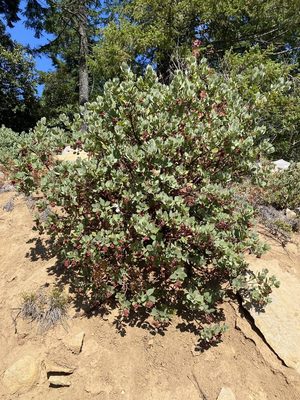
Sculptural mahogany bark and early urn-shaped flowers that feed the West Coast's first bees of spring.
- Full–part sun
- Dry
- 3–9 ft
- Blooms Mar–May
Oregon Grape
Berberis aquifolium
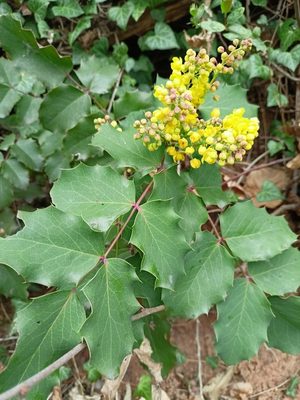
Holly-like evergreen leaves, fragrant yellow spring flowers, and blue berries. It is Oregon's state flower.
- Sun to shade
- Dry–average
- 3–6 ft
- Blooms Mar–Apr

Blue Elderberry
Sambucus cerulea
Fast, big, and covered in flat cream flower heads, then dusty blue fruit that draws every fruit-eating bird in the county.
- Full–part sun
- Average–wet
- 8–20 ft
- Blooms Jun–Jul