- Home
- Plant guide
- Hairy Manzanita
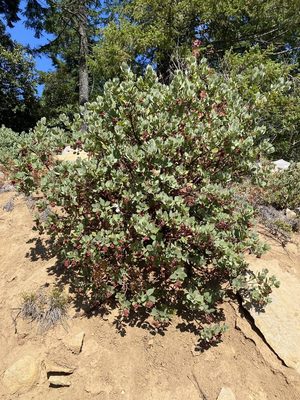
John Leszczynski (CC BY)
Hairy Manzanita
Arctostaphylos columbiana
Sculptural mahogany bark and early urn-shaped flowers that feed the West Coast's first bees of spring.
Native to: California · the Pacific Northwest
Growing Hairy Manzanita
Grown as much for its smooth red peeling branches as its bloom: a living sculpture for a dry, sunny bank from northern California up into the Pacific Northwest. The early urn-shaped flowers are a lifeline for queen bumblebees emerging in late winter and spring.
Where it belongs
Hairy manzanita is native to the Pacific Northwest and northern California, growing on dry sunny slopes, in openings in coniferous forest, on bluffs, and in coastal scrub, usually on poor soil.
Manzanitas are grown as much for their structure as for their flowers. The bark is smooth and a deep mahogany red, peeling in thin curls, and the branches twist in a way that reads as deliberate. An old plant is a piece of living sculpture, and it looks best where you can see the trunk rather than as part of a dense planting.
Growing it
Full sun to part sun, dry soil, in rocky ground, sand, or lean loam, zones 7 to 9. Three to nine feet tall and four to eight feet wide.
The same rule that governs Ceanothus governs this: sharp drainage and no summer water once established. Manzanitas are notably intolerant of irrigation and of rich soil, and root rot in overwatered ground is the standard way to lose one.
Plant small. Manzanitas establish poorly from large containers, and a one-gallon plant typically outperforms a five-gallon within a few years.
Plant in fall. Water through the first winter and the first summer or two, then stop.
Do not amend the soil, do not fertilize, and do not mulch heavily against the trunk. A gravel mulch is appropriate; bark mulch held against the stem is not.
Prune minimally, only to reveal the branch structure.
What it feeds
The flowers are small white to pink urns, hanging in clusters, and they open in late winter and early spring, often February through April.
That timing is the point. Bumblebee queens emerge from overwintering earlier in the mild Pacific climate than most people expect, and they need food immediately while founding colonies alone. Manzanita is one of the plants that carries them through, and the urn shape is worked by bumblebees and by hummingbirds, both of which are active in that window.
Specialist bees collect from Arctostaphylos. Later the small apple-like fruits, which give the genus its Spanish name, are eaten by birds and mammals including bears.
The dense evergreen structure is cover in dry open country.
Living with it
Deer generally leave it alone.
Manzanitas are a large and regionally specific group with many species and selections, some low groundcovers, some tall shrubs. Buy a species suited to your area from a nursery that specializes in western natives, since the wrong one will fail regardless of care.
Water deeply and infrequently while establishing rather than lightly and often.
Sources: USDA PLANTS Database (native range); Lady Bird Johnson Wildflower Center, University of Texas at Austin (species profile); California Native Plant Society and Oregon State University Extension (manzanita establishment and summer water); Xerces Society (late winter bumblebee queen forage).
It’s deer-resistant, drought-tolerant, evergreen, and good for winter interest.Where it grows
Hairy Manzanita is native to California. In the wild you’ll find it across California · Nevada · Oregon · Washington. Always confirm it suits your specific county with your state native plant society before planting.
Regional Garden has written state guides covering Hairy Manzanita in 4 of them so far.
Good for
Where to buy Hairy Manzanita
Some links here are affiliate links and we may earn a small commission at no extra cost to you.
What a first-year Hairy Manzanita planting needs, from a pH kit to mulch.
Companions & kin.
Natives that share Hairy Manzanita’s range and conditions.

Golden Currant
Ribes aureum
Yellow spring flowers that smell of cloves, black fruit birds strip in a week, and red foliage in the fall.
- Full–part sun
- Dry–average
- 4–8 ft
- Blooms Apr–May
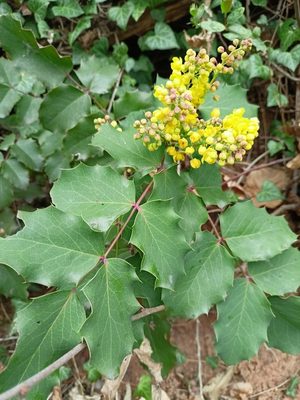
Oregon Grape
Berberis aquifolium
Holly-like evergreen leaves, fragrant yellow spring flowers, and blue berries. It is Oregon's state flower.
- Sun to shade
- Dry–average
- 3–6 ft
- Blooms Mar–Apr
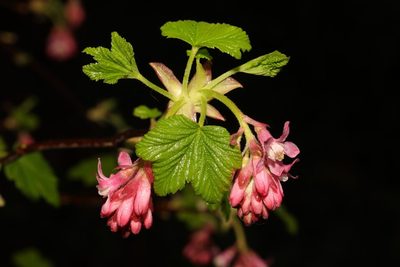
Red-Flowering Currant
Ribes sanguineum
Cascades of rose-pink tassels timed exactly to the return of the rufous hummingbird each spring.
- Full–part sun
- Dry–average
- 5–9 ft
- Blooms Mar–Apr
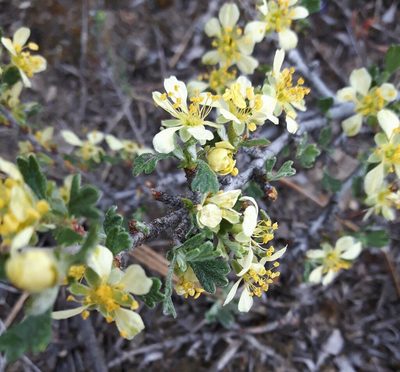
Antelope Bitterbrush
Purshia tridentata
A sagebrush-country shrub that fixes its own nitrogen, feeds native bees in spring, and never wants watering.
- Full sun
- Dry
- 3–8 ft
- Blooms Apr–Jun