- Home
- Collections
- Pollinators
Native Pollinator Plants
Native plants that turn a yard into a season-long buffet for bees, butterflies, and the insects that keep the food web running.
The label means almost nothing on its own
A tag reading "pollinator friendly" tells you that the plant produces flowers. Nearly all of them do. It does not tell you when it blooms, what shape the flowers are, which insects can physically use them, or whether the plant was treated with a systemic insecticide before it reached the shelf.
Those four things are what decide whether a planting feeds insects or merely looks like it does. The species on this page are chosen because they do the job in a documented way, but choosing good species is only the first of three decisions.
Succession matters more than any single plant
Insects need food across the whole season they are active, not during the three weeks in June when most gardens peak.
The hard periods are the ends. In March and April, bumblebee queens are emerging from underground alone, with no workers and no stores, and every one of next year's colonies depends on those individuals finding food. In September and October, the new queens are feeding before they overwinter, and migrating monarchs are crossing the country. A garden with nothing open in April and nothing in October has a gap where it matters most.
Practical version: plant something for each of early spring, late spring, early summer, midsummer, late summer, and fall. Six slots. A garden that covers all six with modest plants outperforms one with a spectacular June and nothing else.
Flower shape decides who can eat
Insects have different tongue lengths and different body sizes, and a flower is a lock that only some of them fit.
Deep tubes such as cardinal flower, penstemon, and beebalm serve hummingbirds and long-tongued bumblebees, and exclude nearly everyone else. Flat open clusters such as yarrow, boneset, golden alexanders, and mountain mint serve the enormous group of tiny bees, flower flies, parasitic wasps, and beetles that cannot reach into anything. Open daisies such as coneflower and blanketflower give butterflies a place to stand.
Most gardens are heavy on showy tubes and light on small flat flowers, which means they feed the visible insects and skip the ones doing much of the work. Plant across the shapes.
Two things that undo the rest
Buy plants that have not been treated with neonicotinoid insecticides. These are systemic, meaning they move through the plant into pollen and nectar, and a treated plant can be actively harmful for a season or more. Ask the nursery directly. Many now label their stock.
Then leave the garden standing. Stem-nesting bees overwinter inside hollow perennial stems, and many butterflies and moths overwinter in leaf litter at ground level. Cutting everything down in fall and raking the beds bare removes the insects you spent the season feeding. Cut back in spring instead.
Sources: Xerces Society for Invertebrate Conservation (pollinator habitat guidance, bloom succession, and neonicotinoid research); US Department of Agriculture Natural Resources Conservation Service (pollinator planting guidance); Mt. Cuba Center (native plant trials measuring pollinator visits).
92 native species in this collection.
A garden that feeds pollinators all season needs something in bloom from the first warm days of spring through the last of fall. Aim for at least three species flowering at any given time, plant in generous drifts of one kind rather than singletons so foragers can work efficiently, and leave seed heads and hollow stems standing over winter to shelter the next generation.
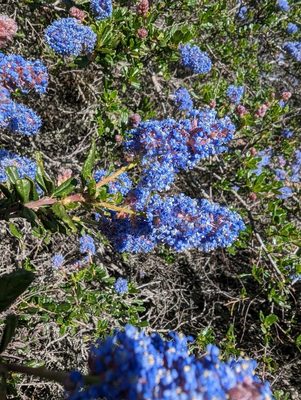
California Lilac
Ceanothus thyrsiflorus
Sheets of true-blue spring flowers on an evergreen shrub that hums with bees on the West Coast.
- Full sun
- Dry
- 6–20 ft
- Blooms Mar–May
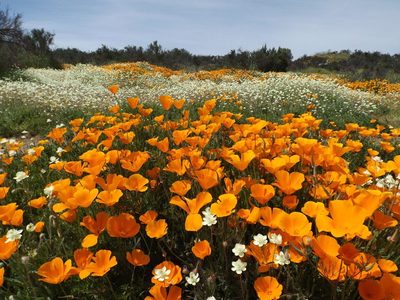
California Poppy
Eschscholzia californica
The silken orange state flower of California, painting dry hillsides every spring.
- Full sun
- Dry
- 8–18 in
- Blooms Mar–Jun
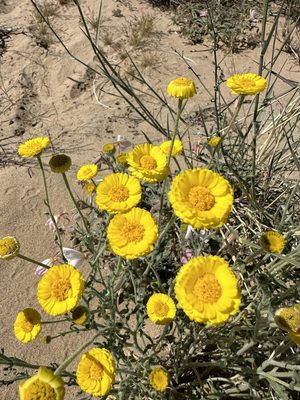
Desert Marigold
Baileya multiradiata
A silver-leaved desert daisy that blooms almost year-round on rainfall alone.
- Full sun
- Dry
- 12–18 in
- Blooms Mar–Oct
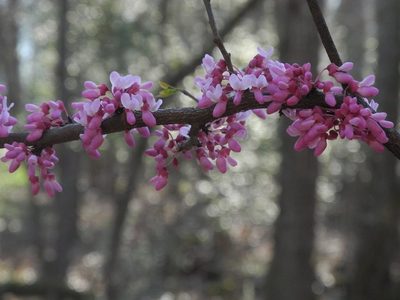
Eastern Redbud
Cercis canadensis
Bare branches erupt in rose-magenta in early spring, and the flowers feed the season's first bees.
- Full–part sun
- Dry–average
- 20–30 ft
- Blooms Mar–Apr
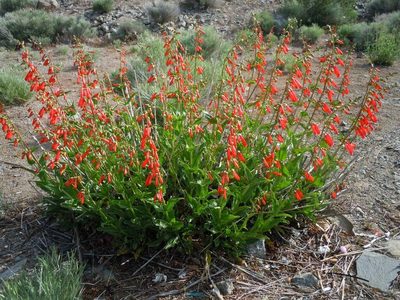
Firecracker Penstemon
Penstemon eatonii
Scarlet tubular flowers timed to the spring hummingbird migration through the desert Southwest.
- Full sun
- Dry
- 1.5–3 ft
- Blooms Mar–May
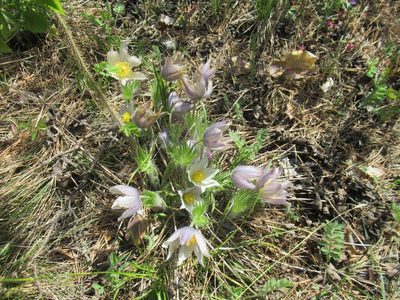
Pasque Flower
Pulsatilla patens
One of the very first prairie flowers, silky purple cups pushing up through cold early-spring ground.
- Full sun
- Dry
- 6–12 in
- Blooms Mar–Apr
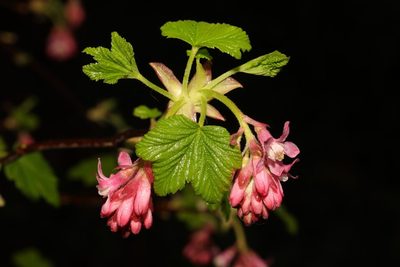
Red-Flowering Currant
Ribes sanguineum
Cascades of rose-pink tassels timed exactly to the return of the rufous hummingbird each spring.
- Full–part sun
- Dry–average
- 5–9 ft
- Blooms Mar–Apr
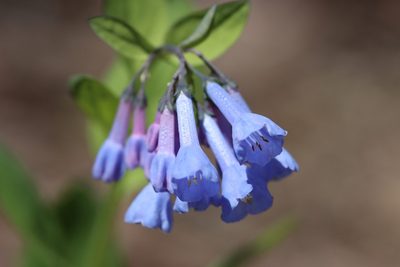
Virginia Bluebells
Mertensia virginica
Pink buds opening to drifts of sky-blue bells, then vanishing underground by summer.
- Part shade
- Average–wet
- 1–2 ft
- Blooms Mar–May
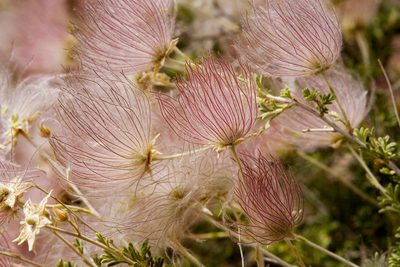
Apache Plume
Fallugia paradoxa
White rose-like flowers and feathery pink seed plumes together on one airy desert shrub.
- Full sun
- Dry
- 3–6 ft
- Blooms Apr–Sep
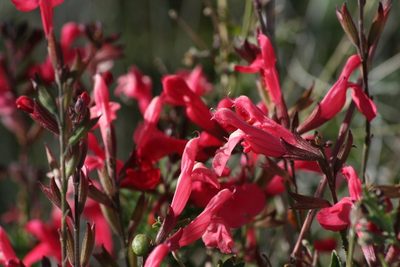
Autumn Sage
Salvia greggii
A tough little evergreen sage that feeds hummingbirds from spring to frost in Texas and the Southwest.
- Full–part sun
- Dry
- 2–3 ft
- Blooms Apr–Oct
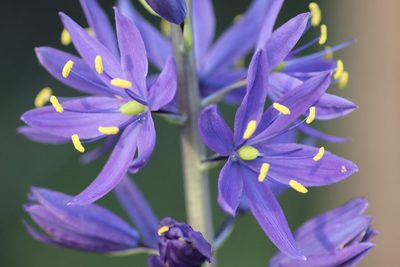
Common Camas
Camassia quamash
The blue that used to run across Northwest prairies in spring, and the one bulb that actually wants a wet winter.
- Full–part sun
- Average–wet
- 1–2.5 ft
- Blooms Apr–May
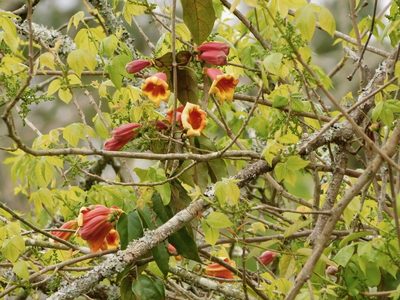
Crossvine
Bignonia capreolata
A vigorous, semi-evergreen climber that smothers a fence in orange-red trumpets each spring.
- Full–part sun
- Dry–average
- 25–50 ft
- Blooms Apr–May
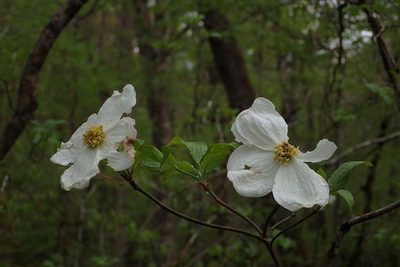
Flowering Dogwood
Cornus florida
The classic understory tree of the eastern woods, with white spring bracts and crimson fall leaves.
- Part shade
- Average
- 15–25 ft
- Blooms Apr–May
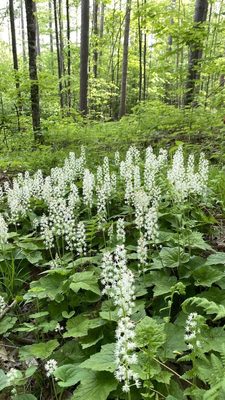
Foamflower
Tiarella cordifolia
Frothy white spring spires over heart-shaped, semi-evergreen foliage in deep shade.
- Part shade
- Average
- 6–12 in
- Blooms Apr–May
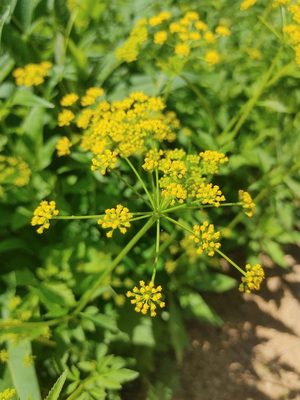
Golden Alexanders
Zizia aurea
Early flat gold heads that feed the first small bees and host the black swallowtail.
- Full–part sun
- Average–wet
- 1.5–2.5 ft
- Blooms Apr–Jun

Prairie Smoke
Geum triflorum
Nodding pink spring bells that turn into smoky, feathered seed plumes, the show after the flower.
- Full–part sun
- Dry
- 6–16 in
- Blooms Apr–May

Saskatoon Serviceberry
Amelanchier alnifolia
White flowers before the leaves, then fruit that tastes like a sweet blueberry, then orange fall color.
- Full–part sun
- Dry–average
- 6–15 ft
- Blooms Apr–May
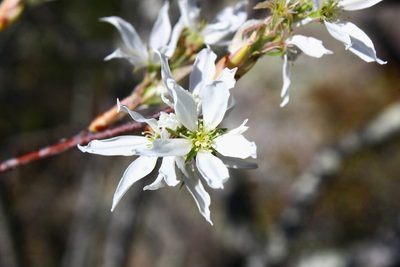
Serviceberry
Amelanchier canadensis
A small four-season tree: white spring flowers, June berries for the birds, and fiery fall color.
- Full–part sun
- Average–wet
- 15–25 ft
- Blooms Apr–May
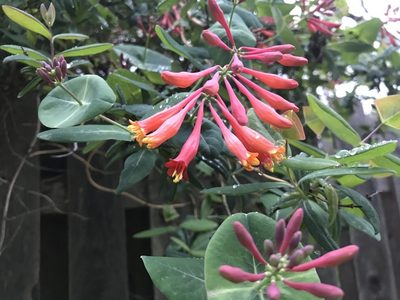
Trumpet Honeysuckle
Lonicera sempervirens
A well-mannered native vine that pours out coral-red hummingbird trumpets from spring to frost.
- Full–part sun
- Dry–average
- 8–15 ft
- Blooms Apr–Sep
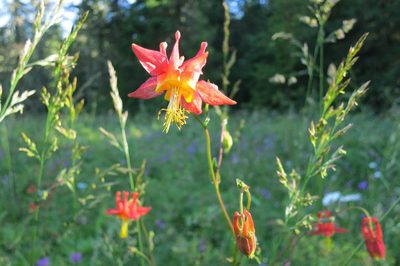
Western Columbine
Aquilegia formosa
The West's nodding red-and-gold columbine, the first big hummingbird draw of the mountain spring.
- Part shade
- Average
- 1.5–3 ft
- Blooms Apr–Jul
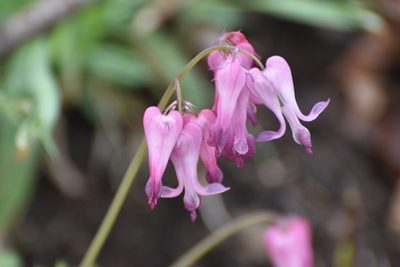
Wild Bleeding Heart
Dicentra eximia
Ferny mounds that drip with pink hearts from spring straight through summer in shade.
- Part shade
- Average
- 12–18 in
- Blooms Apr–Aug
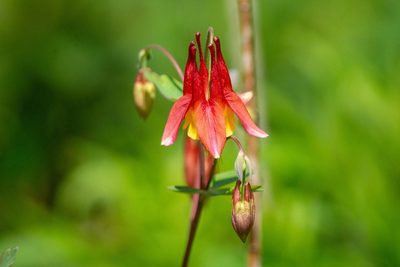
Wild Columbine
Aquilegia canadensis
Nodding red-and-gold lanterns that greet the first spring hummingbirds at a woodland edge.
- Part shade
- Dry–average
- 1–2.5 ft
- Blooms Apr–Jun
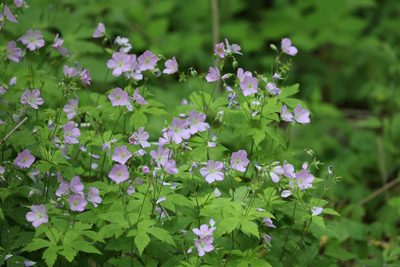
Wild Geranium
Geranium maculatum
A mounding woodland staple with lilac-pink spring flowers and good fall foliage color.
- Part shade
- Average
- 1.5–2 ft
- Blooms Apr–Jun
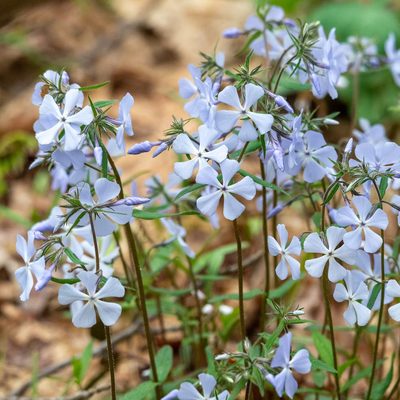
Woodland Phlox
Phlox divaricata
A sweetly fragrant, low spreading phlox that carpets the spring woodland floor in blue.
- Part shade
- Average
- 10–15 in
- Blooms Apr–May
Pollinators, near you.
Whether a species belongs in your yard depends on where you garden. These state guides cover it.
Where to find pollinators plants
Some links here are affiliate links and we may earn a small commission at no extra cost to you.
What a first-year Pollinators planting needs, from a pH kit to mulch.