- Home
- Plant guide
- Apache Plume
Apache Plume
Fallugia paradoxa
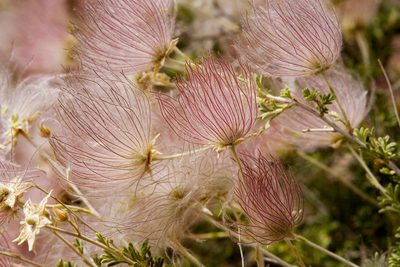
White rose-like flowers and feathery pink seed plumes together on one airy desert shrub.
Native to: the desert Southwest · the Mountain West · the Great Basin
Growing Apache Plume
Holds flowers and the smoky pink seed heads at the same time for months. Practically indestructible in hot, dry, rocky ground.
Where it belongs
Apache plume is native to the Southwest, Mountain West, and Great Basin, growing on dry rocky slopes, in arroyos, on gravel benches, and in pinyon and juniper country from the desert up into the foothills.
It is in the rose family, and the flower shows it: a simple white five-petaled rose about an inch and a half across. What follows is the unusual part. Each seed develops a long feathery pink tail, and a cluster of them forms a puff, so the shrub carries a smoky pink haze at the same time it carries fresh white flowers, from April into September.
Growing it
Full sun, dry soil, in rocky or sandy ground, zones 5 to 9. Three to six feet tall and equally wide.
Drainage and sun. It is essentially indestructible in hot dry rocky ground and declines in heavy wet soil or in shade.
It grows at a moderate pace and is long-lived. It suckers modestly from the roots, which makes it useful for holding a slope and worth knowing if you want a tight single specimen.
The habit is open and twiggy with pale peeling bark and small dark leaves, and it keeps most of its foliage through mild winters. It takes shearing but looks better lightly thinned than clipped, since the flowers and plumes are held at the branch tips.
Prune in late winter, removing old wood at the base rather than shortening the tips.
What it feeds
The open white flowers offer accessible nectar and pollen, and native bees work them steadily through the long bloom season. Small butterflies visit.
The shrub's larger contribution is structure. In open dry country, dense twiggy shrubs are where small birds nest, shelter from predators, and escape midday heat, and there are usually few of them. Verdins, thrashers, and sparrows use this one.
Its root system is deep and spreading, and it is planted deliberately for erosion control on disturbed slopes and roadcuts.
Living with it
Deer generally leave it alone.
Site it where afternoon or evening light will come through the seed plumes from behind. Backlit, the pink haze is the whole reason to grow the plant.
It combines well with desert marigold, chocolate flower, and blue grama, which share its conditions and stay low enough not to compete with it visually.
Water it through its first summer to establish, then stop.
Sources: USDA PLANTS Database (native range); Lady Bird Johnson Wildflower Center, University of Texas at Austin (species profile); USDA Natural Resources Conservation Service (plant guide, erosion control and wildlife cover).
It’s deer-resistant, drought-tolerant, evergreen, and showy.Where it grows
Apache Plume is native to the desert Southwest. In the wild you’ll find it across Arizona · California · Colorado · Idaho · Montana · Nevada · New Mexico · Oregon · Texas · Utah and 2 more states. Always confirm it suits your specific county with your state native plant society before planting.
Regional Garden has written state guides covering Apache Plume in 12 of them so far.
Good for
Where to buy Apache Plume
Some links here are affiliate links and we may earn a small commission at no extra cost to you.
What a first-year Apache Plume planting needs, from a pH kit to mulch.
Companions & kin.
Natives that share Apache Plume’s range and conditions.

Blue Elderberry
Sambucus cerulea
Fast, big, and covered in flat cream flower heads, then dusty blue fruit that draws every fruit-eating bird in the county.
- Full–part sun
- Average–wet
- 8–20 ft
- Blooms Jun–Jul

Golden Currant
Ribes aureum
Yellow spring flowers that smell of cloves, black fruit birds strip in a week, and red foliage in the fall.
- Full–part sun
- Dry–average
- 4–8 ft
- Blooms Apr–May
Antelope Bitterbrush
Purshia tridentata
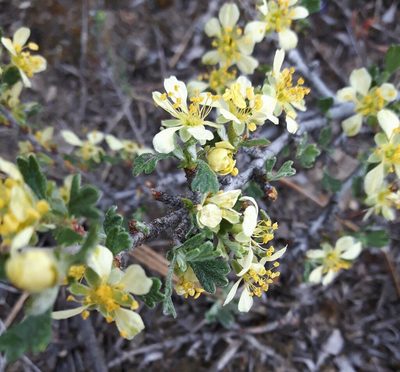
A sagebrush-country shrub that fixes its own nitrogen, feeds native bees in spring, and never wants watering.
- Full sun
- Dry
- 3–8 ft
- Blooms Apr–Jun
Common Snowberry
Symphoricarpos albus
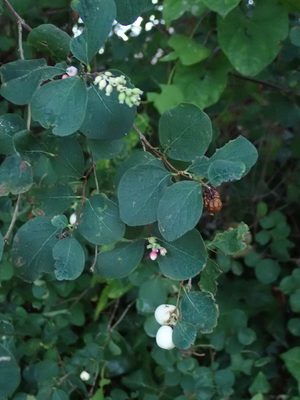
The shrub that will grow where nothing else will, and hangs white berries on bare stems all winter.
- Sun to shade
- Dry–average
- 3–6 ft
- Blooms Jun–Jul