- Home
- Plant guide
- Fragrant Sumac
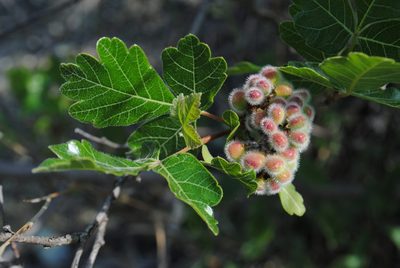
Zihao Wang (CC BY)
Fragrant Sumac
Rhus aromatica
A low, spreading shrub that blankets dry banks and blazes scarlet and orange in fall.
Native to: the Northeast · the Mid-Atlantic · the Southeast · the Midwest · the Great Plains · the Mountain West · the South-Central region
Growing Fragrant Sumac
The cultivar 'Gro-Low' makes one of the best large-scale native groundcovers for hot, dry slopes. Red fuzzy berries persist for birds into winter.
Where it belongs
Fragrant sumac is native across the East, Midwest, Plains, Texas, and into the Mountain West, growing on rocky slopes, bluffs, sand barrens, and open woods. It is one of the more widely distributed native shrubs in the country.
Its main use is as a large-scale groundcover on hard ground. A hot dry slope that erodes, a highway bank, a strip along a driveway, the sunny edge where the lawn gives up: these are places where planting anything is difficult, and where this succeeds by spreading into a continuous low mat.
The cultivar Gro-Low is the one usually sold for that purpose, staying around two feet high and spreading to eight.
Growing it
Full sun to part sun, dry soil, in rocky ground, sand, loam, or clay, zones 3 to 9. Two to six feet tall depending on form, spreading five to ten feet.
Drought tolerant to an unusual degree once established. It wants drainage and does not tolerate wet ground.
It spreads by suckering and by branches rooting where they touch soil. On a slope this is what you want. Near a bed of slower plants it needs an edge cut.
The straight species is taller and more upright; Gro-Low and similar selections are the spreading groundcover forms. Decide which job you are hiring it for before buying.
Crush a leaf and it is aromatic, sharply herbal rather than unpleasant, which gives it its name.
What it feeds
Small yellow catkins open in March and April before the leaves, and they feed early native bees at a point in the season when little else is available.
It is a host plant for several butterflies, including hairstreaks, and for a number of moths.
Female plants carry clusters of fuzzy red berries through fall and into winter. Like winterberry, this is low-preference fruit that birds leave until other food runs out, which makes it a late-winter reserve. Robins, bluebirds, and quail take it.
The dense low structure gives ground-nesting birds and small animals cover.
Living with it
Deer generally leave it alone, which matters for a groundcover meant to cover ground reliably.
A word on the poison ivy question, because the leaves are trifoliate and people worry. Poison ivy and fragrant sumac are related and look alike at a glance. The practical difference is that fragrant sumac's center leaflet has no stalk while poison ivy's does, and fragrant sumac is a shrub with red fuzzy berries rather than a vine with white waxy ones. If you are not certain, do not handle it barehanded until you have confirmed the identification.
Fall color runs orange, scarlet, and burgundy, and it is one of the better fall displays among native shrubs.
Sources: USDA PLANTS Database (native range); Lady Bird Johnson Wildflower Center, University of Texas at Austin (species profile); USDA Natural Resources Conservation Service (plant guide, erosion control and wildlife use).
It’s deer-resistant, drought-tolerant, good fall color, and easy to grow.Where it grows
Fragrant Sumac is native to the Northeast. In the wild you’ll find it across Alabama · Arizona · Arkansas · Colorado · Connecticut · Delaware · Florida · Georgia · Idaho · Illinois and 35 more states. Always confirm it suits your specific county with your state native plant society before planting.
Regional Garden has written state guides covering Fragrant Sumac in 45 of them so far.
Good for
Where to buy Fragrant Sumac
Some links here are affiliate links and we may earn a small commission at no extra cost to you.
What a first-year Fragrant Sumac planting needs, from a pH kit to mulch.
Companions & kin.
Natives that share Fragrant Sumac’s range and conditions.
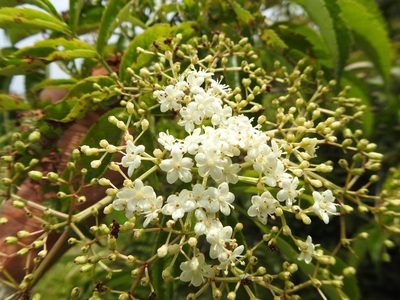
American Elderberry
Sambucus canadensis
Big lacy flower heads in summer give way to purple-black berries for both birds and your kitchen.
- Full–part sun
- Average–wet
- 6–12 ft
- Blooms Jun–Jul

Buttonbush
Cephalanthus occidentalis
Spherical white 'pincushion' flowers over standing water, swarmed by butterflies and bees.
- Full–part sun
- Average–wet
- 5–10 ft
- Blooms Jun–Aug
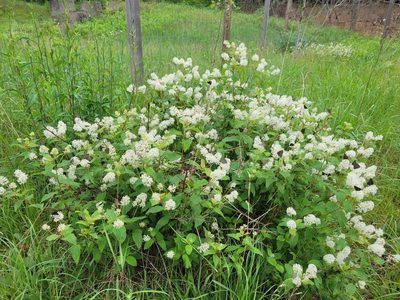
New Jersey Tea
Ceanothus americanus
A compact, drought-proof shrub frothing with white flowers that pollinators and hummingbirds adore.
- Full–part sun
- Dry
- 2–3.5 ft
- Blooms May–Jul

Arrowwood Viburnum
Viburnum dentatum
A bulletproof hedge shrub with white spring flowers, blue fall berries, and burgundy autumn leaves.
- Sun to shade
- Average–wet
- 6–10 ft
- Blooms May–Jun