- Home
- Collections
- For bees
Native Plants for Bees
The native flowers that feed honey bees, bumblebees, and the hundreds of solitary native bees most gardeners never notice.
The bee you are picturing is probably not native
Honey bees are European, kept in managed hives, and effectively livestock. They are important agriculturally and they are not in ecological trouble in the way the headlines suggest.
North America has roughly four thousand native bee species. They are the ones worth planting for, and they behave nothing like a honey bee. Around seventy percent nest in bare ground rather than hives. Most of the rest nest in hollow stems, old beetle tunnels in wood, or snail shells. The great majority are solitary: one female builds a nest, provisions it, and dies, with no colony and no honey. Many are active for only a few weeks a year.
Specialists are the reason species choice matters
Most native bees are generalists that collect pollen from many plants. But roughly a quarter to a third are specialists, restricted to pollen from one plant genus or family, and they cannot substitute anything else.
There are bees that collect only from squashes, only from goldenrod, only from sunflowers, only from asters, only from evening primroses, only from Ceanothus, only from columbine. When the plant disappears from a landscape, the bee does too, whatever else is flowering nearby.
This is the strongest practical argument for planting natives specifically rather than any nectar-rich flower. A butterfly bush feeds adult butterflies and supports no specialist bee and no caterpillar. A goldenrod feeds dozens of species that have nowhere else to go.
Pollen matters as much as nectar
Nectar is fuel for the adult. Pollen is the protein that the larvae eat, and it is what a female bee spends her short life collecting.
Some heavily marketed garden flowers, particularly doubled cultivars, have had their pollen-bearing parts bred into extra petals and produce almost none. A double coneflower or a sterile mophead hydrangea can be visually spectacular and nutritionally empty. Single, open, unmodified flowers are the ones that carry pollen.
Habitat is half the problem
Planting flowers and leaving no nesting sites solves half a bee's needs.
Ground-nesting bees need patches of bare, undisturbed, well-drained soil. Not mulched, not landscape-fabric covered, not tilled. A sunny patch of open dirt at the edge of a bed is nesting habitat, and it is the thing most tidy gardens have eliminated entirely.
Stem-nesting bees need standing dead stems. Leave perennial stalks up through winter and cut them to about a foot in spring rather than to the ground, so the hollow ends stay available.
And skip the insecticides. There is no way to spray a garden for pests and keep its bees.
Sources: Xerces Society for Invertebrate Conservation (native bee ecology, specialist bee lists, and nesting habitat guidance); US Geological Survey Native Bee Inventory and Monitoring Lab (species diversity); Mt. Cuba Center (trials comparing cultivar and straight species pollen availability).
87 native species in this collection.
Most of our native bees are solitary and unfussy, but they depend on a steady supply of pollen-rich, single (not double) flowers. Open daisy and umbel shapes are easiest for short-tongued bees, while tubular flowers reward the long-tongued bumblebees. Skip pesticides entirely and leave some bare, undisturbed ground and pithy stems where ground- and stem-nesting bees raise their young.
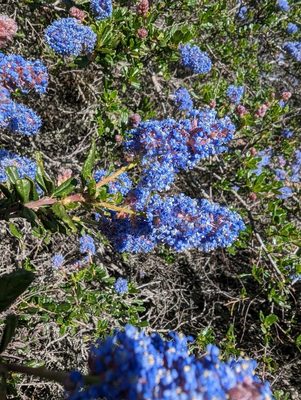
California Lilac
Ceanothus thyrsiflorus
Sheets of true-blue spring flowers on an evergreen shrub that hums with bees on the West Coast.
- Full sun
- Dry
- 6–20 ft
- Blooms Mar–May
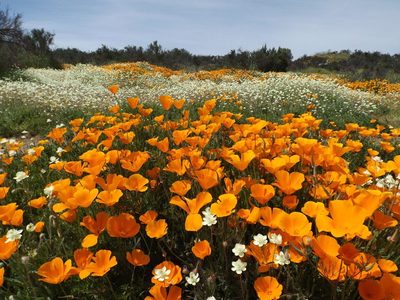
California Poppy
Eschscholzia californica
The silken orange state flower of California, painting dry hillsides every spring.
- Full sun
- Dry
- 8–18 in
- Blooms Mar–Jun
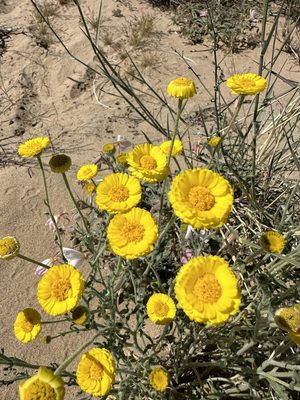
Desert Marigold
Baileya multiradiata
A silver-leaved desert daisy that blooms almost year-round on rainfall alone.
- Full sun
- Dry
- 12–18 in
- Blooms Mar–Oct
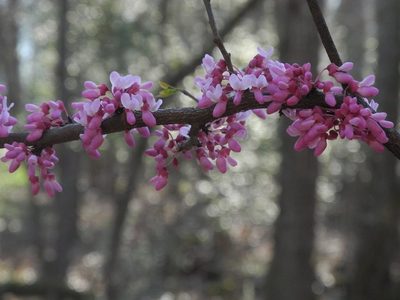
Eastern Redbud
Cercis canadensis
Bare branches erupt in rose-magenta in early spring, and the flowers feed the season's first bees.
- Full–part sun
- Dry–average
- 20–30 ft
- Blooms Mar–Apr
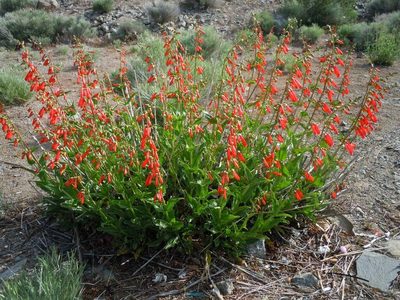
Firecracker Penstemon
Penstemon eatonii
Scarlet tubular flowers timed to the spring hummingbird migration through the desert Southwest.
- Full sun
- Dry
- 1.5–3 ft
- Blooms Mar–May
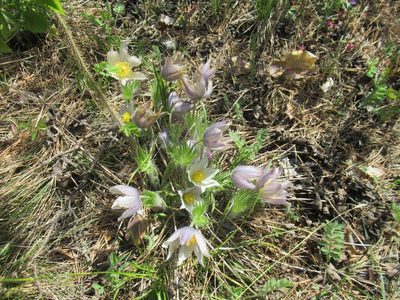
Pasque Flower
Pulsatilla patens
One of the very first prairie flowers, silky purple cups pushing up through cold early-spring ground.
- Full sun
- Dry
- 6–12 in
- Blooms Mar–Apr
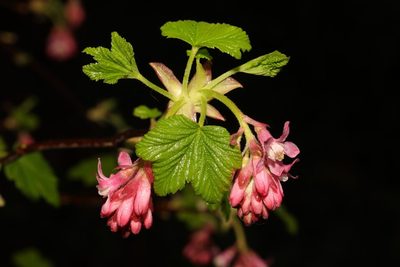
Red-Flowering Currant
Ribes sanguineum
Cascades of rose-pink tassels timed exactly to the return of the rufous hummingbird each spring.
- Full–part sun
- Dry–average
- 5–9 ft
- Blooms Mar–Apr
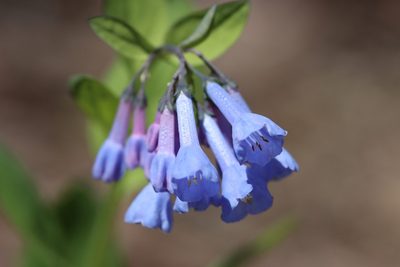
Virginia Bluebells
Mertensia virginica
Pink buds opening to drifts of sky-blue bells, then vanishing underground by summer.
- Part shade
- Average–wet
- 1–2 ft
- Blooms Mar–May
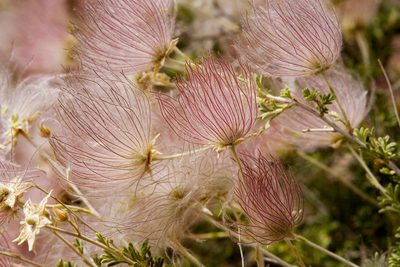
Apache Plume
Fallugia paradoxa
White rose-like flowers and feathery pink seed plumes together on one airy desert shrub.
- Full sun
- Dry
- 3–6 ft
- Blooms Apr–Sep
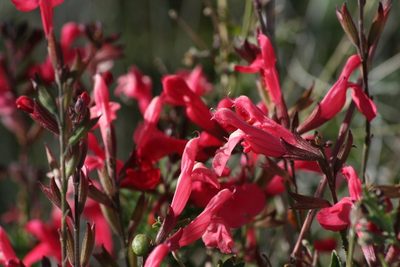
Autumn Sage
Salvia greggii
A tough little evergreen sage that feeds hummingbirds from spring to frost in Texas and the Southwest.
- Full–part sun
- Dry
- 2–3 ft
- Blooms Apr–Oct
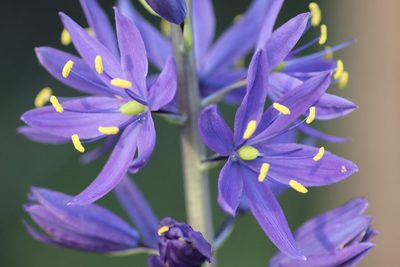
Common Camas
Camassia quamash
The blue that used to run across Northwest prairies in spring, and the one bulb that actually wants a wet winter.
- Full–part sun
- Average–wet
- 1–2.5 ft
- Blooms Apr–May
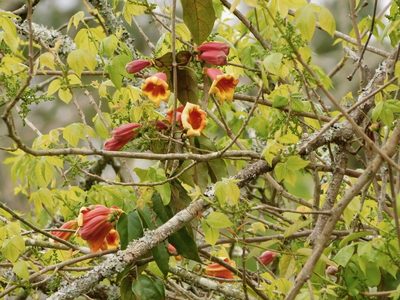
Crossvine
Bignonia capreolata
A vigorous, semi-evergreen climber that smothers a fence in orange-red trumpets each spring.
- Full–part sun
- Dry–average
- 25–50 ft
- Blooms Apr–May
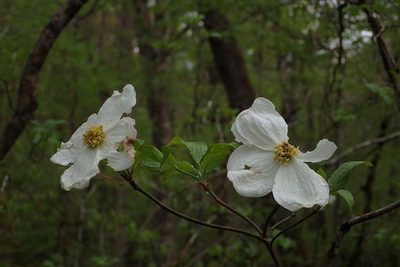
Flowering Dogwood
Cornus florida
The classic understory tree of the eastern woods, with white spring bracts and crimson fall leaves.
- Part shade
- Average
- 15–25 ft
- Blooms Apr–May
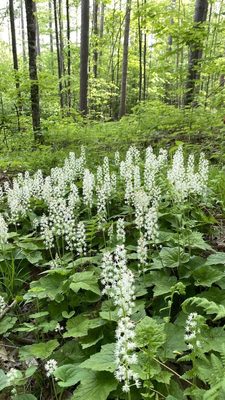
Foamflower
Tiarella cordifolia
Frothy white spring spires over heart-shaped, semi-evergreen foliage in deep shade.
- Part shade
- Average
- 6–12 in
- Blooms Apr–May
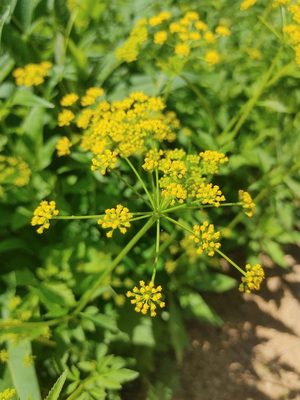
Golden Alexanders
Zizia aurea
Early flat gold heads that feed the first small bees and host the black swallowtail.
- Full–part sun
- Average–wet
- 1.5–2.5 ft
- Blooms Apr–Jun

Prairie Smoke
Geum triflorum
Nodding pink spring bells that turn into smoky, feathered seed plumes, the show after the flower.
- Full–part sun
- Dry
- 6–16 in
- Blooms Apr–May

Saskatoon Serviceberry
Amelanchier alnifolia
White flowers before the leaves, then fruit that tastes like a sweet blueberry, then orange fall color.
- Full–part sun
- Dry–average
- 6–15 ft
- Blooms Apr–May
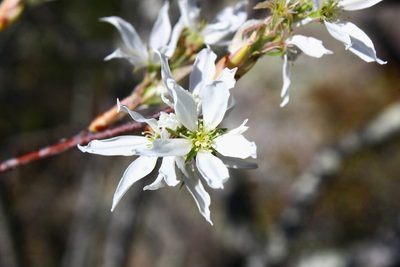
Serviceberry
Amelanchier canadensis
A small four-season tree: white spring flowers, June berries for the birds, and fiery fall color.
- Full–part sun
- Average–wet
- 15–25 ft
- Blooms Apr–May
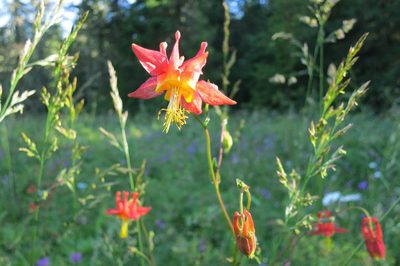
Western Columbine
Aquilegia formosa
The West's nodding red-and-gold columbine, the first big hummingbird draw of the mountain spring.
- Part shade
- Average
- 1.5–3 ft
- Blooms Apr–Jul
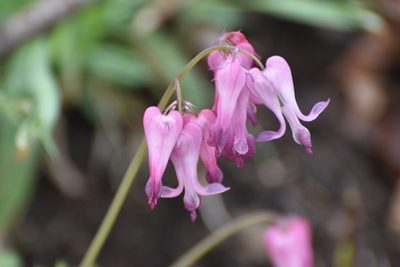
Wild Bleeding Heart
Dicentra eximia
Ferny mounds that drip with pink hearts from spring straight through summer in shade.
- Part shade
- Average
- 12–18 in
- Blooms Apr–Aug
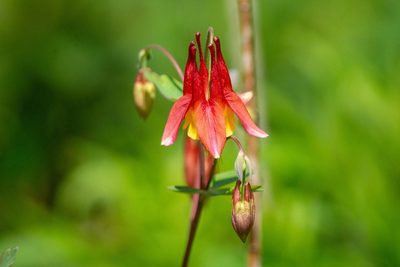
Wild Columbine
Aquilegia canadensis
Nodding red-and-gold lanterns that greet the first spring hummingbirds at a woodland edge.
- Part shade
- Dry–average
- 1–2.5 ft
- Blooms Apr–Jun
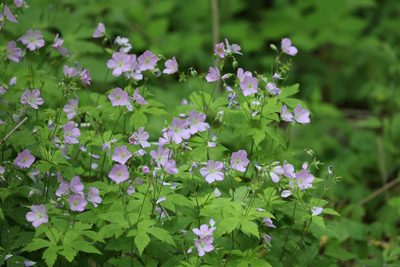
Wild Geranium
Geranium maculatum
A mounding woodland staple with lilac-pink spring flowers and good fall foliage color.
- Part shade
- Average
- 1.5–2 ft
- Blooms Apr–Jun
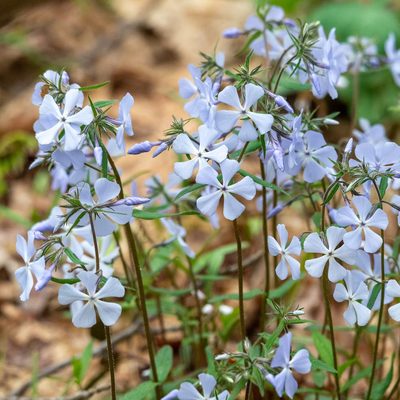
Woodland Phlox
Phlox divaricata
A sweetly fragrant, low spreading phlox that carpets the spring woodland floor in blue.
- Part shade
- Average
- 10–15 in
- Blooms Apr–May

Arrowwood Viburnum
Viburnum dentatum
A bulletproof hedge shrub with white spring flowers, blue fall berries, and burgundy autumn leaves.
- Sun to shade
- Average–wet
- 6–10 ft
- Blooms May–Jun
For bees, near you.
Whether a species belongs in your yard depends on where you garden. These state guides cover it.
Where to find for bees plants
Some links here are affiliate links and we may earn a small commission at no extra cost to you.
What a first-year For bees planting needs, from a pH kit to mulch.