- Home
- Plant guide
- Eastern Redbud
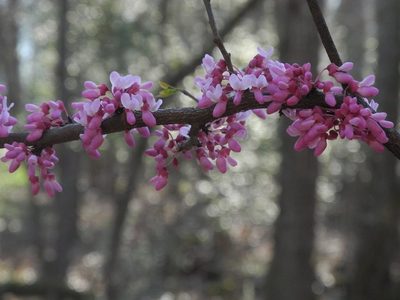
Michael J. Papay (CC BY)
Eastern Redbud
Cercis canadensis
Bare branches erupt in rose-magenta in early spring, and the flowers feed the season's first bees.
Native to: the Northeast · the Mid-Atlantic · the Southeast · the Midwest · the Great Plains · the South-Central region
Growing Eastern Redbud
A small understory tree that flowers straight off the trunk and limbs before leafing out. Heart-shaped leaves turn gold in fall; tolerates clay and part shade.
Where it belongs
Eastern redbud is native across the East, Midwest, Plains, and Texas, growing as an understory tree at woodland edges, along fencerows, and on slopes in open hardwood forest.
It flowers in a way almost no other tree in the country does. The buds open directly from old wood, so the flowers appear on the trunk and on limbs several inches thick, not only on the twigs. A mature tree in early spring looks as though the magenta is coming out of the bark, because it is. The botanical term is cauliflory, and it is common in the tropics and rare here.
Growing it
Full sun to part sun, dry to medium soil, in loam, clay, or rocky ground, zones 4 to 9. Twenty to thirty feet tall and fifteen to twenty-five feet wide.
Adaptable. It takes clay, tolerates part shade, and handles ordinary garden conditions without fuss. It does not want wet feet.
It is in the pea family, which is visible in the flower shape and in the flat seed pods that follow.
It is not especially long-lived, often thirty to fifty years, and older trees develop cankers and lose limbs. Plan for it as a medium-term tree.
Provenance matters more than usual here. The species ranges from Michigan to Texas, and stock grown from southern seed is less cold hardy in the North. Buy from a regional grower.
Prune in late spring after flowering, and prune lightly.
What it feeds
The bloom lands in March and April, ahead of nearly every other tree, and its value is almost entirely about that timing.
Long-tongued bees are the main pollinators: bumblebee queens founding colonies, mason bees, and carpenter bees, all of them foraging early with few alternatives. Several specialist bees collect from redbud. Early butterflies and hummingbirds take nectar.
It is a host plant for the Henry's elfin butterfly and for a number of moths.
Seed in the pods is taken by songbirds and by small mammals through winter, and the heart-shaped leaves turn clear gold in fall.
Living with it
Deer browse young trees.
The flowers are edible and are sometimes scattered on salads, with a mild pea flavor.
Many selections are sold: weeping forms, and purple- or gold-leaved cultivars such as Forest Pansy and Rising Sun. As with other native shrubs and trees, altered leaf pigmentation can reduce how usable the foliage is to leaf-feeding insects, so the straight species is the better choice where habitat is the goal.
Sources: USDA PLANTS Database (native range); Lady Bird Johnson Wildflower Center, University of Texas at Austin (species profile and provenance); Xerces Society (early season bee forage and specialist bees); Mt. Cuba Center (native cultivar trials and insect use).
It’s showy, good fall color, and easy to grow.Where it grows
Eastern Redbud is native to the Northeast. In the wild you’ll find it across Alabama · Arkansas · Colorado · Connecticut · Delaware · Florida · Georgia · Illinois · Indiana · Iowa and 32 more states. Always confirm it suits your specific county with your state native plant society before planting.
Regional Garden has written state guides covering Eastern Redbud in 42 of them so far.
Good for
Where to buy Eastern Redbud
Some links here are affiliate links and we may earn a small commission at no extra cost to you.
What a first-year Eastern Redbud planting needs, from a pH kit to mulch.
Companions & kin.
Natives that share Eastern Redbud’s range and conditions.
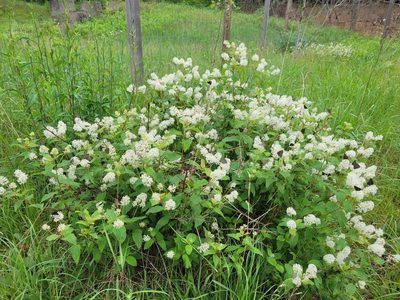
New Jersey Tea
Ceanothus americanus
A compact, drought-proof shrub frothing with white flowers that pollinators and hummingbirds adore.
- Full–part sun
- Dry
- 2–3.5 ft
- Blooms May–Jul
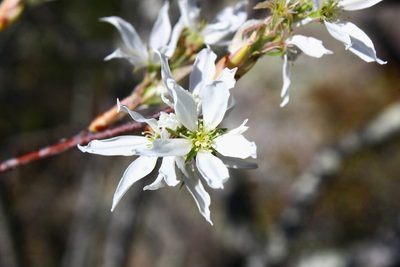
Serviceberry
Amelanchier canadensis
A small four-season tree: white spring flowers, June berries for the birds, and fiery fall color.
- Full–part sun
- Average–wet
- 15–25 ft
- Blooms Apr–May
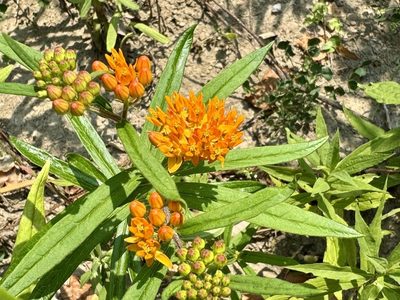
Butterfly Weed
Asclepias tuberosa
A monarch host plant and the brightest orange in the native palette, thriving in lean, dry soil.
- Full sun
- Dry
- 1.5–2.5 ft
- Blooms Jun–Aug

Common Yarrow
Achillea millefolium
A near-continental native with flat flower heads that feed tiny beneficial insects, tough as a weed.
- Full sun
- Dry–average
- 1.5–3 ft
- Blooms May–Aug