- Home
- Plant guide
- Serviceberry
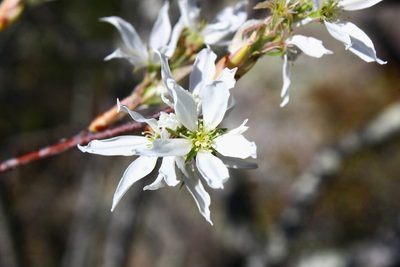
Dominic (CC BY)
Serviceberry
Amelanchier canadensis
A small four-season tree: white spring flowers, June berries for the birds, and fiery fall color.
Native to: the Northeast · the Mid-Atlantic · the Southeast · the Midwest · the Great Plains
Growing Serviceberry
Among the most valuable small native trees for wildlife and tight spaces. The early-summer berries are edible and taste like a mild blueberry.
Where it belongs
Serviceberry is native across the Northeast, Mid-Atlantic, Southeast, Midwest, and Plains, growing at woodland edges, in thickets, along stream banks, and in open low woods.
Its usefulness is a matter of scale. Most people want a tree and have room for something small. At fifteen to twenty-five feet, often multi-stemmed, this fits next to a house, along a drive, or in a front yard where an oak never could, and it delivers something in every season.
The common names multiply confusingly: shadbush, juneberry, saskatoon, sarvis. They refer to overlapping species in the same genus, all similar in the garden.
Growing it
Full sun to part sun, medium to wet soil, in loam or clay, zones 3 to 8.
It takes ordinary garden conditions and prefers soil that does not dry hard. It tolerates part shade and flowers more heavily in sun.
The natural habit is a multi-stemmed clump, which suits an informal planting and a screen. Single-trunk forms are sold for a more tree-like effect. Prune only to shape and to remove crossing branches, in late winter.
It is in the rose family and is subject to the same problems: rust, particularly where junipers are nearby, and occasional leaf spot. These are usually cosmetic.
What it feeds
Four contributions across the year.
The white flowers open in April, before most trees leaf out, and feed early native bees, mining bees, and mason bees at a lean point in the season. Several specialist bees collect from it.
It is a strong host plant. Serviceberry supports well over a hundred species of butterfly and moth caterpillars, which is the food supply nesting songbirds depend on. Chickadees feeding a brood need thousands of caterpillars, and they get them from plants like this rather than from a feeder.
The fruit ripens dark purple in June and is stripped fast by robins, cedar waxwings, catbirds, orioles, and thrushes. If you want any yourself, net a branch or pick early.
Fall color runs orange to scarlet, and the smooth gray bark is a winter feature.
Living with it
Deer browse it, and young trees need protection where pressure is high.
The fruit is genuinely good: sweet, mild, with a faint almond note from the seeds, and it is used for pies and jam across the northern Plains and Canada where saskatoon is a commercial crop.
Plant it where you can watch it in June. The bird activity is the point.
Sources: USDA PLANTS Database (native range and nomenclature); Lady Bird Johnson Wildflower Center, University of Texas at Austin (species profile); Doug Tallamy and University of Delaware research on native woody plants and caterpillar support; Cornell Lab of Ornithology (fruit and nestling diets).
It’s good fall color, showy, and easy to grow.Where it grows
Serviceberry is native to the Northeast. In the wild you’ll find it across Alabama · Arkansas · Colorado · Connecticut · Delaware · Florida · Georgia · Illinois · Indiana · Iowa and 32 more states. Always confirm it suits your specific county with your state native plant society before planting.
Regional Garden has written state guides covering Serviceberry in 42 of them so far.
Good for
Where to buy Serviceberry
Some links here are affiliate links and we may earn a small commission at no extra cost to you.
What a first-year Serviceberry planting needs, from a pH kit to mulch.
Companions & kin.
Natives that share Serviceberry’s range and conditions.
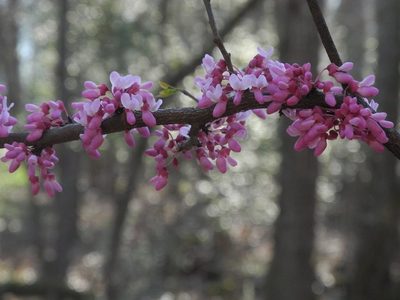
Eastern Redbud
Cercis canadensis
Bare branches erupt in rose-magenta in early spring, and the flowers feed the season's first bees.
- Full–part sun
- Dry–average
- 20–30 ft
- Blooms Mar–Apr
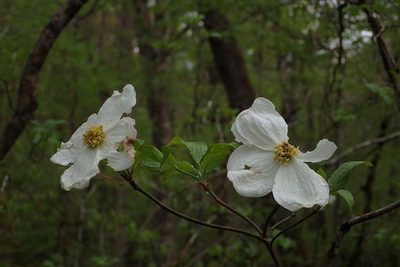
Flowering Dogwood
Cornus florida
The classic understory tree of the eastern woods, with white spring bracts and crimson fall leaves.
- Part shade
- Average
- 15–25 ft
- Blooms Apr–May
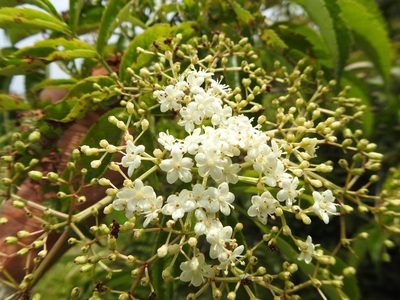
American Elderberry
Sambucus canadensis
Big lacy flower heads in summer give way to purple-black berries for both birds and your kitchen.
- Full–part sun
- Average–wet
- 6–12 ft
- Blooms Jun–Jul
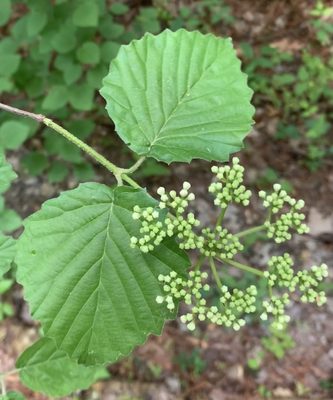
Arrowwood Viburnum
Viburnum dentatum
A bulletproof hedge shrub with white spring flowers, blue fall berries, and burgundy autumn leaves.
- Sun to shade
- Average–wet
- 6–10 ft
- Blooms May–Jun