- Home
- Plant guide
- Arrowwood Viburnum

Ashwin Srinivasan (CC BY)
Arrowwood Viburnum
Viburnum dentatum
A bulletproof hedge shrub with white spring flowers, blue fall berries, and burgundy autumn leaves.
Native to: the Northeast · the Mid-Atlantic · the Southeast · the Midwest
Growing Arrowwood Viburnum
Adaptable to sun or shade and almost any soil, making one of the best native privacy hedges. Plant two or more for good berry set.
Where it belongs
Arrowwood viburnum is native to the Northeast, Mid-Atlantic, Southeast, and Midwest, growing in woodland edges, thickets, along streams, and in old fences and hedgerows.
It is the plant to reach for when someone wants a screening hedge and would otherwise buy privet, burning bush, or Japanese barberry, all of which are invasive across much of the East. This does the same job, at the same size, and feeds birds while doing it.
The name comes from the straight young shoots, which were used for arrow shafts.
Growing it
Full sun, part sun, or shade, medium to wet soil, in loam or clay, zones 3 to 8. Six to ten feet tall and equally wide.
Its adaptability is what makes it a practical hedge. It flowers and fruits best in sun, and it still performs acceptably in real shade, which very few flowering shrubs do. It takes clay, takes moisture, and tolerates ordinary garden conditions.
Space plants five to six feet apart for a screen. It fills in within a few years and needs little shaping. Prune right after flowering if at all, since the flower buds for next year form in summer.
One requirement people miss: it needs cross-pollination to set fruit well. A single plant flowers and produces almost no berries. Plant two or more, and ideally more than one genetic individual rather than several plants of the same named clone.
What it feeds
Flat clusters of small creamy flowers open in May and June with nectar held shallow and open, so a wide range of small native bees, flower flies, and beetles can use them. Butterflies visit.
It is a strong host plant. Viburnums support a substantial number of butterfly and moth caterpillars, and the spring azure uses them directly.
The berries are the main event. They ripen blue-black in September and October, and their high fat content is exactly what songbirds need during fall migration. Thrushes, catbirds, robins, and cedar waxwings work them, and a hedge can be stripped in a matter of days.
Living with it
Deer will browse it, particularly young plants.
Viburnum leaf beetle, an introduced pest, has spread through the Northeast and Midwest and damages this species, though it is less susceptible than some viburnums. Watch for chewed leaves in early summer and prune out egg-laden twig tips in winter, which is the standard control.
Fall color runs from yellow through burgundy to deep wine, varying by plant.
Sources: USDA PLANTS Database (native range); Lady Bird Johnson Wildflower Center, University of Texas at Austin (species profile and pollination requirements); Cornell University (viburnum leaf beetle identification and management); Cornell Lab of Ornithology (fall migration fruit).
It’s easy to grow, good fall color, and showy.Where it grows
Arrowwood Viburnum is native to the Northeast. In the wild you’ll find it across Alabama · Arkansas · Connecticut · Delaware · Florida · Georgia · Illinois · Indiana · Iowa · Kentucky and 24 more states. Always confirm it suits your specific county with your state native plant society before planting.
Regional Garden has written state guides covering Arrowwood Viburnum in 34 of them so far.
Good for
Where to buy Arrowwood Viburnum
Some links here are affiliate links and we may earn a small commission at no extra cost to you.
What a first-year Arrowwood Viburnum planting needs, from a pH kit to mulch.
Companions & kin.
Natives that share Arrowwood Viburnum’s range and conditions.
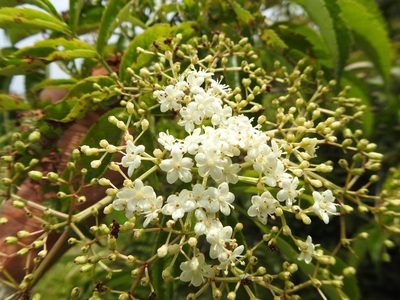
American Elderberry
Sambucus canadensis
Big lacy flower heads in summer give way to purple-black berries for both birds and your kitchen.
- Full–part sun
- Average–wet
- 6–12 ft
- Blooms Jun–Jul

Buttonbush
Cephalanthus occidentalis
Spherical white 'pincushion' flowers over standing water, swarmed by butterflies and bees.
- Full–part sun
- Average–wet
- 5–10 ft
- Blooms Jun–Aug
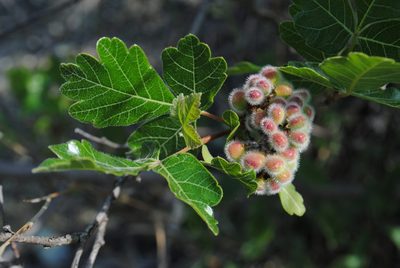
Fragrant Sumac
Rhus aromatica
A low, spreading shrub that blankets dry banks and blazes scarlet and orange in fall.
- Full–part sun
- Dry
- 2–6 ft
- Blooms Mar–Apr
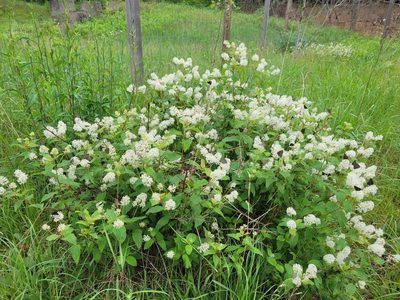
New Jersey Tea
Ceanothus americanus
A compact, drought-proof shrub frothing with white flowers that pollinators and hummingbirds adore.
- Full–part sun
- Dry
- 2–3.5 ft
- Blooms May–Jul