- Home
- Plant guide
- New Jersey Tea
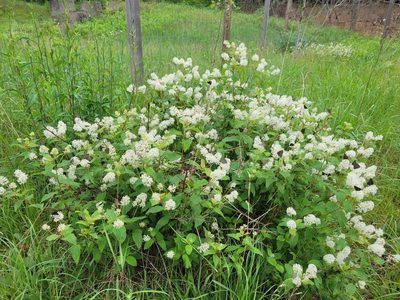
WF_MI (CC BY)
New Jersey Tea
Ceanothus americanus
A compact, drought-proof shrub frothing with white flowers that pollinators and hummingbirds adore.
Native to: the Northeast · the Mid-Atlantic · the Southeast · the Midwest · the Great Plains · the South-Central region
Growing New Jersey Tea
A deep root makes it almost impossible to transplant but bombproof in drought once set. Host to spring azure and summer azure butterflies.
Where it belongs
New Jersey tea is native across the East, Midwest, Plains, and Texas, growing in dry prairie, oak savanna, rocky glades, and open woods. It is a plant of thin soil and fire-maintained landscapes.
Its size is unusual and useful. Most native shrubs are six to ten feet, which rules them out for a small yard or a foundation planting. This one stays at two to three and a half feet, dense and rounded, which lets it work where a full sized shrub cannot.
The name comes from the Revolutionary period, when the leaves were dried and brewed as a substitute for imported tea.
Growing it
Full sun to part sun, dry soil, in rocky ground, sand, or lean loam, zones 3 to 8. Two to three and a half feet.
Drainage. It grows on prairie and glade soils and will not tolerate wet feet.
The root is the notable feature: a woody taproot and root crown that can descend many feet, which is how the plant survives drought and how it resprouts after fire. It is also why the plant is essentially impossible to move once established. Plant it small and plant it once.
It fixes its own nitrogen through root nodules, so it needs no fertilizer, and adding any helps its competitors instead.
It is slow to establish. Two or three years before it looks like much is normal. After that it is close to permanent and needs nothing.
What it feeds
The flowers are held in dense frothy white panicles in late spring and early summer, and the insect traffic on them is remarkable for a plant this size.
Because the individual flowers are tiny and open, the visitor list runs very broad: small native bees, mining bees, sweat bees, flower flies, beetles, and a long list of wasps. Hummingbirds visit as well. Specialist bees collect from Ceanothus.
It hosts the spring azure and summer azure butterflies, whose caterpillars feed on the flower buds, and a number of moths.
Birds take the seed, which is ejected forcibly from the capsules when they dry.
Living with it
Deer will browse it, and in high-pressure areas young plants need protection.
It needs almost no pruning. Cut back damaged wood in early spring; it flowers on new growth, so a hard cut is tolerated if the plant gets ragged.
Its close relatives on the West Coast are the ceanothus shrubs sold as California lilac, which are larger, evergreen, and blue-flowered but occupy the same ecological role.
Sources: USDA PLANTS Database (native range); Lady Bird Johnson Wildflower Center, University of Texas at Austin (species profile and root system); Xerces Society (Ceanothus specialist bees and azure butterfly hosts).
It’s deer-resistant, drought-tolerant, and a nitrogen-fixer.Where it grows
New Jersey Tea is native to the Northeast. In the wild you’ll find it across Alabama · Arkansas · Colorado · Connecticut · Delaware · Florida · Georgia · Illinois · Indiana · Iowa and 32 more states. Always confirm it suits your specific county with your state native plant society before planting.
Regional Garden has written state guides covering New Jersey Tea in 42 of them so far.
Good for
Where to buy New Jersey Tea
Some links here are affiliate links and we may earn a small commission at no extra cost to you.
What a first-year New Jersey Tea planting needs, from a pH kit to mulch.
Companions & kin.
Natives that share New Jersey Tea’s range and conditions.

Buttonbush
Cephalanthus occidentalis
Spherical white 'pincushion' flowers over standing water, swarmed by butterflies and bees.
- Full–part sun
- Average–wet
- 5–10 ft
- Blooms Jun–Aug
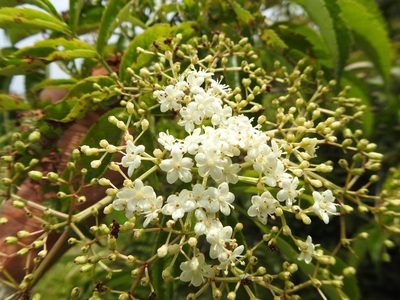
American Elderberry
Sambucus canadensis
Big lacy flower heads in summer give way to purple-black berries for both birds and your kitchen.
- Full–part sun
- Average–wet
- 6–12 ft
- Blooms Jun–Jul
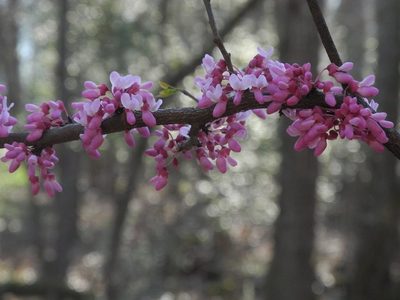
Eastern Redbud
Cercis canadensis
Bare branches erupt in rose-magenta in early spring, and the flowers feed the season's first bees.
- Full–part sun
- Dry–average
- 20–30 ft
- Blooms Mar–Apr
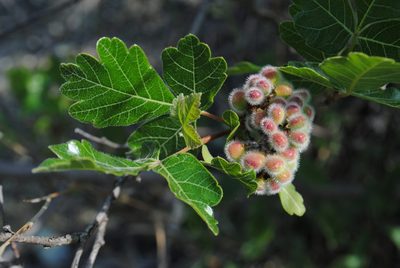
Fragrant Sumac
Rhus aromatica
A low, spreading shrub that blankets dry banks and blazes scarlet and orange in fall.
- Full–part sun
- Dry
- 2–6 ft
- Blooms Mar–Apr