- Home
- Collections
- Butterflies
Native Butterfly Plants
Nectar and host plants that bring butterflies to your garden, and give their caterpillars something to eat once they arrive.
Two completely different jobs
A butterfly's life has two halves and they eat different things.
The adult drinks nectar and can take it from almost any suitable flower, including plants from other continents. The caterpillar eats leaves, and it is usually restricted to a small number of plant species, sometimes to exactly one.
Nearly every garden marketed as a butterfly garden addresses only the first half. It supplies nectar to adults that emerged somewhere else. That is worth something, and it is not the same as supporting a population.
The host plant list is short and specific
Monarch caterpillars eat milkweed and nothing else. Spicebush swallowtails eat spicebush and sassafras. Black swallowtails eat plants in the carrot family, which is why golden alexanders belongs in a butterfly garden. Karner blues eat wild lupine, full stop. Gulf fritillaries eat passionflower. Pipevine swallowtails eat pipevines.
Fritillaries eat violets, which is worth pausing on, because violets are the thing most people are spraying out of the lawn.
Skippers, which make up a large share of the butterflies in most yards, eat native grasses. Little bluestem, big bluestem, switchgrass, and sedges are butterfly plants, and they never get sold as such.
Accepting the damage is the actual commitment
If the host plants are working, they will be chewed. A milkweed stripped to the stems in August is a milkweed that did its job.
The way to make that tolerable is quantity and placement. Three milkweeds look like a problem; nine look like a planting. Put host plants where damage reads as normal, in a meadow area or the middle of a bed, and put the nectar plants where you want things to look composed.
And do not spray. Anything that kills caterpillars kills these caterpillars, including products marketed as organic or biological. Bt is lethal to butterfly larvae. Mosquito fogging services treat the vegetation caterpillars live on.
What makes good nectar
Adults need somewhere to stand, so flat-topped flowers and broad daisies work better than nodding tubes. Stiff goldenrod, Joe-Pye weed, blazing star, coneflower, and mountain mint are heavily used for exactly that reason.
Extend the season at both ends. Early butterflies emerging in April need something open, which is what creeping phlox and woodland phlox provide. Fall migrants need late nectar, which is what asters and goldenrods provide.
A shallow depression of damp sand or mud, sometimes called a puddling station, gives males a source of the minerals they need. It costs nothing and gets used.
Sources: Xerces Society for Invertebrate Conservation (butterfly conservation and host plant lists); US Fish and Wildlife Service (listed butterfly species and host dependence); Doug Tallamy and University of Delaware research on native plants and lepidoptera; North American Butterfly Association (garden certification criteria).
71 native species in this collection.
A real butterfly garden does two jobs: nectar for the adults and host leaves for the caterpillars. Flat-topped flowers make the best landing pads, and warm, sheltered, sunny spots out of the wind get the most visits. Tolerate a little leaf damage. Those chewed leaves are the whole point, and a caterpillar today is a butterfly next month.
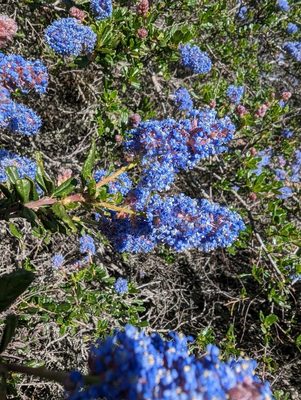
California Lilac
Ceanothus thyrsiflorus
Sheets of true-blue spring flowers on an evergreen shrub that hums with bees on the West Coast.
- Full sun
- Dry
- 6–20 ft
- Blooms Mar–May
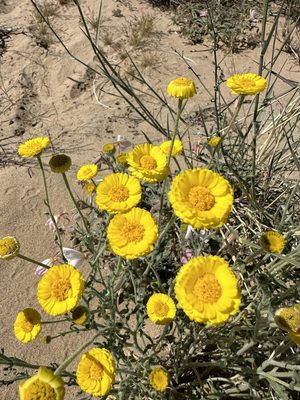
Desert Marigold
Baileya multiradiata
A silver-leaved desert daisy that blooms almost year-round on rainfall alone.
- Full sun
- Dry
- 12–18 in
- Blooms Mar–Oct
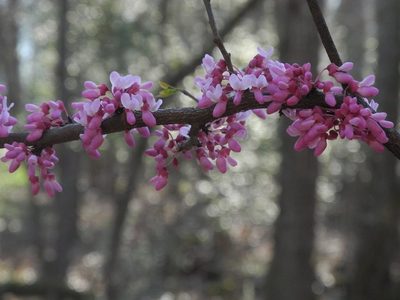
Eastern Redbud
Cercis canadensis
Bare branches erupt in rose-magenta in early spring, and the flowers feed the season's first bees.
- Full–part sun
- Dry–average
- 20–30 ft
- Blooms Mar–Apr
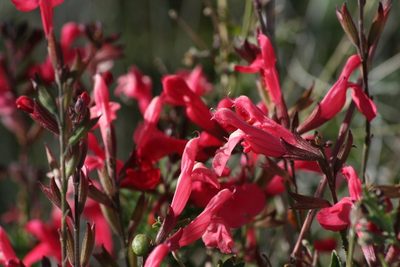
Autumn Sage
Salvia greggii
A tough little evergreen sage that feeds hummingbirds from spring to frost in Texas and the Southwest.
- Full–part sun
- Dry
- 2–3 ft
- Blooms Apr–Oct
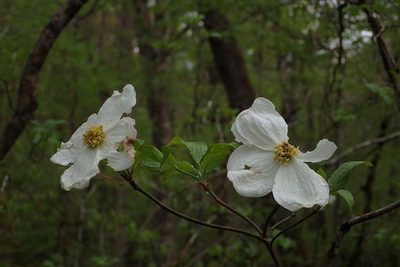
Flowering Dogwood
Cornus florida
The classic understory tree of the eastern woods, with white spring bracts and crimson fall leaves.
- Part shade
- Average
- 15–25 ft
- Blooms Apr–May
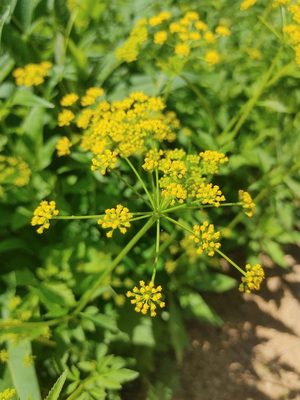
Golden Alexanders
Zizia aurea
Early flat gold heads that feed the first small bees and host the black swallowtail.
- Full–part sun
- Average–wet
- 1.5–2.5 ft
- Blooms Apr–Jun

Saskatoon Serviceberry
Amelanchier alnifolia
White flowers before the leaves, then fruit that tastes like a sweet blueberry, then orange fall color.
- Full–part sun
- Dry–average
- 6–15 ft
- Blooms Apr–May
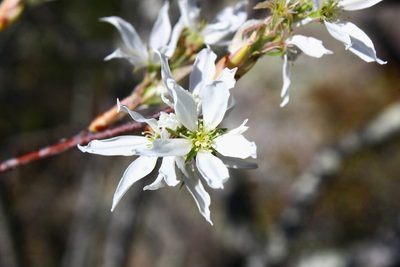
Serviceberry
Amelanchier canadensis
A small four-season tree: white spring flowers, June berries for the birds, and fiery fall color.
- Full–part sun
- Average–wet
- 15–25 ft
- Blooms Apr–May
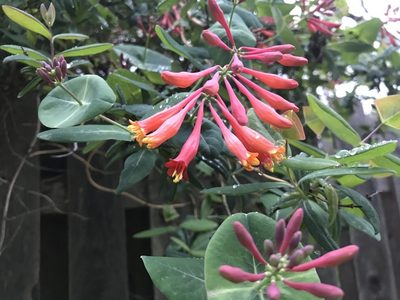
Trumpet Honeysuckle
Lonicera sempervirens
A well-mannered native vine that pours out coral-red hummingbird trumpets from spring to frost.
- Full–part sun
- Dry–average
- 8–15 ft
- Blooms Apr–Sep
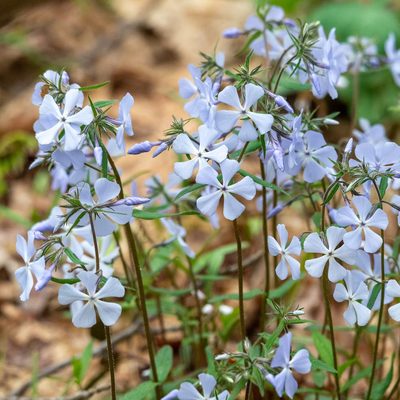
Woodland Phlox
Phlox divaricata
A sweetly fragrant, low spreading phlox that carpets the spring woodland floor in blue.
- Part shade
- Average
- 10–15 in
- Blooms Apr–May

Arrowwood Viburnum
Viburnum dentatum
A bulletproof hedge shrub with white spring flowers, blue fall berries, and burgundy autumn leaves.
- Sun to shade
- Average–wet
- 6–10 ft
- Blooms May–Jun
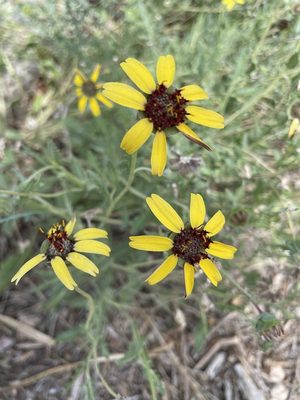
Chocolate Flower
Berlandiera lyrata
Yellow daisies that genuinely smell of chocolate each morning, and bloom all summer in heat.
- Full sun
- Dry
- 1–2 ft
- Blooms May–Sep

Common Yarrow
Achillea millefolium
A near-continental native with flat flower heads that feed tiny beneficial insects, tough as a weed.
- Full sun
- Dry–average
- 1.5–3 ft
- Blooms May–Aug
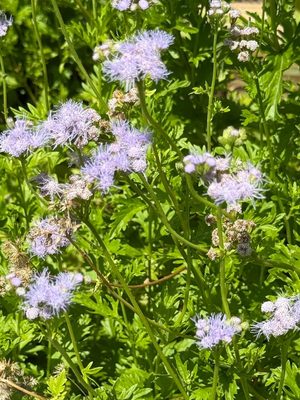
Gregg's Mistflower
Conoclinium greggii
Fuzzy blue flowers that act like a magnet for queen and monarch butterflies in the Southwest.
- Full–part sun
- Dry–average
- 1–2 ft
- Blooms May–Oct
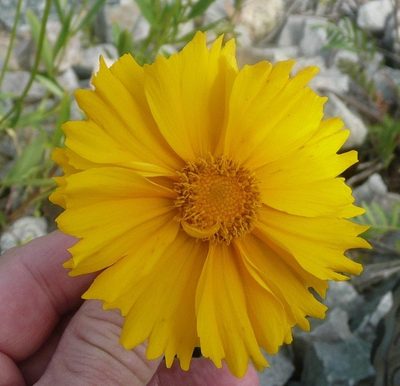
Lanceleaf Coreopsis
Coreopsis lanceolata
Sunny gold daisies for weeks in early summer on the leanest, driest soil you can offer.
- Full sun
- Dry–average
- 1.5–2 ft
- Blooms May–Jul
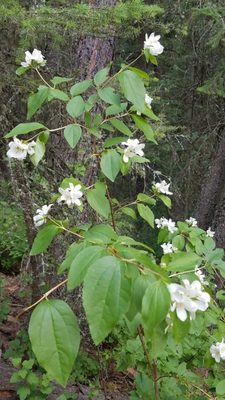
Lewis's Mock Orange
Philadelphus lewisii
Two weeks in early summer when the whole shrub smells of orange blossom, and the rest of the year asking for nothing.
- Full–part sun
- Dry–average
- 5–10 ft
- Blooms May–Jun
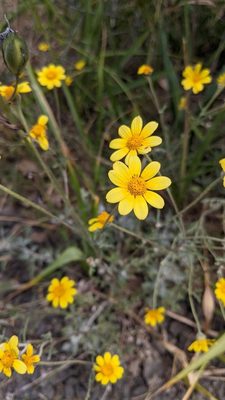
Oregon Sunshine
Eriophyllum lanatum
Silver-woolly foliage under golden daisies, on a plant that treats a hot dry summer as normal weather.
- Full sun
- Dry
- 0.7–2 ft
- Blooms May–Jul
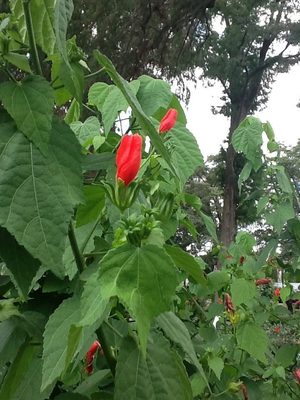
Turk's Cap
Malvaviscus arboreus var. drummondii
One of the few natives that pours out hummingbird-red flowers in dry shade all season long.
- Sun to shade
- Dry–average
- 2–5 ft
- Blooms May–Oct
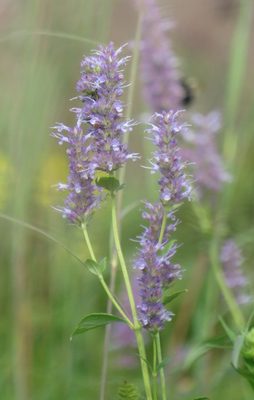
Anise Hyssop
Agastache foeniculum
Months of lavender spikes over licorice-scented foliage, mobbed by bees from dawn to dusk.
- Full–part sun
- Dry–average
- 2–4 ft
- Blooms Jun–Sep
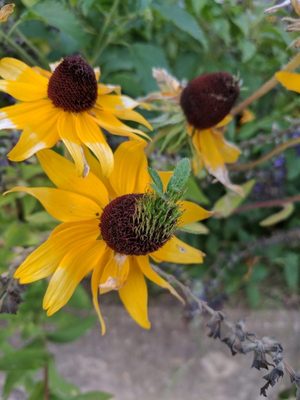
Black-Eyed Susan
Rudbeckia hirta
A cheerful, unkillable starter native that blooms its first year and seeds itself politely around.
- Full–part sun
- Dry–average
- 1.5–3 ft
- Blooms Jun–Sep
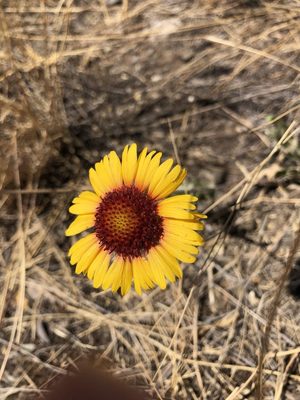
Blanketflower
Gaillardia aristata
Fiery red-and-gold wheels that bloom nonstop all summer on hot, dry, sandy ground.
- Full sun
- Dry
- 1–2.5 ft
- Blooms Jun–Sep

Blue Elderberry
Sambucus cerulea
Fast, big, and covered in flat cream flower heads, then dusty blue fruit that draws every fruit-eating bird in the county.
- Full–part sun
- Average–wet
- 8–20 ft
- Blooms Jun–Jul
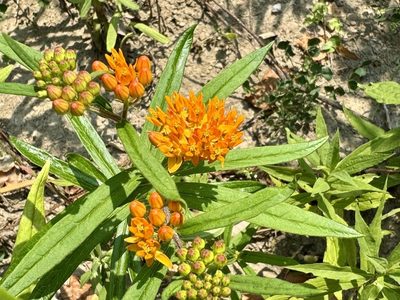
Butterfly Weed
Asclepias tuberosa
A monarch host plant and the brightest orange in the native palette, thriving in lean, dry soil.
- Full sun
- Dry
- 1.5–2.5 ft
- Blooms Jun–Aug

Buttonbush
Cephalanthus occidentalis
Spherical white 'pincushion' flowers over standing water, swarmed by butterflies and bees.
- Full–part sun
- Average–wet
- 5–10 ft
- Blooms Jun–Aug
Butterflies, near you.
Whether a species belongs in your yard depends on where you garden. These state guides cover it.
Where to find butterflies plants
Some links here are affiliate links and we may earn a small commission at no extra cost to you.
What a first-year Butterflies planting needs, from a pH kit to mulch.