- Home
- Plant guide
- Turk's Cap
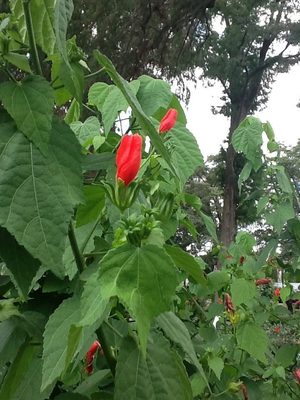
Turk's Cap
Malvaviscus arboreus var. drummondii
One of the few natives that pours out hummingbird-red flowers in dry shade all season long.
Native to: the South-Central region · the Southeast
Growing Turk's Cap
Invaluable for shaded Texas and Gulf gardens where flowering options are thin. Dies back in a hard winter and returns from the root.
Where it belongs
Turk's cap is native to Texas and the Gulf Southeast, growing in the shade of woodland edges, along stream bottoms, and in the understory of coastal live oak and pecan groves.
It solves a specific and difficult problem. In Texas and the Gulf states, the shaded parts of a yard are hot, dry, and root-filled, and almost nothing flowers there. Homeowners plant impatiens and caladiums, which need constant water. This is a native that flowers profusely in exactly that spot and needs very little.
Growing it
Part sun to shade, and full sun with enough water, dry to medium soil, in loam, clay, or rocky ground, zones 7 to 10. Two to five feet, and often as wide.
It is in the mallow family, related to hibiscus and okra, and the flower is a scarlet hibiscus whose petals stay furled into a loose turban that never opens. That closed shape is the identifying feature and the reason for the name.
In shade it stays lower and looser; in more sun it is denser and needs more water. Give it room, because a mature plant can be five feet across.
In a hard winter it dies back to the ground and returns from the root in spring, which is normal for its northern range and not a loss. Do not cut the dead stems until new growth appears.
Cut it back hard in late winter to keep it dense.
What it feeds
Hummingbirds are the main visitors, and the closed flower is built for them: a bird pushes its bill between the furled petals to reach nectar at the base while the protruding stamen column dusts its forehead.
Butterflies work it heavily, and it is a nectar plant for swallowtails and the Gulf fritillary. It hosts several skippers.
The bloom runs from May to October, covering the entire hummingbird season in its range including fall migration along the Gulf coast.
After the flowers come small red fruit that birds eat and that are edible to people as well, mealy and mildly sweet, tasting somewhere between apple and watermelon.
Living with it
Deer generally leave it alone.
It spreads slowly by root suckers into a colony, which is useful for filling a shaded bed and worth knowing if you want a single specimen.
There is a Mexican relative with much larger, more upright flowers sold under the same common name. The native Texas variety is the smaller, spreading one with the tight turban flower.
Sources: USDA PLANTS Database (native range and nomenclature); Lady Bird Johnson Wildflower Center, University of Texas at Austin (species profile); Texas Parks and Wildlife (hummingbird and butterfly plantings for shaded Gulf gardens).
It’s deer-resistant, drought-tolerant, and long-blooming.Where it grows
Turk's Cap is native to the South-Central region. In the wild you’ll find it across Alabama · Arkansas · Delaware · Florida · Georgia · Kentucky · Louisiana · Maryland · Mississippi · Missouri and 7 more states. Always confirm it suits your specific county with your state native plant society before planting.
Regional Garden has written state guides covering Turk's Cap in 17 of them so far.
Good for
Where to buy Turk's Cap
Some links here are affiliate links and we may earn a small commission at no extra cost to you.
What a first-year Turk's Cap planting needs, from a pH kit to mulch.
Companions & kin.
Natives that share Turk's Cap’s range and conditions.

Wild Bergamot
Monarda fistulosa
Ragged lavender crowns that hum with bees, hummingbirds, and clearwing moths; foliage smells of oregano.
- Full–part sun
- Dry–average
- 2–4 ft
- Blooms Jun–Aug
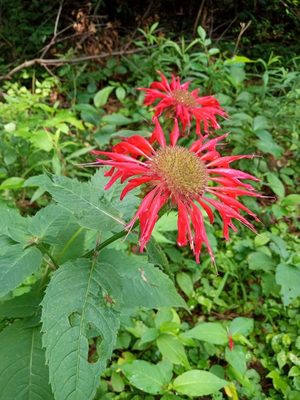
Scarlet Beebalm
Monarda didyma
A hummingbird magnet with fireworks-red blooms for moist, rich soil at a woodland edge.
- Full–part sun
- Average–wet
- 2.5–4 ft
- Blooms Jul–Aug
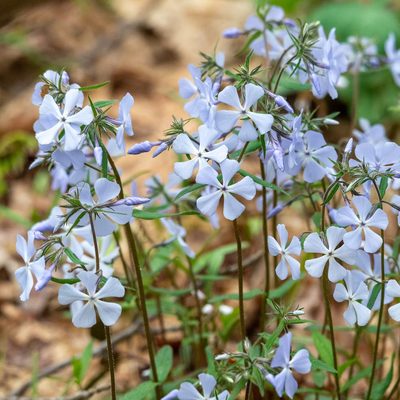
Woodland Phlox
Phlox divaricata
A sweetly fragrant, low spreading phlox that carpets the spring woodland floor in blue.
- Part shade
- Average
- 10–15 in
- Blooms Apr–May

Buttonbush
Cephalanthus occidentalis
Spherical white 'pincushion' flowers over standing water, swarmed by butterflies and bees.
- Full–part sun
- Average–wet
- 5–10 ft
- Blooms Jun–Aug