- Home
- Plant guide
- Wild Bergamot

Alan Rockefeller (CC BY)
Wild Bergamot
Monarda fistulosa
Ragged lavender crowns that hum with bees, hummingbirds, and clearwing moths; foliage smells of oregano.
Native to: the Northeast · the Mid-Atlantic · the Southeast · the Midwest · the Great Plains · the South-Central region · the Mountain West
Growing Wild Bergamot
One of the best all-round pollinator plants for dry, sunny ground. Give it air movement to limit late-summer powdery mildew.
Where it belongs
Wild bergamot is native across nearly the entire United States, in prairie, open woodland edge, and dry meadow. It is one of the most broadly distributed and most useful natives available.
It is a mint family plant, which explains both the square stems and the aromatic leaves, but unlike most garden mints it forms a clump and expands slowly rather than running everywhere.
Growing it
Full sun to light shade, on average to dry soil with real drainage. It handles poor ground and drought well once established, and it declines in heavy wet soil.
Powdery mildew is the one recurring complaint and it is mostly a spacing problem. The plant evolved in open prairie with air moving through it; planted tight against a fence or crowded into a border it mildews in humid summers. Give it room, thin the stems in spring if the clump is dense, and site it where air moves. The mildew is unsightly rather than harmful.
Cutting stems back by a third in late spring produces a shorter, sturdier plant that stands better.
What it feeds
This is one of the strongest pollinator plants in the guide, and unusually broad in what it serves. The tubular florets are deep enough for long-tongued bumblebees, hawk moths, and hummingbirds, while the clustered head lets butterflies land and work it. It flowers through midsummer, bridging the gap between spring and the late asters and goldenrods.
It is also a larval host for several moths.
Deer
The aromatic foliage means deer walk past it. In areas under heavy browsing pressure, wild bergamot, mountain mint, and the other aromatic mint-family natives are the reliable backbone of a planting when coneflowers and asters get grazed to the ground.
Living with it
Long-lived, spreading gently outward. Divide every few years if the center thins, or leave it. Leave the seed heads standing: goldfinches take the seed, and the hollow stems shelter overwintering insects.
Sources: USDA PLANTS Database (native status and range); Xerces Society for Invertebrate Conservation (pollinator value); Mt. Cuba Center (Monarda trial results on mildew resistance and pollinator visitation).
It’s deer-resistant, drought-tolerant, fragrant, and long-blooming.Where it grows
Wild Bergamot is native to the Northeast. In the wild you’ll find it across Alabama · Arizona · Arkansas · Colorado · Connecticut · Delaware · Florida · Georgia · Idaho · Illinois and 35 more states. Always confirm it suits your specific county with your state native plant society before planting.
Regional Garden has written state guides covering Wild Bergamot in 45 of them so far.
Good for
Where to buy Wild Bergamot
Some links here are affiliate links and we may earn a small commission at no extra cost to you.
What a first-year Wild Bergamot planting needs, from a pH kit to mulch.
Companions & kin.
Natives that share Wild Bergamot’s range and conditions.
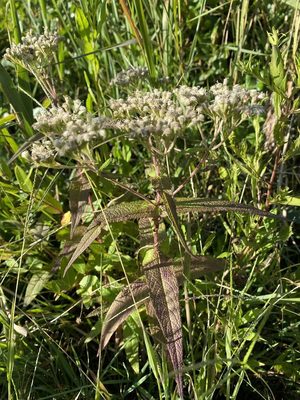
Common Boneset
Eupatorium perfoliatum
Frothy white heads alive with small native bees and wasps, for ground that stays damp.
- Full–part sun
- Average–wet
- 3–5 ft
- Blooms Aug–Sep

Common Yarrow
Achillea millefolium
A near-continental native with flat flower heads that feed tiny beneficial insects, tough as a weed.
- Full sun
- Dry–average
- 1.5–3 ft
- Blooms May–Aug
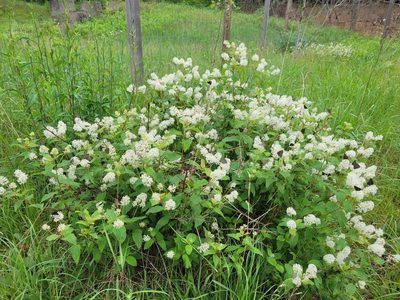
New Jersey Tea
Ceanothus americanus
A compact, drought-proof shrub frothing with white flowers that pollinators and hummingbirds adore.
- Full–part sun
- Dry
- 2–3.5 ft
- Blooms May–Jul
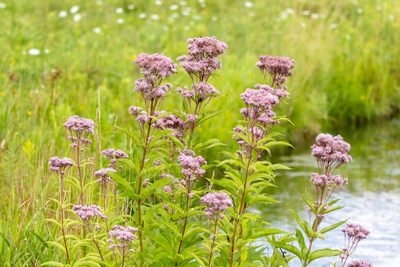
Spotted Joe-Pye Weed
Eutrochium maculatum
Statuesque domes of vanilla-scented mauve that swallowtails and monarchs cover in late summer.
- Full–part sun
- Average–wet
- 4–7 ft
- Blooms Jul–Sep