- Home
- Plant guide
- Common Boneset
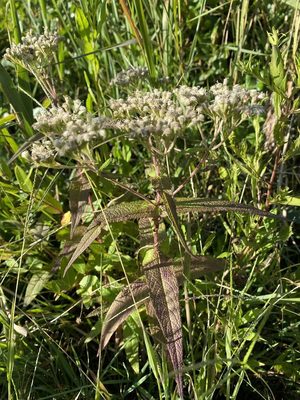
Zihao Wang (CC BY)
Common Boneset
Eupatorium perfoliatum
Frothy white heads alive with small native bees and wasps, for ground that stays damp.
Native to: the Northeast · the Mid-Atlantic · the Southeast · the Midwest · the Great Plains
Growing Common Boneset
Among the most diverse pollinator plants there is. Count the species on it on a warm August afternoon. Thrives where most perennials sulk from wet feet.
Where it belongs
Boneset grows through the East, Midwest, and eastern Plains, in marshes, wet meadows, ditches, and along the edges of ponds and slow water. Its company is Joe-Pye weed, blue vervain, and swamp milkweed, and it wants the same wet feet they do.
Nobody plants it for looks. The flowers are small, dull white, and held in flat crowded clusters, and next to a coneflower it reads as a weed. It is here for what lands on it.
Growing it
Full sun to part sun, wet to medium soil, in loam or clay, zones 3 to 8. Three to five feet.
The identifying feature is the leaf. Two leaves meet and fuse around the stem so that the stem appears to pass straight through a single leaf, which is what perfoliatum means. Once you have seen it you cannot mistake the plant for anything else.
It is genuinely easy in wet ground and will reseed there. In a dry bed it struggles, which is the only real way to fail with it.
The common name comes from a historical medicinal use for a fever, not from anything to do with mending bones. The plant contains compounds now considered unsafe to consume, and it is grown as habitat, not as an herb.
What it feeds
Sit beside a flowering boneset on a warm afternoon in late August and count species. Most people stop somewhere past twenty.
The flowers are tiny, shallow, and packed flat, which means short-tongued insects can reach the nectar. That opens it to the enormous group of small native bees, solitary wasps, flower flies, beetles, and small butterflies that cannot use deep tubular flowers at all. Those insects are the bulk of pollinator diversity and the part most gardens feed poorly.
Predatory and parasitoid wasps come for the nectar as adults while their larvae are consuming pest insects elsewhere in the yard, which is a quieter benefit.
Living with it
Deer generally avoid it; the foliage is bitter.
It reseeds freely in open wet soil. In a rain garden or meadow that is a feature. In a planned bed, cut the heads before seed ripens.
Leave the stems standing over winter, then cut back in spring.
Sources: USDA PLANTS Database (native range); Lady Bird Johnson Wildflower Center, University of Texas at Austin (species profile); Xerces Society (flower architecture and short-tongued pollinator access).
It’s easy to grow.Where it grows
Common Boneset is native to the Northeast. In the wild you’ll find it across Alabama · Arkansas · Colorado · Connecticut · Delaware · Florida · Georgia · Illinois · Indiana · Iowa and 32 more states. Always confirm it suits your specific county with your state native plant society before planting.
Regional Garden has written state guides covering Common Boneset in 42 of them so far.
Good for
Where to buy Common Boneset
Some links here are affiliate links and we may earn a small commission at no extra cost to you.
What a first-year Common Boneset planting needs, from a pH kit to mulch.
Companions & kin.
Natives that share Common Boneset’s range and conditions.
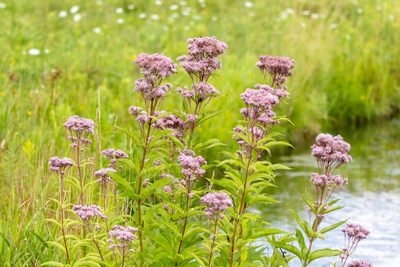
Spotted Joe-Pye Weed
Eutrochium maculatum
Statuesque domes of vanilla-scented mauve that swallowtails and monarchs cover in late summer.
- Full–part sun
- Average–wet
- 4–7 ft
- Blooms Jul–Sep

Wild Bergamot
Monarda fistulosa
Ragged lavender crowns that hum with bees, hummingbirds, and clearwing moths; foliage smells of oregano.
- Full–part sun
- Dry–average
- 2–4 ft
- Blooms Jun–Aug
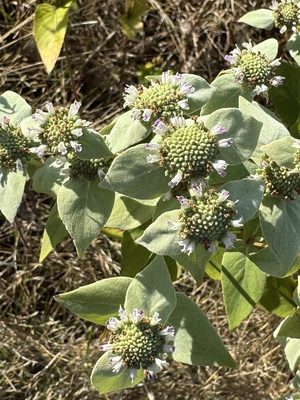
Short-Toothed Mountain Mint
Pycnanthemum muticum
Trial after trial names it the single most attractive plant to pollinators, and deer won't touch it.
- Full–part sun
- Dry–average
- 2–3 ft
- Blooms Jul–Sep
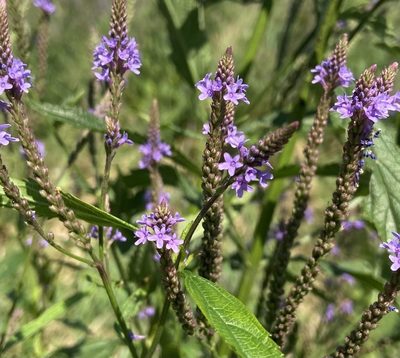
Blue Vervain
Verbena hastata
Candelabras of tiny violet flowers for wet ground, working for small native bees all summer.
- Full–part sun
- Average–wet
- 3–5 ft
- Blooms Jul–Sep