- Home
- Plant guide
- Spotted Joe-Pye Weed
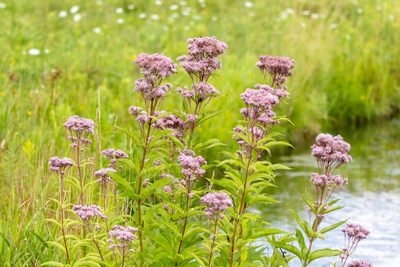
Andrew Murray (CC BY)
Spotted Joe-Pye Weed
Eutrochium maculatum
Statuesque domes of vanilla-scented mauve that swallowtails and monarchs cover in late summer.
Native to: the Northeast · the Mid-Atlantic · the Southeast · the Midwest · the Great Plains
Growing Spotted Joe-Pye Weed
A back-of-border anchor that reaches head height in moist soil. One of the highest-value butterfly nectar plants you can grow.
Where it belongs
Spotted Joe-Pye weed grows across the Northeast, Mid-Atlantic, Southeast, Midwest, and eastern Plains, in wet meadows, along streams, in ditches, and at the damp edges of thickets.
The name has a story attached about a healer who used the plant, repeated everywhere and hard to verify. What is not in doubt is the plant's size: it reaches four to seven feet in good ground, which puts the flowers at eye level and above.
Of the several Joe-Pye species, this is the one with the purple-spotted stem and the flattest flower heads, and it tolerates the most moisture.
Growing it
Full sun to part sun, wet to medium soil, in loam or clay, zones 3 to 8.
Moisture drives the height. In a wet swale it will hit seven feet. In ordinary garden soil that dries in summer it may stop at four and the lower leaves will brown. Neither is wrong, but plan the position for the size you will actually get.
It is a clump-former and does not run. It does reseed in open damp ground, moderately, which is easy to pull.
If the full height is too much for the spot, cut all the stems back by a third in early June. It will flower shorter and slightly later, on sturdier stems. Skipping that cut is fine in a place with room.
What it feeds
This is the plant to stand next to in late August. The flat mauve domes hold tiger swallowtails, monarchs, great spangled fritillaries, and painted ladies at the same time, and a mature clump can carry a dozen butterflies at once.
The nectar volume is unusually high, which is why it outperforms most of what gets sold as a butterfly plant. Bees of every size work it, and specialist bees collect from this genus. Clearwing moths visit by day.
The flowers carry a light vanilla scent, strongest in warm afternoon sun.
Living with it
Deer will browse it where pressure is high, usually taking the tops in early summer.
Give it room. A crowded plant with poor airflow gets powdery mildew on the lower leaves late in the season, which is cosmetic and largely preventable by spacing.
The seed heads fade to a soft buff and hold their shape through winter, feeding small birds. Cut back in spring.
Sources: USDA PLANTS Database (native range and nomenclature); Lady Bird Johnson Wildflower Center, University of Texas at Austin (species profile); Xerces Society (butterfly nectar value and specialist bees).
It’s showy, and fragrant.Where it grows
Spotted Joe-Pye Weed is native to the Northeast. In the wild you’ll find it across Alabama · Arkansas · Colorado · Connecticut · Delaware · Florida · Georgia · Illinois · Indiana · Iowa and 32 more states. Always confirm it suits your specific county with your state native plant society before planting.
Regional Garden has written state guides covering Spotted Joe-Pye Weed in 42 of them so far.
Good for
Where to buy Spotted Joe-Pye Weed
Some links here are affiliate links and we may earn a small commission at no extra cost to you.
What a first-year Spotted Joe-Pye Weed planting needs, from a pH kit to mulch.
Companions & kin.
Natives that share Spotted Joe-Pye Weed’s range and conditions.
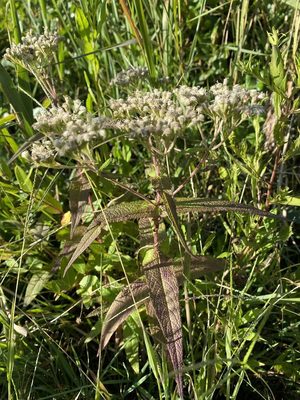
Common Boneset
Eupatorium perfoliatum
Frothy white heads alive with small native bees and wasps, for ground that stays damp.
- Full–part sun
- Average–wet
- 3–5 ft
- Blooms Aug–Sep

Wild Bergamot
Monarda fistulosa
Ragged lavender crowns that hum with bees, hummingbirds, and clearwing moths; foliage smells of oregano.
- Full–part sun
- Dry–average
- 2–4 ft
- Blooms Jun–Aug
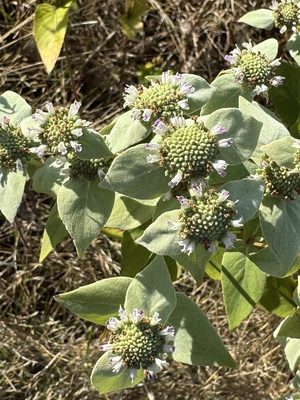
Short-Toothed Mountain Mint
Pycnanthemum muticum
Trial after trial names it the single most attractive plant to pollinators, and deer won't touch it.
- Full–part sun
- Dry–average
- 2–3 ft
- Blooms Jul–Sep
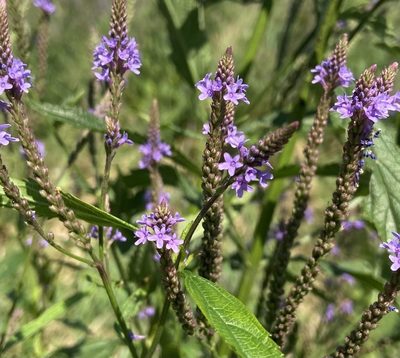
Blue Vervain
Verbena hastata
Candelabras of tiny violet flowers for wet ground, working for small native bees all summer.
- Full–part sun
- Average–wet
- 3–5 ft
- Blooms Jul–Sep