- Home
- Collections
- Clay soil
Native Plants for Clay Soil
Native plants that root happily into heavy clay, the dense, slow-draining soil that defeats so many garden-center perennials.
What clay actually is
Clay particles are extremely small and flat, and they pack tightly with little pore space between them. The consequences follow from that geometry: water moves through slowly, the soil holds a lot of it, and when it dries it shrinks and cracks into something close to brick.
The upside is rarely mentioned. Clay is chemically rich. It holds nutrients far better than sand does, and once a plant's roots are into it, it supplies steady moisture through dry spells that would kill the same plant in sandy soil.
The tallgrass prairies of the Midwest grew on heavy clay-rich soils. So did the plants.
The compost-in-a-hole mistake
The standard advice is to dig a hole, mix the excavated clay with compost, and plant into the improved mix.
This produces a container. Water moves into the loose amended pocket and then stops at the boundary with the surrounding clay, because water does not readily cross from one soil texture into a different one. The hole fills, the roots sit in it, and the plant drowns. Roots also tend to circle inside the pleasant pocket rather than pushing into the native soil, so the plant never establishes properly.
Plant into the native soil instead. Dig the hole no deeper than the root ball and two to three times as wide, set the plant slightly high, and backfill with what came out. Spread compost on the surface as mulch and let it work down.
What genuinely improves clay
Organic matter added at the surface, over time, and roots.
The deep fibrous root systems of prairie natives penetrate compacted clay, create channels, and add organic matter as older roots die back and decompose. This is how prairie soils were built in the first place, and it works in a garden on a scale of years rather than a season.
Foxglove beardtongue, stiff goldenrod, purple coneflower, big bluestem, and switchgrass are all effective at it and untroubled by the conditions while they work.
Practical rules for a clay garden
Do not work clay when it is wet. Digging or walking on saturated clay compacts it badly and the damage takes years to undo. Wait until a handful crumbles instead of smearing.
Plant in fall or early spring, when the soil is workable and the plant has time before summer.
Set plants slightly high, with the crown at or just above grade, since crown rot in winter-wet clay is the most common cause of loss.
And consider raising the whole bed a few inches if the site holds standing water. That is a smaller intervention than trying to change the soil, and it works.
Sources: Lady Bird Johnson Wildflower Center, University of Texas at Austin (species profiles and soil tolerance); US Department of Agriculture Natural Resources Conservation Service (soil texture, water movement, and prairie soil formation); university extension guidance on planting in heavy soils.
57 native species in this collection.
Heavy clay is actually fertile and moisture-holding; the trick is choosing plants whose deep, muscular roots can punch through it and even improve it over time. Avoid working clay when it is wet, plant a little high to keep crowns from sitting in water, and mulch to keep the surface from baking into a crust. These natives do the soil-building for you.
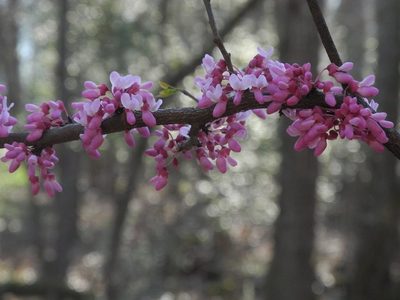
Eastern Redbud
Cercis canadensis
Bare branches erupt in rose-magenta in early spring, and the flowers feed the season's first bees.
- Full–part sun
- Dry–average
- 20–30 ft
- Blooms Mar–Apr
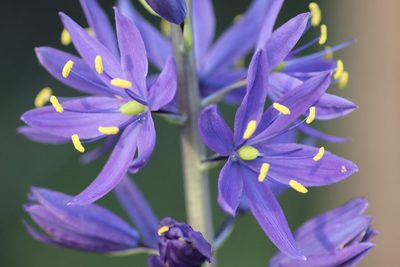
Common Camas
Camassia quamash
The blue that used to run across Northwest prairies in spring, and the one bulb that actually wants a wet winter.
- Full–part sun
- Average–wet
- 1–2.5 ft
- Blooms Apr–May
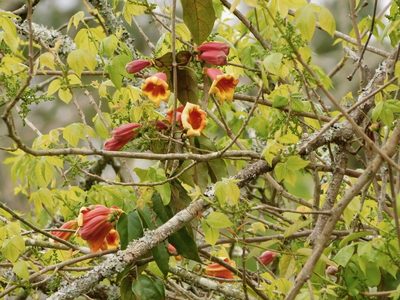
Crossvine
Bignonia capreolata
A vigorous, semi-evergreen climber that smothers a fence in orange-red trumpets each spring.
- Full–part sun
- Dry–average
- 25–50 ft
- Blooms Apr–May
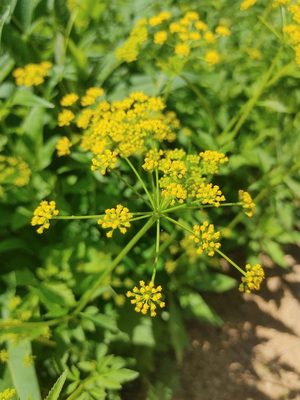
Golden Alexanders
Zizia aurea
Early flat gold heads that feed the first small bees and host the black swallowtail.
- Full–part sun
- Average–wet
- 1.5–2.5 ft
- Blooms Apr–Jun
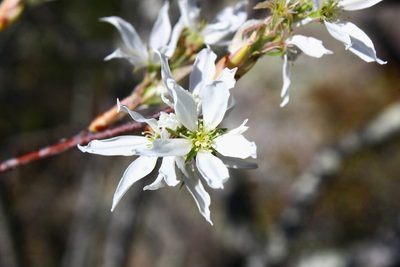
Serviceberry
Amelanchier canadensis
A small four-season tree: white spring flowers, June berries for the birds, and fiery fall color.
- Full–part sun
- Average–wet
- 15–25 ft
- Blooms Apr–May
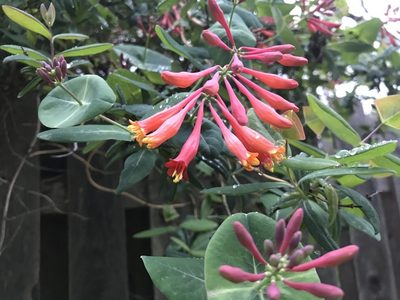
Trumpet Honeysuckle
Lonicera sempervirens
A well-mannered native vine that pours out coral-red hummingbird trumpets from spring to frost.
- Full–part sun
- Dry–average
- 8–15 ft
- Blooms Apr–Sep

Arrowwood Viburnum
Viburnum dentatum
A bulletproof hedge shrub with white spring flowers, blue fall berries, and burgundy autumn leaves.
- Sun to shade
- Average–wet
- 6–10 ft
- Blooms May–Jun

Common Yarrow
Achillea millefolium
A near-continental native with flat flower heads that feed tiny beneficial insects, tough as a weed.
- Full sun
- Dry–average
- 1.5–3 ft
- Blooms May–Aug
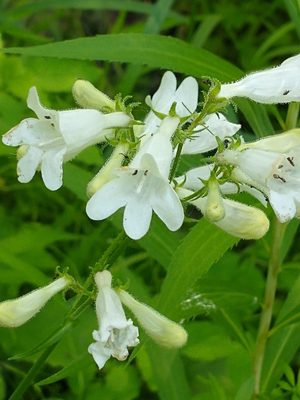
Foxglove Beardtongue
Penstemon digitalis
Airy white bells in early summer, a bridge bloom between spring ephemerals and the summer prairie.
- Full–part sun
- Dry–average
- 2–4 ft
- Blooms May–Jun
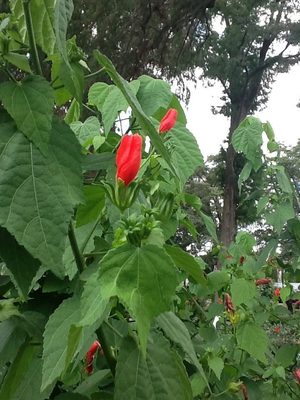
Turk's Cap
Malvaviscus arboreus var. drummondii
One of the few natives that pours out hummingbird-red flowers in dry shade all season long.
- Sun to shade
- Dry–average
- 2–5 ft
- Blooms May–Oct
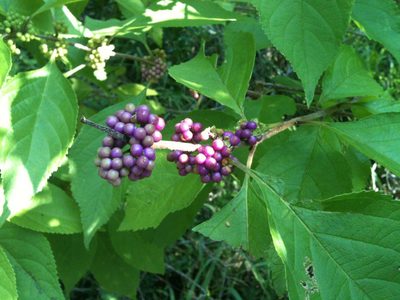
American Beautyberry
Callicarpa americana
Unreal clusters of metallic-purple berries hug the stems in fall and feed dozens of bird species.
- Full–part sun
- Dry–average
- 4–7 ft
- Blooms Jun–Jul
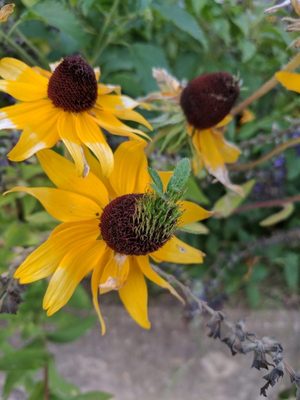
Black-Eyed Susan
Rudbeckia hirta
A cheerful, unkillable starter native that blooms its first year and seeds itself politely around.
- Full–part sun
- Dry–average
- 1.5–3 ft
- Blooms Jun–Sep

Blue Elderberry
Sambucus cerulea
Fast, big, and covered in flat cream flower heads, then dusty blue fruit that draws every fruit-eating bird in the county.
- Full–part sun
- Average–wet
- 8–20 ft
- Blooms Jun–Jul
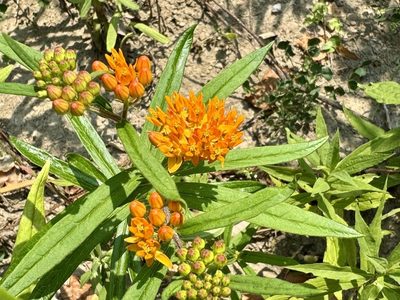
Butterfly Weed
Asclepias tuberosa
A monarch host plant and the brightest orange in the native palette, thriving in lean, dry soil.
- Full sun
- Dry
- 1.5–2.5 ft
- Blooms Jun–Aug

Buttonbush
Cephalanthus occidentalis
Spherical white 'pincushion' flowers over standing water, swarmed by butterflies and bees.
- Full–part sun
- Average–wet
- 5–10 ft
- Blooms Jun–Aug
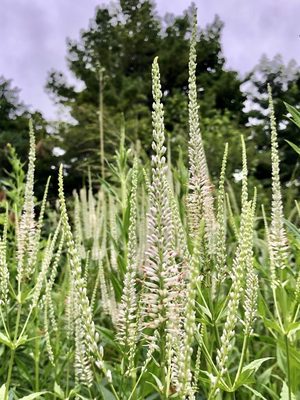
Culver's Root
Veronicastrum virginicum
Elegant white candelabra spires that bring vertical structure and a haze of bees to midsummer.
- Full–part sun
- Average–wet
- 3–5 ft
- Blooms Jun–Aug
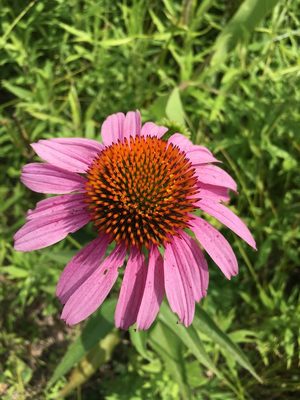
Purple Coneflower
Echinacea purpurea
The garden workhorse: months of nectar for bees and butterflies, then seed heads goldfinches strip all winter.
- Full–part sun
- Dry–average
- 2–4 ft
- Blooms Jun–Sep
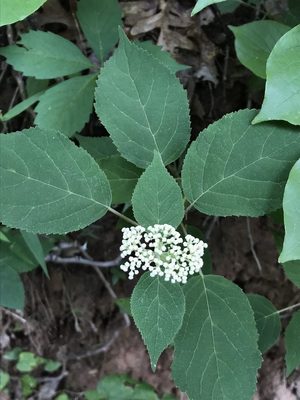
Smooth Hydrangea
Hydrangea arborescens
The native parent of the 'Annabelle' hydrangea, with white summer domes for shade.
- Part shade
- Average
- 3–5 ft
- Blooms Jun–Aug

Wild Bergamot
Monarda fistulosa
Ragged lavender crowns that hum with bees, hummingbirds, and clearwing moths; foliage smells of oregano.
- Full–part sun
- Dry–average
- 2–4 ft
- Blooms Jun–Aug
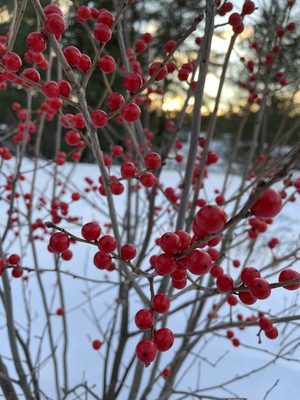
Winterberry
Ilex verticillata
A deciduous holly that drops its leaves to reveal branches packed with brilliant red winter berries.
- Full–part sun
- Average–wet
- 5–10 ft
- Blooms Jun–Jul
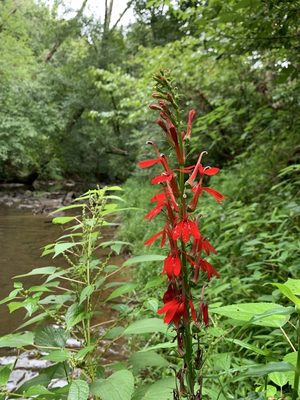
Cardinal Flower
Lobelia cardinalis
The most intense red in the native flora, built for the hummingbirds that pollinate it.
- Full–part sun
- Average–wet
- 2–4 ft
- Blooms Jul–Sep
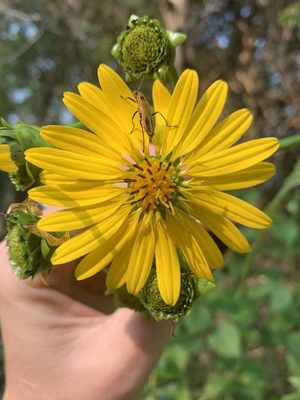
Cup Plant
Silphium perfoliatum
A prairie giant whose paired leaves hold rainwater for birds; goldfinches mob the seeds.
- Full–part sun
- Average–wet
- 5–8 ft
- Blooms Jul–Sep
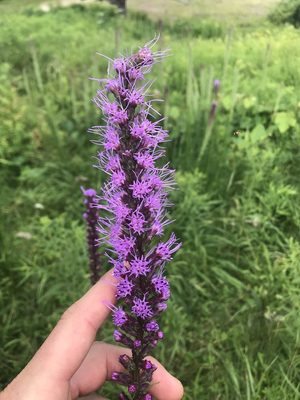
Dense Blazing Star
Liatris spicata
Vertical wands of magenta that open top-down and pull in every swallowtail in the neighborhood.
- Full sun
- Average–wet
- 2–4 ft
- Blooms Jul–Aug
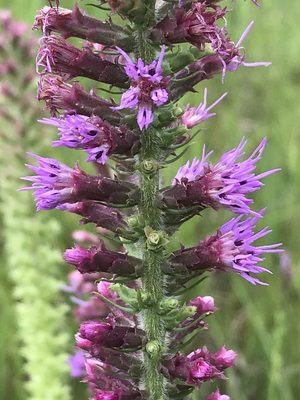
Prairie Blazing Star
Liatris pycnostachya
The tallest blazing star, a five-foot torch of purple over the high-summer prairie.
- Full sun
- Dry–average
- 3–5 ft
- Blooms Jul–Aug
Clay soil, near you.
Whether a species belongs in your yard depends on where you garden. These state guides cover it.
Where to find clay soil plants
Some links here are affiliate links and we may earn a small commission at no extra cost to you.
What a first-year Clay soil planting needs, from a pH kit to mulch.