- Home
- Plant guide
- Winterberry
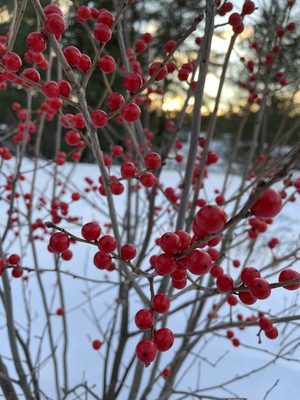
Winterberry
Ilex verticillata
A deciduous holly that drops its leaves to reveal branches packed with brilliant red winter berries.
Native to: the Northeast · the Mid-Atlantic · the Southeast · the Midwest
Growing Winterberry
The classic red berries for winter, blazing against snow and stripped by robins late in the season. Needs one male plant nearby to set fruit.
Where it belongs
Winterberry is native to the Northeast, Mid-Atlantic, Southeast, and Midwest, growing in swamps, wet thickets, pond margins, and the low wet ground along streams.
It is a deciduous holly, which surprises people who expect hollies to be evergreen. That habit is exactly what makes it valuable. An evergreen holly hides its fruit among dark leaves; this one drops every leaf and leaves the red berries alone on bare gray stems, and against snow the effect is the strongest winter display in the native flora.
Growing it
Full sun to part sun, wet to medium soil, in loam or clay, zones 3 to 9. Five to ten feet tall and as wide.
Wet ground is its preference. It handles seasonal flooding and is a standard rain garden and pond-edge plant. It also grows in ordinary garden soil that stays moist.
It wants acidic soil. In alkaline conditions the foliage yellows and the plant declines.
It suckers into a thicket over time. Remove suckers annually for a single specimen, or let it colonize where a thicket is welcome.
The pollination requirement is the thing to get right. Plants are male or female, and only females fruit. You need one male within about fifty feet of the females, and the bloom times must overlap: Southern Gentleman pollinates Winter Red and other late bloomers, Jim Dandy pollinates the early ones such as Red Sprite. Buying only females, or mismatching the pair, is the most common reason a winterberry planting has no berries.
What it feeds
The flowers in June and July are tiny and greenish-white and easy to miss, and bees work them steadily.
The fruit ripens in September and holds on the branches into the new year, which is the part that matters ecologically. It is low in fat, which means birds generally leave it until better food is gone, so it functions as a late-winter reserve rather than a fall meal. Robins, cedar waxwings, and bluebirds strip it in January and February, often a whole shrub in a single visit.
Several moths use it as a host, and the thicket provides winter cover.
Living with it
Deer will browse it.
The berries are mildly toxic to people and should not be eaten.
Branches cut for indoor arrangements are a legitimate use, and cutting a few does not meaningfully reduce what the birds get from an established shrub.
There is no pruning to do beyond removing dead wood and managing suckers. Do it in early spring.
Sources: USDA PLANTS Database (native range); Lady Bird Johnson Wildflower Center, University of Texas at Austin (species profile and pollination); Cornell Lab of Ornithology (winter fruit and fat content in bird diets); Mt. Cuba Center (Ilex verticillata trial results on cultivar pairing and fruit set).
It’s good for winter interest, showy, and salt-tolerant.Where it grows
Winterberry is native to the Northeast. In the wild you’ll find it across Alabama · Arkansas · Connecticut · Delaware · Florida · Georgia · Illinois · Indiana · Iowa · Kentucky and 24 more states. Always confirm it suits your specific county with your state native plant society before planting.
Regional Garden has written state guides covering Winterberry in 34 of them so far.
Good for
Where to buy Winterberry
Some links here are affiliate links and we may earn a small commission at no extra cost to you.
What a first-year Winterberry planting needs, from a pH kit to mulch.
Companions & kin.
Natives that share Winterberry’s range and conditions.
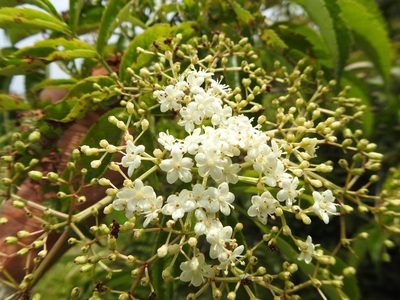
American Elderberry
Sambucus canadensis
Big lacy flower heads in summer give way to purple-black berries for both birds and your kitchen.
- Full–part sun
- Average–wet
- 6–12 ft
- Blooms Jun–Jul

Arrowwood Viburnum
Viburnum dentatum
A bulletproof hedge shrub with white spring flowers, blue fall berries, and burgundy autumn leaves.
- Sun to shade
- Average–wet
- 6–10 ft
- Blooms May–Jun

Buttonbush
Cephalanthus occidentalis
Spherical white 'pincushion' flowers over standing water, swarmed by butterflies and bees.
- Full–part sun
- Average–wet
- 5–10 ft
- Blooms Jun–Aug
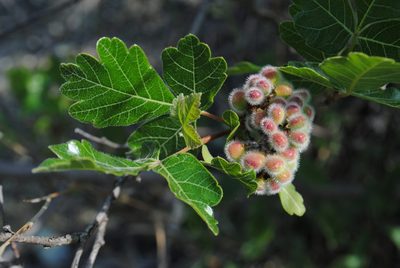
Fragrant Sumac
Rhus aromatica
A low, spreading shrub that blankets dry banks and blazes scarlet and orange in fall.
- Full–part sun
- Dry
- 2–6 ft
- Blooms Mar–Apr