- Home
- Plant guide
- Buttonbush

Buttonbush
Cephalanthus occidentalis
Spherical white 'pincushion' flowers over standing water, swarmed by butterflies and bees.
Native to: the Northeast · the Mid-Atlantic · the Southeast · the Midwest · the Great Plains · the South-Central region · California
Growing Buttonbush
The premier native shrub for soggy ground, pond edges, and rain gardens. Waterfowl and songbirds eat the button-like seed heads.
Where it belongs
Buttonbush grows across the East, Midwest, Plains, Texas, and parts of California, in swamps, marshes, pond margins, and the shallow edges of slow streams. It routinely grows with its roots submerged.
That is what makes it useful. Almost every shrub sold at a garden center will die in ground that holds water, and the wet corner of a yard is a chronic problem. This is the plant that solves it, and it is native across most of the country.
Growing it
Full sun to part sun, wet to medium soil, in clay or loam, zones 5 to 9. Five to ten feet tall and four to eight feet wide.
Wet is the preference, not merely the tolerance. It takes standing water for long periods and it accepts ordinary garden soil that stays moist. It will not tolerate a dry site.
The habit is loose, open, and somewhat rangy, with coarse glossy leaves. It leafs out very late in spring, often not until May, and gardeners regularly conclude it is dead. Wait.
It responds well to hard pruning. Cutting it back to a foot in late winter every few years produces a denser, better-shaped plant and does not cost the flowers, which come on new wood.
It is one of the standard plants for rain gardens, detention basins, and shoreline stabilization, and it is planted at scale for that purpose.
What it feeds
The flower is a perfect white sphere about an inch across, made of dozens of tiny tubular flowers with long protruding styles, so it looks like a pincushion. They open in June through August.
Butterflies are the headline. Swallowtails and monarchs work the heads persistently, and a flowering shrub in July can hold several at a time. Bees of all sizes visit, and hummingbirds take nectar. Several moths use it as a host plant.
The flowers become hard round seed balls that persist into winter. Waterfowl eat them, and mallards and wood ducks are documented feeding on them, which is a genuinely unusual thing for a garden shrub to offer.
Living with it
Deer will browse it, particularly young plants.
The foliage is toxic to livestock and is not something to plant in a pasture.
The seed balls hold on through winter and give the bare shrub some structure. There is no fall cleanup.
Sources: USDA PLANTS Database (native range); Lady Bird Johnson Wildflower Center, University of Texas at Austin (species profile); USDA Natural Resources Conservation Service (plant guide, wetland restoration and waterfowl use).
It’s showy, and salt-tolerant.Where it grows
Buttonbush is native to the Northeast. In the wild you’ll find it across Alabama · Arkansas · California · Colorado · Connecticut · Delaware · Florida · Georgia · Illinois · Indiana and 34 more states. Always confirm it suits your specific county with your state native plant society before planting.
Regional Garden has written state guides covering Buttonbush in 44 of them so far.
Good for
Where to buy Buttonbush
Some links here are affiliate links and we may earn a small commission at no extra cost to you.
What a first-year Buttonbush planting needs, from a pH kit to mulch.
Companions & kin.
Natives that share Buttonbush’s range and conditions.
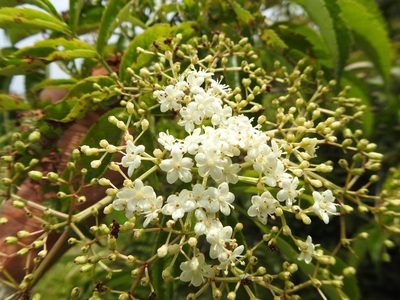
American Elderberry
Sambucus canadensis
Big lacy flower heads in summer give way to purple-black berries for both birds and your kitchen.
- Full–part sun
- Average–wet
- 6–12 ft
- Blooms Jun–Jul
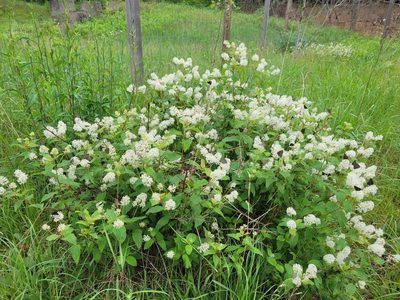
New Jersey Tea
Ceanothus americanus
A compact, drought-proof shrub frothing with white flowers that pollinators and hummingbirds adore.
- Full–part sun
- Dry
- 2–3.5 ft
- Blooms May–Jul
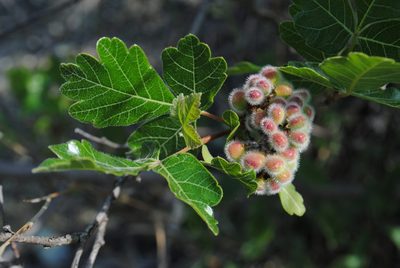
Fragrant Sumac
Rhus aromatica
A low, spreading shrub that blankets dry banks and blazes scarlet and orange in fall.
- Full–part sun
- Dry
- 2–6 ft
- Blooms Mar–Apr
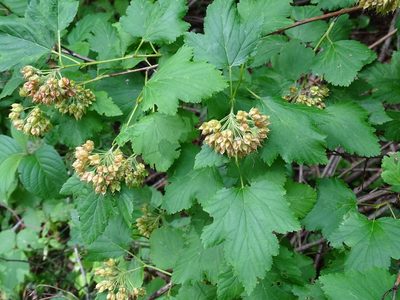
Ninebark
Physocarpus opulifolius
An adaptable, four-season shrub with spring flowers, colorful foliage, and peeling winter bark.
- Full–part sun
- Dry to wet
- 5–10 ft
- Blooms May–Jun