- Home
- Plant guide
- Ninebark
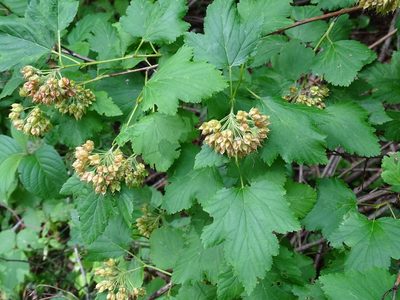
Ninebark
Physocarpus opulifolius
An adaptable, four-season shrub with spring flowers, colorful foliage, and peeling winter bark.
Native to: the Northeast · the Mid-Atlantic · the Southeast · the Midwest · the Great Plains
Growing Ninebark
About the toughest native shrub there is: wet or dry, sun or part shade, clay or rock. Wild green-leaved forms feed pollinators better than dark cultivars.
Where it belongs
Ninebark is native across the Northeast, Mid-Atlantic, Southeast, Midwest, and eastern Plains, growing on stream banks, rocky slopes, and the edges of woods.
Its range of tolerance is the reason to know it. It grows in wet ground and in dry ground, in full sun and in part shade, in heavy clay and in rocky soil, and it is hardy to zone 3. There are very few shrubs you can plant almost anywhere with confidence, and this is one.
The name refers to the mature bark, which peels in thin papery strips in several layers, exposing tan and cinnamon underneath. It is a winter feature on older plants.
Growing it
Full sun to part sun, dry to wet soil, in loam, clay, or rocky ground, zones 3 to 7. Five to ten feet tall and equally wide.
It grows fast and it grows large. In a small foundation planting it outgrows the space quickly. Give it room, or plan on renewal pruning.
Prune by removing the oldest stems at the base right after flowering, taking about a third each year. Shearing it into a ball removes the arching habit that makes it look like anything, and it does not improve the plant.
It is used for erosion control on banks and in restoration plantings, where the root system and the tolerance for periodic flooding both matter.
What it feeds
Clusters of small white to pale pink flowers open in May and June, and the shape is a flat accessible cluster rather than a tube.
Native bees, flower flies, small wasps, and beetles work them, and several butterflies take nectar. It is a host plant for a number of moths.
The seed heads that follow turn red and then brown and persist into winter, and small birds take them. The dense twiggy structure is nesting and shelter cover.
One thing to weigh when buying. Dark-leaved selections, sold under names like Diablo and Summer Wine, are widely available and popular. Research on purple-leaved cultivars of native shrubs has found that in several cases the altered leaf chemistry makes them less usable to leaf-feeding insects. If the planting is meant as habitat, the green-leaved wild form is the safer choice.
Living with it
Deer generally leave it alone.
It is drought tolerant once established and needs no watering in an ordinary year.
Powdery mildew shows up on some cultivars in humid summers and is largely cosmetic. Good airflow reduces it.
Leave the seed heads for winter. Prune in late spring after flowering.
Sources: USDA PLANTS Database (native range); Lady Bird Johnson Wildflower Center, University of Texas at Austin (species profile); Mt. Cuba Center (Physocarpus trial results on cultivar performance and insect use).
It’s deer-resistant, drought-tolerant, easy to grow, good fall color, and good for winter interest.Where it grows
Ninebark is native to the Northeast. In the wild you’ll find it across Alabama · Arkansas · Colorado · Connecticut · Delaware · Georgia · Illinois · Indiana · Iowa · Kansas and 30 more states. Always confirm it suits your specific county with your state native plant society before planting.
Regional Garden has written state guides covering Ninebark in 40 of them so far.
Good for
Where to buy Ninebark
Some links here are affiliate links and we may earn a small commission at no extra cost to you.
What a first-year Ninebark planting needs, from a pH kit to mulch.
Companions & kin.
Natives that share Ninebark’s range and conditions.
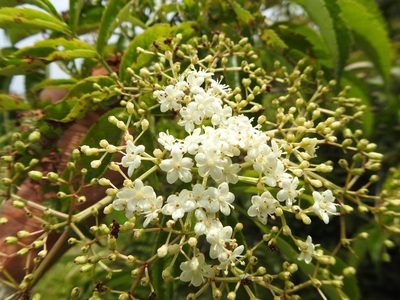
American Elderberry
Sambucus canadensis
Big lacy flower heads in summer give way to purple-black berries for both birds and your kitchen.
- Full–part sun
- Average–wet
- 6–12 ft
- Blooms Jun–Jul

Buttonbush
Cephalanthus occidentalis
Spherical white 'pincushion' flowers over standing water, swarmed by butterflies and bees.
- Full–part sun
- Average–wet
- 5–10 ft
- Blooms Jun–Aug

Arrowwood Viburnum
Viburnum dentatum
A bulletproof hedge shrub with white spring flowers, blue fall berries, and burgundy autumn leaves.
- Sun to shade
- Average–wet
- 6–10 ft
- Blooms May–Jun
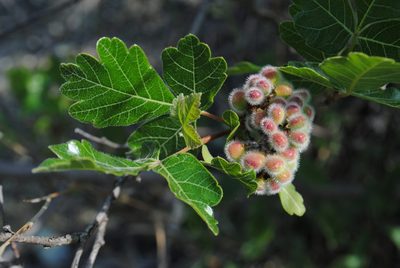
Fragrant Sumac
Rhus aromatica
A low, spreading shrub that blankets dry banks and blazes scarlet and orange in fall.
- Full–part sun
- Dry
- 2–6 ft
- Blooms Mar–Apr