- Home
- Collections
- Deer-resistant
Deer-Resistant Native Plants
Native plants deer tend to walk past: the aromatic, fuzzy, and bitter-leaved species that survive where browsing is heavy.
Start with the honest version
A hungry deer will eat almost anything. Lists labeled deer proof are marketing. What exists is a spectrum of preference, and where a plant sits on it depends on how much pressure your area has, what season it is, and what else is available.
Early spring is the worst window. Deer come out of winter depleted, and new soft growth on plants they would ignore in July gets browsed. Young plants of any species are more vulnerable than established ones. And a deer population with nothing else to eat will work down the list.
The plants here are the ones that hold up under real pressure. They are not a guarantee.
Four reasons a plant gets skipped
Knowing the mechanism tells you more than the label does.
Aromatic foliage is the most reliable. Mountain mint, anise hyssop, wild bergamot, beebalm, and yarrow all carry strong volatile oils, and deer avoid them consistently. Crush a leaf: if it smells strongly of mint, oregano, or anise, it is likely safe.
Fuzzy or rough texture works too. Stiff goldenrod's sandpapery leaves and the felted foliage of desert plants are unpleasant to eat.
Bitter or milky sap deters browsing. Milkweeds, with their toxic latex, are mostly avoided as mature plants, though deer will take the tender tips.
Spiny or leathery leaves protect Oregon grape, inkberry, and rattlesnake master, whose stiff bristled foliage is not worth the trouble.
What deer prefer, so you can plan around it
Hostas, daylilies, tulips, and yews are candy. Among natives, they favor serviceberry, spicebush, arrowwood viburnum, red-twig dogwood, and most trilliums and lilies.
That does not mean you cannot grow them. It means those plants need protection while establishing, or placement close to the house where traffic discourages browsing, or a fence.
What actually works when the list is not enough
A fence is the only reliable answer, and it needs to be eight feet, because deer jump. Two parallel shorter fences a few feet apart also work, since deer judge depth poorly.
Repellents work partially and need reapplication after rain and as new growth appears. Rotating between two or three products delays habituation, which is the usual reason they stop working.
For individual plants, a cylinder of wire mesh through the first two seasons gets a shrub past the vulnerable stage at very little cost.
And plant more than you need. A planting dense enough to absorb some browsing survives; three specimens do not.
Sources: Rutgers New Jersey Agricultural Experiment Station (landscape plant deer resistance ratings); Cornell Cooperative Extension (deer management and fencing guidance); Lady Bird Johnson Wildflower Center, University of Texas at Austin (species profiles and browse notes).
74 native species in this collection.
No plant is truly deer-proof when winters are hard and the herd is hungry, but deer reliably avoid aromatic foliage (mints and salvias), fuzzy or coarse leaves, and toxic or bitter sap. Lean on those traits, plant the few irresistible things close to the house, and a new bed will sail through its first season far more often than not.
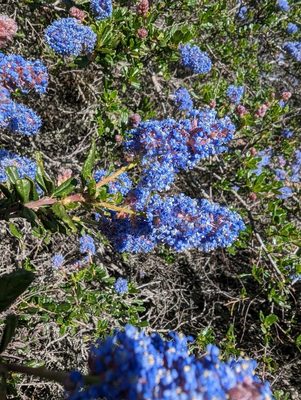
California Lilac
Ceanothus thyrsiflorus
Sheets of true-blue spring flowers on an evergreen shrub that hums with bees on the West Coast.
- Full sun
- Dry
- 6–20 ft
- Blooms Mar–May
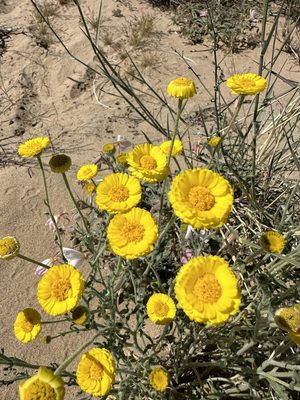
Desert Marigold
Baileya multiradiata
A silver-leaved desert daisy that blooms almost year-round on rainfall alone.
- Full sun
- Dry
- 12–18 in
- Blooms Mar–Oct
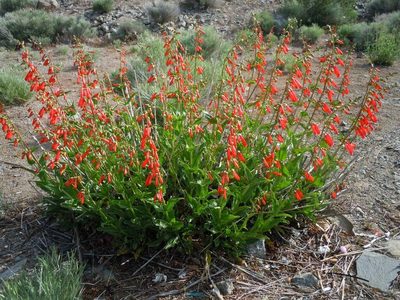
Firecracker Penstemon
Penstemon eatonii
Scarlet tubular flowers timed to the spring hummingbird migration through the desert Southwest.
- Full sun
- Dry
- 1.5–3 ft
- Blooms Mar–May
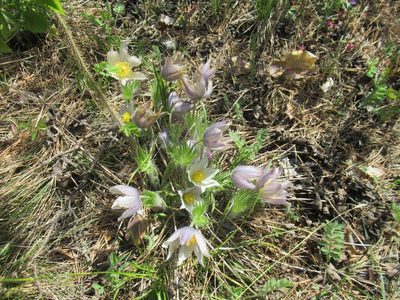
Pasque Flower
Pulsatilla patens
One of the very first prairie flowers, silky purple cups pushing up through cold early-spring ground.
- Full sun
- Dry
- 6–12 in
- Blooms Mar–Apr
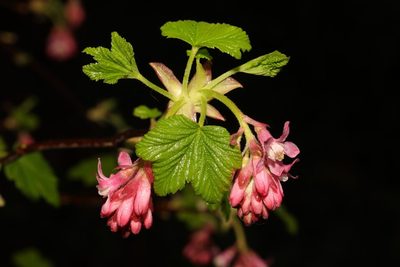
Red-Flowering Currant
Ribes sanguineum
Cascades of rose-pink tassels timed exactly to the return of the rufous hummingbird each spring.
- Full–part sun
- Dry–average
- 5–9 ft
- Blooms Mar–Apr
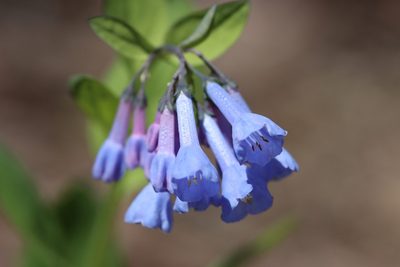
Virginia Bluebells
Mertensia virginica
Pink buds opening to drifts of sky-blue bells, then vanishing underground by summer.
- Part shade
- Average–wet
- 1–2 ft
- Blooms Mar–May
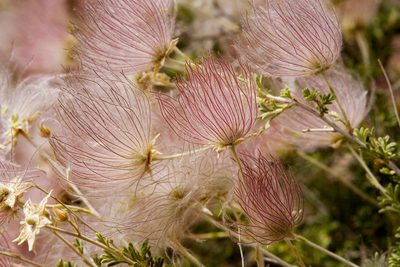
Apache Plume
Fallugia paradoxa
White rose-like flowers and feathery pink seed plumes together on one airy desert shrub.
- Full sun
- Dry
- 3–6 ft
- Blooms Apr–Sep
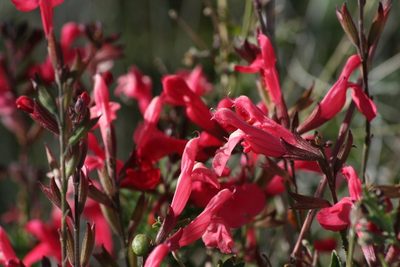
Autumn Sage
Salvia greggii
A tough little evergreen sage that feeds hummingbirds from spring to frost in Texas and the Southwest.
- Full–part sun
- Dry
- 2–3 ft
- Blooms Apr–Oct
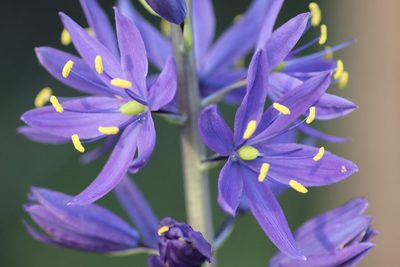
Common Camas
Camassia quamash
The blue that used to run across Northwest prairies in spring, and the one bulb that actually wants a wet winter.
- Full–part sun
- Average–wet
- 1–2.5 ft
- Blooms Apr–May
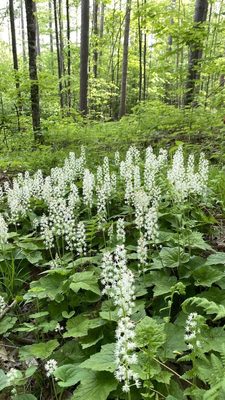
Foamflower
Tiarella cordifolia
Frothy white spring spires over heart-shaped, semi-evergreen foliage in deep shade.
- Part shade
- Average
- 6–12 in
- Blooms Apr–May
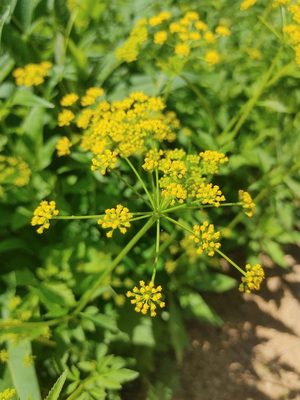
Golden Alexanders
Zizia aurea
Early flat gold heads that feed the first small bees and host the black swallowtail.
- Full–part sun
- Average–wet
- 1.5–2.5 ft
- Blooms Apr–Jun

Prairie Smoke
Geum triflorum
Nodding pink spring bells that turn into smoky, feathered seed plumes, the show after the flower.
- Full–part sun
- Dry
- 6–16 in
- Blooms Apr–May
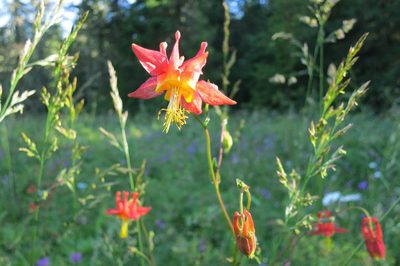
Western Columbine
Aquilegia formosa
The West's nodding red-and-gold columbine, the first big hummingbird draw of the mountain spring.
- Part shade
- Average
- 1.5–3 ft
- Blooms Apr–Jul
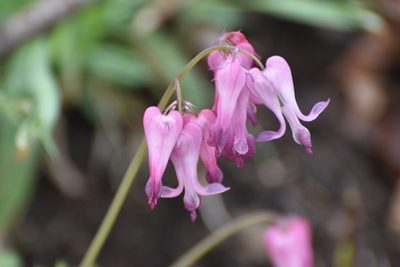
Wild Bleeding Heart
Dicentra eximia
Ferny mounds that drip with pink hearts from spring straight through summer in shade.
- Part shade
- Average
- 12–18 in
- Blooms Apr–Aug
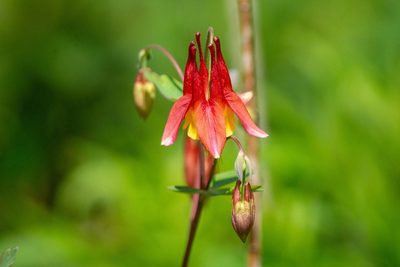
Wild Columbine
Aquilegia canadensis
Nodding red-and-gold lanterns that greet the first spring hummingbirds at a woodland edge.
- Part shade
- Dry–average
- 1–2.5 ft
- Blooms Apr–Jun
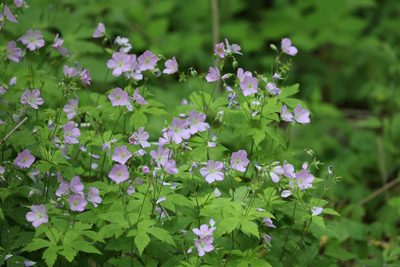
Wild Geranium
Geranium maculatum
A mounding woodland staple with lilac-pink spring flowers and good fall foliage color.
- Part shade
- Average
- 1.5–2 ft
- Blooms Apr–Jun
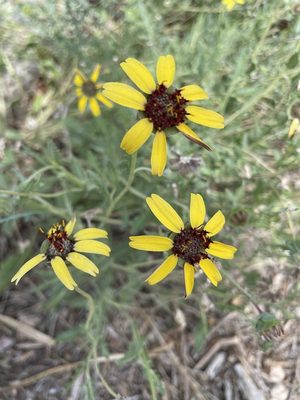
Chocolate Flower
Berlandiera lyrata
Yellow daisies that genuinely smell of chocolate each morning, and bloom all summer in heat.
- Full sun
- Dry
- 1–2 ft
- Blooms May–Sep

Common Yarrow
Achillea millefolium
A near-continental native with flat flower heads that feed tiny beneficial insects, tough as a weed.
- Full sun
- Dry–average
- 1.5–3 ft
- Blooms May–Aug
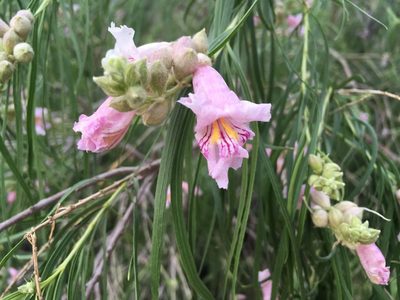
Desert Willow
Chilopsis linearis
A graceful desert tree hung with orchid-like trumpets all summer, fueled by nothing but heat.
- Full sun
- Dry
- 15–25 ft
- Blooms May–Sep
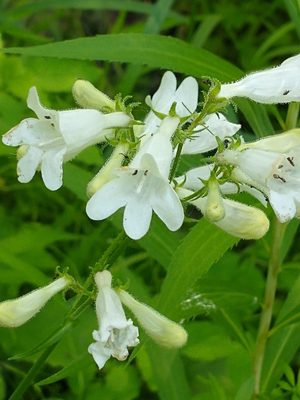
Foxglove Beardtongue
Penstemon digitalis
Airy white bells in early summer, a bridge bloom between spring ephemerals and the summer prairie.
- Full–part sun
- Dry–average
- 2–4 ft
- Blooms May–Jun
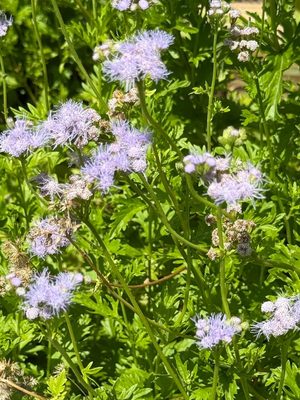
Gregg's Mistflower
Conoclinium greggii
Fuzzy blue flowers that act like a magnet for queen and monarch butterflies in the Southwest.
- Full–part sun
- Dry–average
- 1–2 ft
- Blooms May–Oct
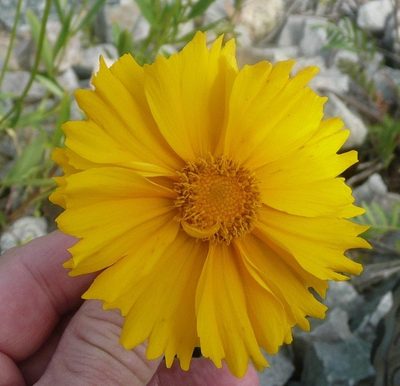
Lanceleaf Coreopsis
Coreopsis lanceolata
Sunny gold daisies for weeks in early summer on the leanest, driest soil you can offer.
- Full sun
- Dry–average
- 1.5–2 ft
- Blooms May–Jul
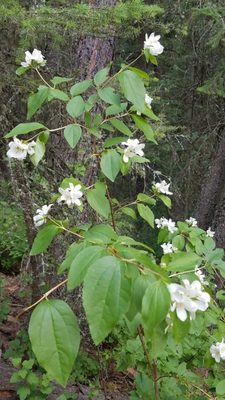
Lewis's Mock Orange
Philadelphus lewisii
Two weeks in early summer when the whole shrub smells of orange blossom, and the rest of the year asking for nothing.
- Full–part sun
- Dry–average
- 5–10 ft
- Blooms May–Jun
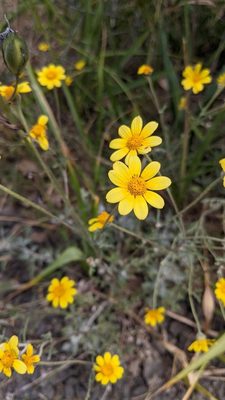
Oregon Sunshine
Eriophyllum lanatum
Silver-woolly foliage under golden daisies, on a plant that treats a hot dry summer as normal weather.
- Full sun
- Dry
- 0.7–2 ft
- Blooms May–Jul
Deer-resistant, near you.
Whether a species belongs in your yard depends on where you garden. These state guides cover it.
Where to find deer-resistant plants
Some links here are affiliate links and we may earn a small commission at no extra cost to you.
What a first-year Deer-resistant planting needs, from a pH kit to mulch.