- Home
- Plant guide
- Virginia Bluebells
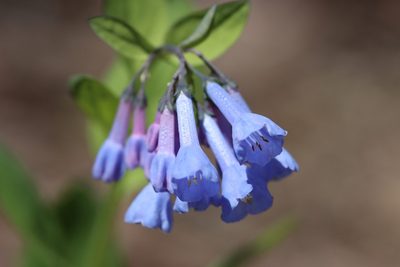
Hunter Hammil (CC BY)
Virginia Bluebells
Mertensia virginica
Pink buds opening to drifts of sky-blue bells, then vanishing underground by summer.
Native to: the Northeast · the Mid-Atlantic · the Southeast · the Midwest
Growing Virginia Bluebells
A true spring ephemeral that goes dormant after blooming, so interplant with ferns or sedges to fill the gap. Naturalizes into breathtaking colonies in moist woods.
Where it belongs
Virginia bluebells grow in the Northeast, Mid-Atlantic, Southeast, and Midwest, in moist deciduous woods, on floodplains, and along river bottoms. Where they are happy they carpet acres, and a bottomland woods in full bloom is one of the sights of the eastern spring.
They are a true spring ephemeral, and that term carries a specific meaning worth understanding before you plant. The species completes its entire above-ground year in about ten weeks, using the window between snowmelt and the moment the tree canopy closes over. Then it dies back completely and waits underground for ten months.
Growing it
Part sun to shade, medium to wet soil, rich in leaf litter, in loam, zones 3 to 8. One to two feet in bloom.
Moist woodland soil is the requirement. They tolerate spring flooding, which is where they grow naturally, and they suffer in dry shade.
Plant bare-root in fall, three inches deep. Potted plants are usually sold in bloom in spring, which is fine, though they will be entering dormancy within weeks of purchase.
The dormancy has to be planned around. By late June there is nothing there, and if you have not planted something else in that space you have a bare patch for the rest of the summer. Interplant with Christmas fern, Pennsylvania sedge, wild geranium, or hosta, all of which expand to fill the gap. Mark the location so you do not dig into the roots in August.
They naturalize by seed over years into large colonies. Patience is the whole technique.
What it feeds
The flower is a narrow tube, and reaching the nectar takes a long tongue. Bumblebee queens are the primary pollinators, and this is important forage at exactly the moment those queens are alone, founding colonies, and burning energy with no workers to help.
Early hummingbirds visit. Bee flies hover at the flowers. Several mining bee specialists collect from it. Short-tongued bees sometimes cut into the base of the tube to rob nectar without pollinating.
Living with it
Deer generally avoid it.
Do not tidy the yellowing foliage. The plant is moving its year's energy back into the root while those leaves fade, and cutting them early weakens next spring.
Leaf litter is the correct mulch. Rake it onto the bed in fall and leave it.
Sources: USDA PLANTS Database (native range); Lady Bird Johnson Wildflower Center, University of Texas at Austin (species profile and ephemeral life cycle); Xerces Society (spring bumblebee queen forage).
It’s deer-resistant, and showy.Where it grows
Virginia Bluebells is native to the Northeast. In the wild you’ll find it across Alabama · Arkansas · Connecticut · Delaware · Florida · Georgia · Illinois · Indiana · Iowa · Kentucky and 24 more states. Always confirm it suits your specific county with your state native plant society before planting.
Regional Garden has written state guides covering Virginia Bluebells in 34 of them so far.
Good for
Where to buy Virginia Bluebells
Some links here are affiliate links and we may earn a small commission at no extra cost to you.
What a first-year Virginia Bluebells planting needs, from a pH kit to mulch.
Companions & kin.
Natives that share Virginia Bluebells’s range and conditions.
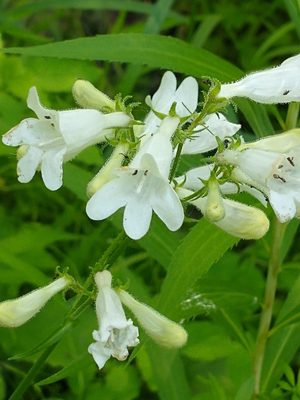
Foxglove Beardtongue
Penstemon digitalis
Airy white bells in early summer, a bridge bloom between spring ephemerals and the summer prairie.
- Full–part sun
- Dry–average
- 2–4 ft
- Blooms May–Jun
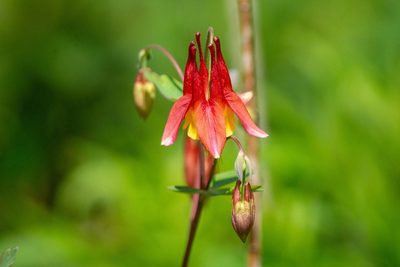
Wild Columbine
Aquilegia canadensis
Nodding red-and-gold lanterns that greet the first spring hummingbirds at a woodland edge.
- Part shade
- Dry–average
- 1–2.5 ft
- Blooms Apr–Jun
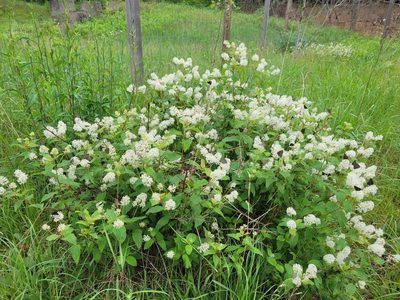
New Jersey Tea
Ceanothus americanus
A compact, drought-proof shrub frothing with white flowers that pollinators and hummingbirds adore.
- Full–part sun
- Dry
- 2–3.5 ft
- Blooms May–Jul

Wild Bergamot
Monarda fistulosa
Ragged lavender crowns that hum with bees, hummingbirds, and clearwing moths; foliage smells of oregano.
- Full–part sun
- Dry–average
- 2–4 ft
- Blooms Jun–Aug