- Home
- Collections
- Rain garden
Native Rain Garden Plants
Moisture-loving natives for rain gardens, pond edges, downspout basins, and the low spots that stay soggy after a storm.
What it is and what it does
A rain garden is a shallow depression, typically four to eight inches deep, positioned to receive runoff from a roof, driveway, or paved area. Water collects in it during a storm and infiltrates into the ground over the following day or two.
The point is that it drains. A rain garden that holds water for a week is a failed rain garden, and it will breed mosquitoes, which need about seven to ten days of standing water to complete their cycle. Draining within forty-eight hours avoids that entirely.
The purpose is to keep stormwater on site rather than sending it into a storm drain, carrying lawn chemicals, oil, and sediment with it. In many municipalities there are rebates for installing one.
Test your drainage before you dig
Dig a hole about a foot deep, fill it with water, let it drain completely, then fill it again and time how fast the level drops.
Half an inch per hour or better is fine. Much slower than that and you have heavy clay or a high water table, and a basin will hold water too long. The answers there are to make the basin shallower and wider, to excavate deeper and backfill with a sand and compost mix, or to choose a different location.
Site it at least ten feet from the foundation and downslope of it. Avoid the septic field, and call before you dig for utility locates.
Three zones, three plant lists
This is the part that gets skipped, and it is why plants fail in rain gardens.
The bottom of the basin is wet periodically and dry between storms. Plants there need to tolerate both. Cardinal flower, great blue lobelia, blue vervain, boneset, swamp milkweed, and cinnamon fern all handle the swing.
The slopes are transitional, wet briefly and drier overall. Joe-Pye weed, Culver's root, switchgrass, and dense blazing star suit that band.
The rim is essentially ordinary garden conditions and takes ordinary plants: little bluestem, coneflower, aromatic aster.
Planting a bottom-zone species on the rim leaves it thirsty; planting a rim species in the bottom drowns it. Both are common.
Shrubs anchor it
Buttonbush, winterberry, red-twig dogwood, and elderberry all grow in wet ground and give a rain garden structure that perennials alone do not. Buttonbush in particular grows in standing water and carries the heaviest butterfly traffic of anything on this list.
Mulch with shredded hardwood rather than bark nuggets, which float and wash out. Water through the first season regardless of rainfall, since a new planting has no roots to reach the moisture.
Sources: US Environmental Protection Agency (rain garden design and stormwater guidance); university extension rain garden manuals, including University of Wisconsin and Rutgers; Lady Bird Johnson Wildflower Center, University of Texas at Austin (species moisture tolerance); US Centers for Disease Control and Prevention (mosquito breeding and standing water).
30 native species in this collection.
A rain garden catches roof and driveway runoff and lets it soak in instead of rushing to the storm drain, and these natives are built for that boom-and-bust of flood then dry. Put the most water-tolerant species in the wet center and the merely moisture-loving ones up on the sloped edges. Once established they handle both the standing water and the dry weeks between storms.
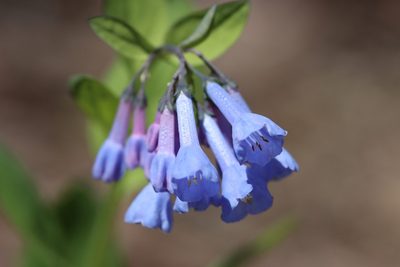
Virginia Bluebells
Mertensia virginica
Pink buds opening to drifts of sky-blue bells, then vanishing underground by summer.
- Part shade
- Average–wet
- 1–2 ft
- Blooms Mar–May
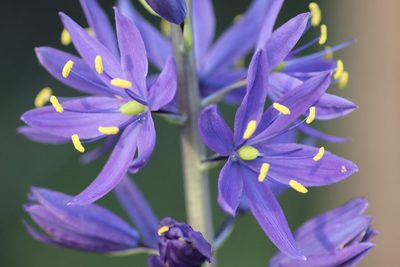
Common Camas
Camassia quamash
The blue that used to run across Northwest prairies in spring, and the one bulb that actually wants a wet winter.
- Full–part sun
- Average–wet
- 1–2.5 ft
- Blooms Apr–May
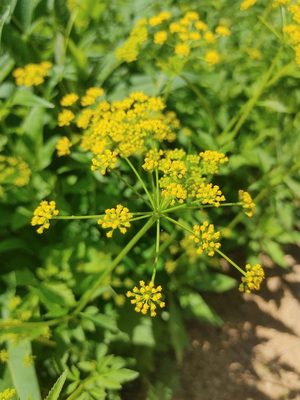
Golden Alexanders
Zizia aurea
Early flat gold heads that feed the first small bees and host the black swallowtail.
- Full–part sun
- Average–wet
- 1.5–2.5 ft
- Blooms Apr–Jun
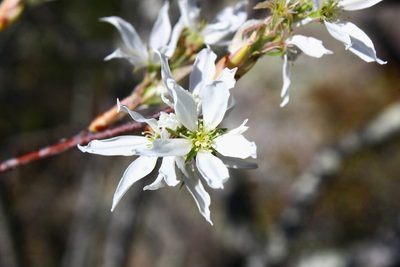
Serviceberry
Amelanchier canadensis
A small four-season tree: white spring flowers, June berries for the birds, and fiery fall color.
- Full–part sun
- Average–wet
- 15–25 ft
- Blooms Apr–May

Arrowwood Viburnum
Viburnum dentatum
A bulletproof hedge shrub with white spring flowers, blue fall berries, and burgundy autumn leaves.
- Sun to shade
- Average–wet
- 6–10 ft
- Blooms May–Jun

Blue Elderberry
Sambucus cerulea
Fast, big, and covered in flat cream flower heads, then dusty blue fruit that draws every fruit-eating bird in the county.
- Full–part sun
- Average–wet
- 8–20 ft
- Blooms Jun–Jul

Buttonbush
Cephalanthus occidentalis
Spherical white 'pincushion' flowers over standing water, swarmed by butterflies and bees.
- Full–part sun
- Average–wet
- 5–10 ft
- Blooms Jun–Aug
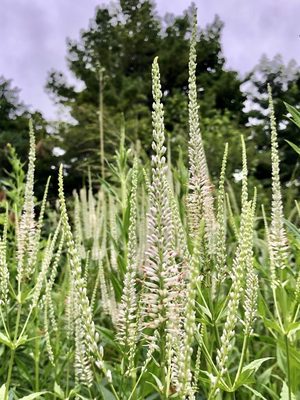
Culver's Root
Veronicastrum virginicum
Elegant white candelabra spires that bring vertical structure and a haze of bees to midsummer.
- Full–part sun
- Average–wet
- 3–5 ft
- Blooms Jun–Aug
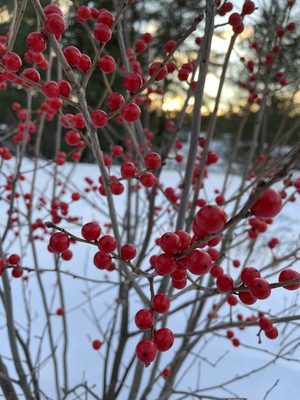
Winterberry
Ilex verticillata
A deciduous holly that drops its leaves to reveal branches packed with brilliant red winter berries.
- Full–part sun
- Average–wet
- 5–10 ft
- Blooms Jun–Jul
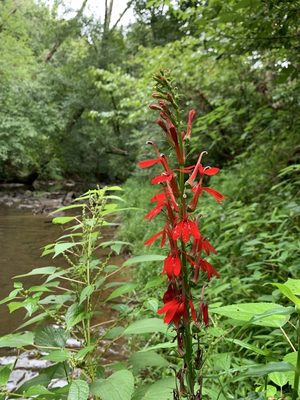
Cardinal Flower
Lobelia cardinalis
The most intense red in the native flora, built for the hummingbirds that pollinate it.
- Full–part sun
- Average–wet
- 2–4 ft
- Blooms Jul–Sep
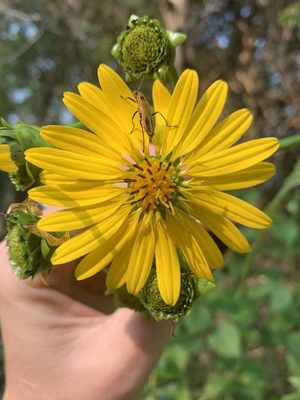
Cup Plant
Silphium perfoliatum
A prairie giant whose paired leaves hold rainwater for birds; goldfinches mob the seeds.
- Full–part sun
- Average–wet
- 5–8 ft
- Blooms Jul–Sep
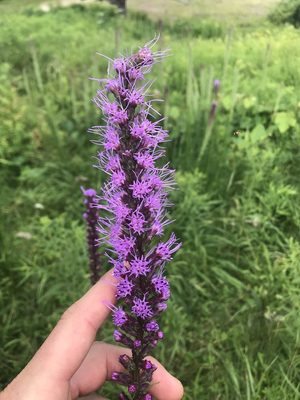
Dense Blazing Star
Liatris spicata
Vertical wands of magenta that open top-down and pull in every swallowtail in the neighborhood.
- Full sun
- Average–wet
- 2–4 ft
- Blooms Jul–Aug
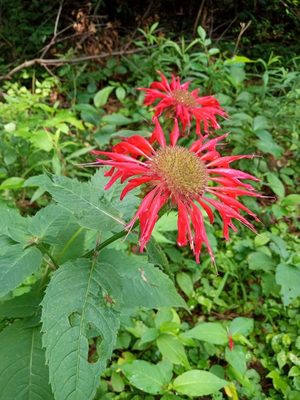
Scarlet Beebalm
Monarda didyma
A hummingbird magnet with fireworks-red blooms for moist, rich soil at a woodland edge.
- Full–part sun
- Average–wet
- 2.5–4 ft
- Blooms Jul–Aug
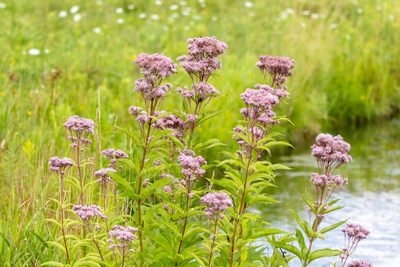
Spotted Joe-Pye Weed
Eutrochium maculatum
Statuesque domes of vanilla-scented mauve that swallowtails and monarchs cover in late summer.
- Full–part sun
- Average–wet
- 4–7 ft
- Blooms Jul–Sep
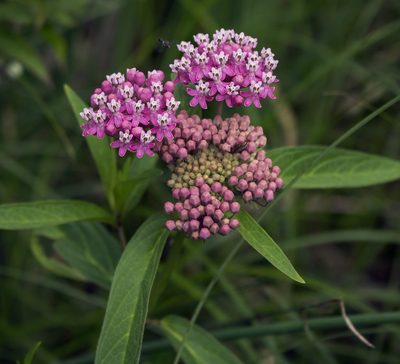
Swamp Milkweed
Asclepias incarnata
A well-behaved, clump-forming milkweed for wet ground: a monarch host that also looks at home in a border.
- Full–part sun
- Average–wet
- 3–4 ft
- Blooms Jul–Aug
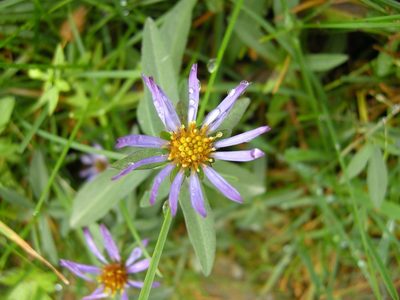
Douglas Aster
Symphyotrichum subspicatum
The Pacific Northwest's late-season aster, feeding bees into the first cool, wet days of fall.
- Full–part sun
- Average–wet
- 2–4 ft
- Blooms Aug–Oct
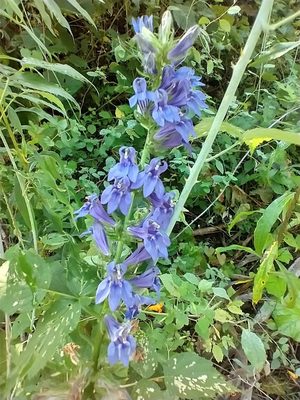
Great Blue Lobelia
Lobelia siphilitica
Spikes of true blue for late summer shade and damp ground, worked hard by bumblebees.
- Full–part sun
- Average–wet
- 2–3 ft
- Blooms Aug–Sep
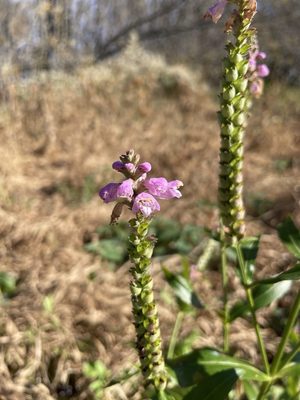
Obedient Plant
Physostegia virginiana
Snapdragon-like pink spikes for late summer, beloved by bumblebees and hummingbirds.
- Full–part sun
- Average–wet
- 2–4 ft
- Blooms Aug–Sep
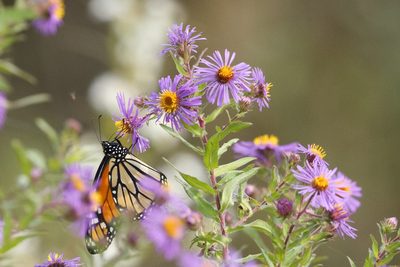
New England Aster
Symphyotrichum novae-angliae
Late-season fuel: clouds of purple daisies feeding migrating monarchs and the last bumblebees of fall.
- Full–part sun
- Average–wet
- 3–5 ft
- Blooms Sep–Oct
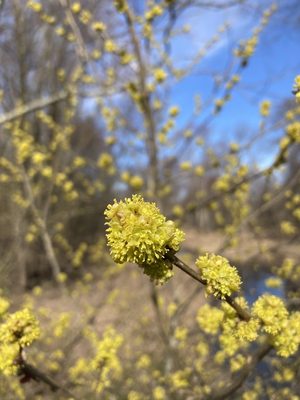
Spicebush
Lindera benzoin
An early-blooming shade shrub, host to the spicebush swallowtail, with butter-yellow fall color.
- Part shade
- Average–wet
- 6–12 ft
- Blooms Mar–Apr
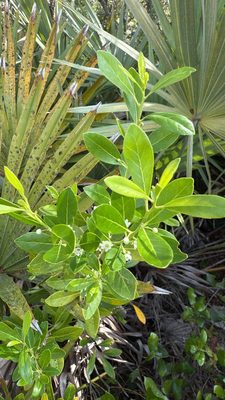
Inkberry Holly
Ilex glabra
A native evergreen alternative to boxwood that takes wet feet and feeds bees and birds.
- Full–part sun
- Average–wet
- 4–8 ft
- Blooms May–Jun
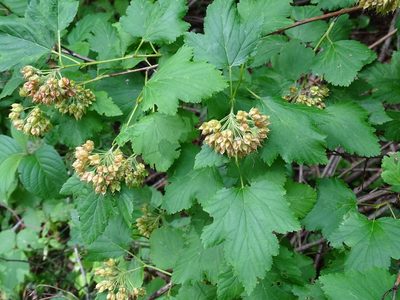
Ninebark
Physocarpus opulifolius
An adaptable, four-season shrub with spring flowers, colorful foliage, and peeling winter bark.
- Full–part sun
- Dry to wet
- 5–10 ft
- Blooms May–Jun
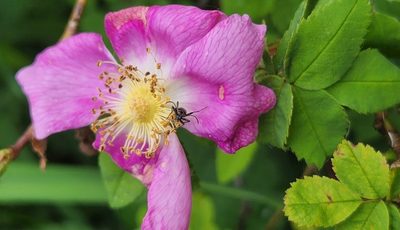
Nootka Rose
Rosa nutkana
One ring of pink petals, a real rose scent, and hips that stay scarlet on bare canes all winter.
- Full–part sun
- Average–wet
- 3–9 ft
- Blooms May–Jun
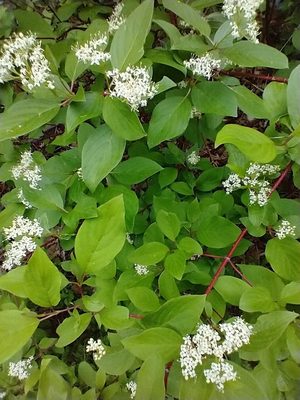
Red-Twig Dogwood
Cornus sericea
Grown for its fire-engine-red winter stems, with white spring flowers and berries birds devour.
- Full–part sun
- Average–wet
- 6–9 ft
- Blooms May–Jun
Rain garden, near you.
Whether a species belongs in your yard depends on where you garden. These state guides cover it.
Where to find rain garden plants
Some links here are affiliate links and we may earn a small commission at no extra cost to you.
What a first-year Rain garden planting needs, from a pH kit to mulch.