- Home
- Plant guide
- Cup Plant
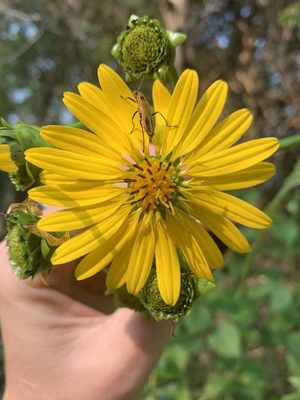
Cup Plant
Silphium perfoliatum
A prairie giant whose paired leaves hold rainwater for birds; goldfinches mob the seeds.
Native to: the Midwest · the Great Plains · the Southeast · the Mid-Atlantic
Growing Cup Plant
Big and bold, so give it space at the back of a damp border. The fused leaf 'cups' really do hold water that birds drink from.
Where it belongs
Cup plant is a tallgrass prairie species of the Midwest, Plains, and parts of the Southeast and Mid-Atlantic, growing in moist prairie, along streams, and in low ground at the edges of woods.
It is one of the largest herbaceous perennials in North America, routinely reaching five to eight feet, occasionally more. That is a fact to decide about before planting rather than after. In a small bed it is a mistake. Along a fence line, at the back of a damp border, or as a summer screen, it is remarkable.
Growing it
Full sun to part sun, medium to wet soil, in loam or clay, zones 3 to 9.
The stem is square and the paired leaves fuse around it to form a genuine cup, several inches across, that fills with rain and dew. Chickadees, goldfinches, and warblers drink from those cups, and so do wasps and bees. It works best where there is not much other water available.
It grows fast and it grows big, and in rich moist ground it spreads by rhizome and by seed into a substantial colony. If you want one clump rather than a stand, plan on pulling volunteers each spring, or plant it somewhere a colony is welcome.
Do not stake it. The stems are thick enough to stand on their own unless they are shaded.
What it feeds
The yellow flowers are held at the top and feed bees and butterflies through midsummer, though it is the seed that draws the crowd.
Goldfinches strip the seed heads and will hang upside down on the stems to do it, and they use plant down for nesting late in the season. Chickadees, juncos, and sparrows take what falls. A large stand in September is one of the most bird-active things in a native planting.
Hollow stems shelter overwintering insects, and stem-nesting bees use the cut ends.
Living with it
Deer browse the young growth. Established plants outgrow the damage.
The lower leaves brown by late summer, particularly in a dry year. Plant something in front of it rather than trying to prevent that.
Leave the stalks standing through winter for the birds and the insects. Cut back in spring, and leave a foot of hollow stem where you can.
Sources: USDA PLANTS Database (native range); Lady Bird Johnson Wildflower Center, University of Texas at Austin (species profile); Cornell Lab of Ornithology (seed-eating songbirds and native plant food sources).
It’s showy, and fast-growing.Where it grows
Cup Plant is native to the Midwest. In the wild you’ll find it across Alabama · Arkansas · Colorado · Delaware · Florida · Georgia · Illinois · Indiana · Iowa · Kansas and 26 more states. Always confirm it suits your specific county with your state native plant society before planting.
Regional Garden has written state guides covering Cup Plant in 36 of them so far.
Good for
Where to buy Cup Plant
Some links here are affiliate links and we may earn a small commission at no extra cost to you.
What a first-year Cup Plant planting needs, from a pH kit to mulch.
Companions & kin.
Natives that share Cup Plant’s range and conditions.
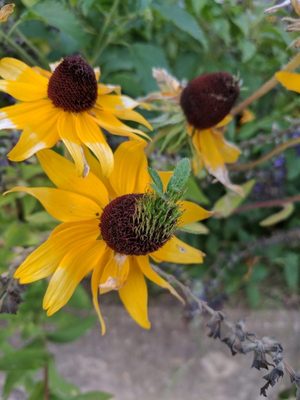
Black-Eyed Susan
Rudbeckia hirta
A cheerful, unkillable starter native that blooms its first year and seeds itself politely around.
- Full–part sun
- Dry–average
- 1.5–3 ft
- Blooms Jun–Sep
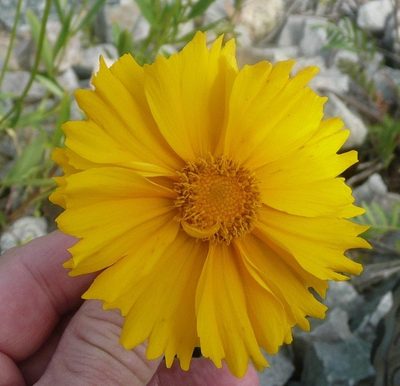
Lanceleaf Coreopsis
Coreopsis lanceolata
Sunny gold daisies for weeks in early summer on the leanest, driest soil you can offer.
- Full sun
- Dry–average
- 1.5–2 ft
- Blooms May–Jul
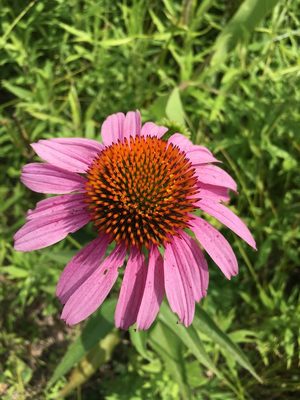
Purple Coneflower
Echinacea purpurea
The garden workhorse: months of nectar for bees and butterflies, then seed heads goldfinches strip all winter.
- Full–part sun
- Dry–average
- 2–4 ft
- Blooms Jun–Sep
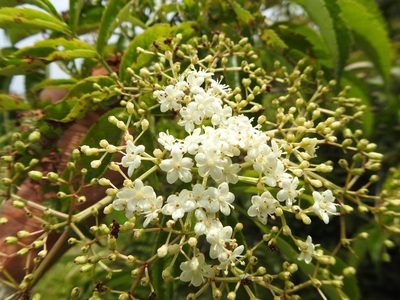
American Elderberry
Sambucus canadensis
Big lacy flower heads in summer give way to purple-black berries for both birds and your kitchen.
- Full–part sun
- Average–wet
- 6–12 ft
- Blooms Jun–Jul