- Home
- Plant guide
- American Elderberry
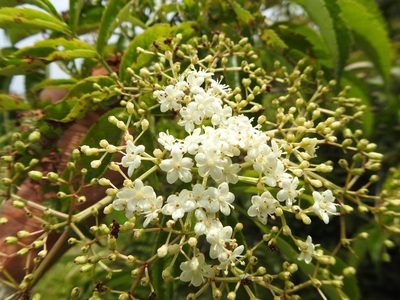
sudomir (CC BY)
American Elderberry
Sambucus canadensis
Big lacy flower heads in summer give way to purple-black berries for both birds and your kitchen.
Native to: the Northeast · the Mid-Atlantic · the Southeast · the Midwest · the Great Plains · the South-Central region
Growing American Elderberry
Fast and vigorous in moist soil, so give it room or cut it back hard each winter. Cook the ripe berries for syrup; never eat them raw.
Where it belongs
American elderberry is native across the East, Midwest, Plains, and Texas, growing in moist ground: ditches, stream banks, wet field edges, and roadside low spots. It is one of the most recognizable summer roadside plants in the eastern half of the country.
It is grown both as habitat and as a fruit crop, and the two uses are compatible. A pair of shrubs produces more fruit than most households use and still leaves plenty for birds.
Growing it
Full sun to part sun, medium to wet soil, in loam or clay, zones 3 to 9. Six to twelve feet tall and as wide.
It grows fast, which is the practical argument for it. A new plant can be a substantial shrub in two or three seasons, so it fills a screening gap faster than almost any other native.
That speed comes with a habit that many find coarse. Stems are soft-wooded, arch heavily under fruit, and often die back partway. The management is to cut the whole plant back hard every few winters, or to remove the oldest canes annually. It flowers on both new and second-year wood, so hard renewal costs one season of fruit.
It suckers and spreads into a thicket in moist ground.
For fruit, plant two different named varieties for cross-pollination.
What it feeds
The flower heads are broad flat clusters of tiny creamy flowers, up to ten inches across, opening in June and July. Their shape puts nectar within reach of small bees, flower flies, beetles, and wasps, and they are heavily worked.
The fruit ripens purple-black in August and is one of the most valuable bird foods in the eastern flora. More than fifty bird species are documented eating it, and the timing coincides with the start of fall migration.
The thicket structure is nesting habitat, and it hosts a number of moths.
Living with it
Deer browse it.
An important caution about eating it. Ripe cooked berries are used for syrup, jelly, and wine and are widely consumed. Raw berries, and all the green parts of the plant including leaves, stems, and unripe fruit, contain cyanogenic compounds and cause nausea and vomiting. Cook the ripe fruit, strain out the stems, and do not eat any part of it raw.
There is also a lookalike risk. Water hemlock and poison hemlock are lethally toxic and superficially resemble elderberry to an inexperienced eye. Learn the shrub's woody stems and opposite compound leaves before harvesting anything.
Sources: USDA PLANTS Database (native range and nomenclature); Lady Bird Johnson Wildflower Center, University of Texas at Austin (species profile); University of Missouri Extension (elderberry production and cultivar pollination); National Capital Poison Center (raw elderberry and plant part toxicity).
It’s easy to grow, fast-growing, and fragrant.Where it grows
American Elderberry is native to the Northeast. In the wild you’ll find it across Alabama · Arkansas · Colorado · Connecticut · Delaware · Florida · Georgia · Illinois · Indiana · Iowa and 32 more states. Always confirm it suits your specific county with your state native plant society before planting.
Regional Garden has written state guides covering American Elderberry in 42 of them so far.
Good for
Where to buy American Elderberry
Some links here are affiliate links and we may earn a small commission at no extra cost to you.
What a first-year American Elderberry planting needs, from a pH kit to mulch.
Companions & kin.
Natives that share American Elderberry’s range and conditions.
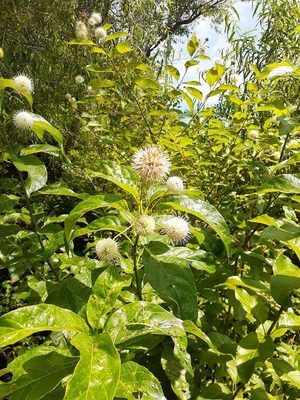
Buttonbush
Cephalanthus occidentalis
Spherical white 'pincushion' flowers over standing water, swarmed by butterflies and bees.
- Full–part sun
- Average–wet
- 5–10 ft
- Blooms Jun–Aug
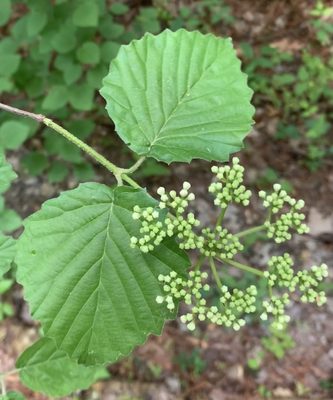
Arrowwood Viburnum
Viburnum dentatum
A bulletproof hedge shrub with white spring flowers, blue fall berries, and burgundy autumn leaves.
- Sun to shade
- Average–wet
- 6–10 ft
- Blooms May–Jun
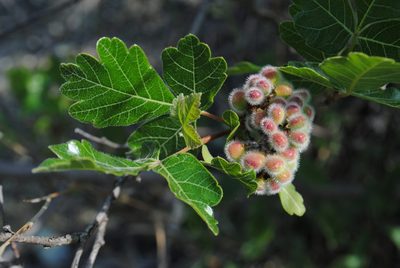
Fragrant Sumac
Rhus aromatica
A low, spreading shrub that blankets dry banks and blazes scarlet and orange in fall.
- Full–part sun
- Dry
- 2–6 ft
- Blooms Mar–Apr
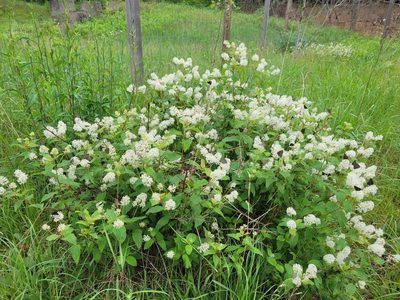
New Jersey Tea
Ceanothus americanus
A compact, drought-proof shrub frothing with white flowers that pollinators and hummingbirds adore.
- Full–part sun
- Dry
- 2–3.5 ft
- Blooms May–Jul