- Home
- Plant guide
- Cardinal Flower
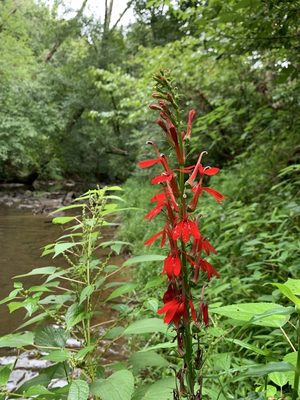
Alicia Ballard (CC BY)
Cardinal Flower
Lobelia cardinalis
The most intense red in the native flora, built for the hummingbirds that pollinate it.
Native to: the Northeast · the Mid-Atlantic · the Southeast · the Midwest · the South-Central region · the desert Southwest
Growing Cardinal Flower
Needs soil that stays moist, so it is perfect for a rain garden or pond edge. Short-lived but reseeds where the ground stays damp and open.
Where it belongs
Cardinal flower is native across most of the eastern and central United States and down into the Southwest, growing along stream banks, in wet meadows, and at pond edges. It is a plant of ground that stays damp.
That is the whole trick with it. Most native perennials fail from too much water; this one fails from too little. It is the correct answer for the soggy corner that defeats everything else, and the wrong answer for a dry sunny bank.
Growing it
Consistent moisture, in sun or part shade. In full sun it needs reliably damp ground; in part shade it tolerates a little more dryness. A rain garden, a downspout outfall, a pond margin, or a low spot that stays wet in spring all suit it.
It is short-lived, often two or three years, and like several plants in this guide it persists by seeding rather than by individuals lasting. Seedlings need bare damp soil to germinate, so a thick mulch around it quietly ends the colony. Leave some open ground.
Do not bury the basal rosette. It stays green over winter and needs light, and heaping leaves or mulch over it is a common way to lose the plant.
What it feeds
The flower is a tube too deep and too narrow for most insects to work, and it is red, which insects see poorly and birds see well. It is pollinated primarily by ruby-throated hummingbirds, and it is one of the strongest hummingbird plants in the eastern flora.
If you want hummingbirds, this and trumpet honeysuckle will do more than any feeder, and without the mold and the sugar water and the cleaning.
Living with it
Deer will eat it where pressure is high. It is otherwise trouble-free given water.
Leave the flowering stems standing until seed drops, then leave them anyway for the winter. Cut back in late spring, taking care not to damage the overwintering rosette at the base.
Sources: USDA PLANTS Database (native status and range); Lady Bird Johnson Wildflower Center, University of Texas at Austin (species profile and pollination); Cornell Lab of Ornithology (hummingbird plant selection).
It’s showy.Where it grows
Cardinal Flower is native to the Northeast. In the wild you’ll find it across Alabama · Arizona · Arkansas · California · Connecticut · Delaware · Florida · Georgia · Illinois · Indiana and 29 more states. Always confirm it suits your specific county with your state native plant society before planting.
Regional Garden has written state guides covering Cardinal Flower in 39 of them so far.
Good for
Where to buy Cardinal Flower
Some links here are affiliate links and we may earn a small commission at no extra cost to you.
What a first-year Cardinal Flower planting needs, from a pH kit to mulch.
Companions & kin.
Natives that share Cardinal Flower’s range and conditions.
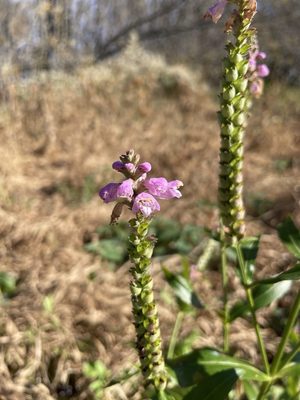
Obedient Plant
Physostegia virginiana
Snapdragon-like pink spikes for late summer, beloved by bumblebees and hummingbirds.
- Full–part sun
- Average–wet
- 2–4 ft
- Blooms Aug–Sep
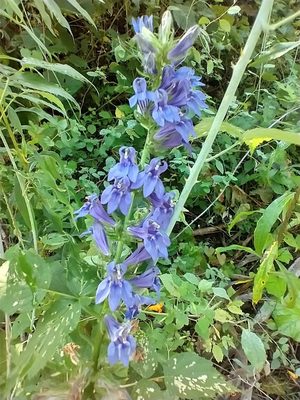
Great Blue Lobelia
Lobelia siphilitica
Spikes of true blue for late summer shade and damp ground, worked hard by bumblebees.
- Full–part sun
- Average–wet
- 2–3 ft
- Blooms Aug–Sep
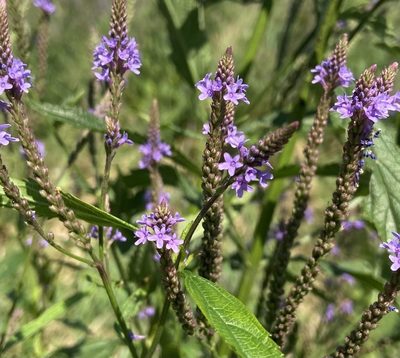
Blue Vervain
Verbena hastata
Candelabras of tiny violet flowers for wet ground, working for small native bees all summer.
- Full–part sun
- Average–wet
- 3–5 ft
- Blooms Jul–Sep

Buttonbush
Cephalanthus occidentalis
Spherical white 'pincushion' flowers over standing water, swarmed by butterflies and bees.
- Full–part sun
- Average–wet
- 5–10 ft
- Blooms Jun–Aug