- Home
- Plant guide
- Obedient Plant
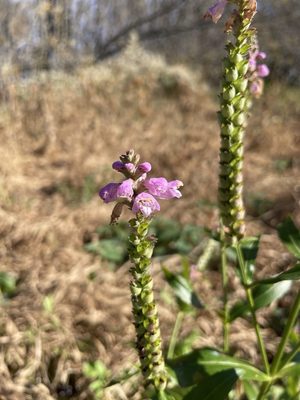
Obedient Plant
Physostegia virginiana
Snapdragon-like pink spikes for late summer, beloved by bumblebees and hummingbirds.
Native to: the Northeast · the Mid-Atlantic · the Southeast · the Midwest · the Great Plains · the South-Central region
Growing Obedient Plant
Vigorous to the point of running in rich, moist soil, so give it room or grow it in a tougher dry spot to slow it down.
Where it belongs
Obedient plant grows across the East, Midwest, Plains, and Texas, in wet meadows, along stream banks, in ditches, and at the damp edges of prairies.
The name is the first thing to explain, because it promises the opposite of the plant's actual behavior. Push an individual flower sideways on the stem and it stays where you put it, which is a genuine and slightly odd property. That is the obedience being referred to. The plant itself is not obedient in any other sense.
Growing it
Full sun to part sun, medium to wet soil, in loam or clay, zones 3 to 9. Two to four feet.
In rich, moist, cultivated soil it travels by rhizome and can take over a bed inside a couple of seasons. This is the most common complaint about it and it is justified.
The management is straightforward once you know. Plant it where a colony is welcome: a rain garden, a naturalized damp area, a strip between a lawn and a fence where mowing sets the boundary. Or plant it somewhere lean and dry, where it stays noticeably tighter and shorter. What does not work is putting it in improved soil next to a slow-growing perennial you value.
Pulling the outer runners each spring keeps a clump in bounds if you are willing to do it annually.
What it feeds
The bloom comes in August and September, which is a valuable slot. Bumblebees are the main visitors and are heavy enough to trip the flower; watch one push into the tube and back out dusted with pollen.
Hummingbirds work the spikes regularly, and it is one of the better late-season hummingbird plants for a sunny damp spot, alongside cardinal flower and scarlet beebalm.
Butterflies and long-tongued native bees take nectar. Small birds pick over the seed later.
Living with it
Deer will browse it in high-pressure areas.
It cuts well and lasts in a vase, which is a use for the growth you remove.
The straight species is what feeds insects; several compact selections exist and are less inclined to run, which is a reasonable compromise for a small garden as long as the flowers are still the recognizable pink tubes.
Leave the stems for winter and cut back in spring. Pull unwanted spread in April, when the new shoots make the colony's edges obvious.
Sources: USDA PLANTS Database (native range); Lady Bird Johnson Wildflower Center, University of Texas at Austin (species profile and growth habit); Cornell Lab of Ornithology (late season hummingbird plantings).
It’s showy, and easy to grow.Where it grows
Obedient Plant is native to the Northeast. In the wild you’ll find it across Alabama · Arkansas · Colorado · Connecticut · Delaware · Florida · Georgia · Illinois · Indiana · Iowa and 32 more states. Always confirm it suits your specific county with your state native plant society before planting.
Regional Garden has written state guides covering Obedient Plant in 42 of them so far.
Good for
Where to buy Obedient Plant
Some links here are affiliate links and we may earn a small commission at no extra cost to you.
What a first-year Obedient Plant planting needs, from a pH kit to mulch.
Companions & kin.
Natives that share Obedient Plant’s range and conditions.
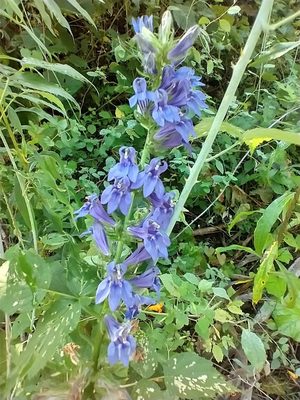
Great Blue Lobelia
Lobelia siphilitica
Spikes of true blue for late summer shade and damp ground, worked hard by bumblebees.
- Full–part sun
- Average–wet
- 2–3 ft
- Blooms Aug–Sep
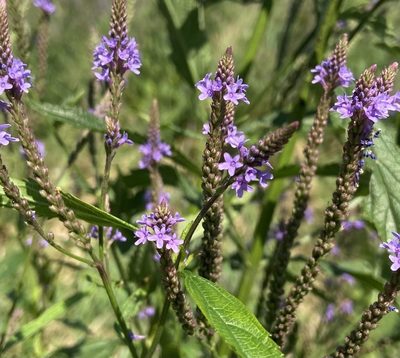
Blue Vervain
Verbena hastata
Candelabras of tiny violet flowers for wet ground, working for small native bees all summer.
- Full–part sun
- Average–wet
- 3–5 ft
- Blooms Jul–Sep

Buttonbush
Cephalanthus occidentalis
Spherical white 'pincushion' flowers over standing water, swarmed by butterflies and bees.
- Full–part sun
- Average–wet
- 5–10 ft
- Blooms Jun–Aug
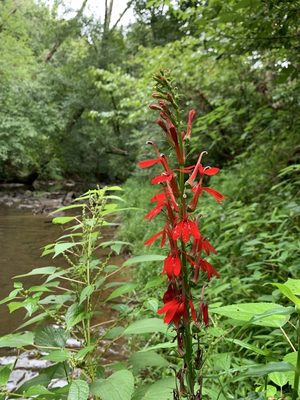
Cardinal Flower
Lobelia cardinalis
The most intense red in the native flora, built for the hummingbirds that pollinate it.
- Full–part sun
- Average–wet
- 2–4 ft
- Blooms Jul–Sep