- Home
- Plant guide
- Blue Elderberry

Gavin Slater (CC BY)
Blue Elderberry
Sambucus cerulea
Fast, big, and covered in flat cream flower heads, then dusty blue fruit that draws every fruit-eating bird in the county.
Native to: the Pacific Northwest · California · the Great Basin · the Mountain West · the desert Southwest
Growing Blue Elderberry
It grows quickly and loosely and is better at the back of a planting than the front. Only the ripe blue fruit is edible and only cooked; the rest of the plant is not.
Where it belongs
Blue elderberry grows through the Pacific states, the Great Basin, the Rockies and the Southwest, along streams, ditches, canyon bottoms, forest edges and any disturbed ground with a little moisture. It is one of the largest native shrubs of the West and often reads as a small tree.
The flat cream flower heads can be a foot across, and the fruit that follows is dusty blue with a pale waxy bloom that rubs off between the fingers.
Growing it
It is fast and it is large, commonly eight to twenty feet, and the most common mistake is putting it somewhere too small.
It wants sun or part shade and ground that holds some moisture, though established plants handle a dry summer better than their soft appearance suggests. Ordinary soil, clay and sand all work.
The growth is loose and the wood is brittle and pith-filled, so it is not a tidy shrub and never will be. Cut whole stems to the ground in late winter to keep it renewing; it responds by throwing vigorous new shoots.
What it feeds
The broad flat flower heads are a landing platform, which suits beetles, flies, small native bees and butterflies that cannot work deep flowers.
The fruit is the main event. Band-tailed pigeons, waxwings, robins, grosbeaks, thrushes and orioles all take it heavily, and a fruiting elderberry in August is one of the busiest plants a Western yard can hold. It is also a larval host for several moths, and the hollow stems are used by cavity-nesting native bees.
Living with it
Give it the back of a planting, a property edge, a ditch line, or the wet corner nothing else wants. It is a working shrub rather than an ornamental one.
On edibility, be precise: the ripe blue fruit is used for jelly, syrup and wine and is generally prepared cooked. The leaves, bark, roots and unripe fruit contain compounds that cause vomiting and are not food. Red-fruited elderberries are a different species and are treated differently again. If you plan to eat any of it, learn it from a source that specializes in that, not from a garden page.
It’s fast-growing, easy to grow, showy, and drought-tolerant.Where it grows
Blue Elderberry is native to the Pacific Northwest. In the wild you’ll find it across Arizona · California · Colorado · Idaho · Montana · Nevada · New Mexico · Oregon · Texas · Utah and 2 more states. Always confirm it suits your specific county with your state native plant society before planting.
Regional Garden has written state guides covering Blue Elderberry in 12 of them so far.
Good for
Where to buy Blue Elderberry
Some links here are affiliate links and we may earn a small commission at no extra cost to you.
What a first-year Blue Elderberry planting needs, from a pH kit to mulch.
Companions & kin.
Natives that share Blue Elderberry’s range and conditions.

Golden Currant
Ribes aureum
Yellow spring flowers that smell of cloves, black fruit birds strip in a week, and red foliage in the fall.
- Full–part sun
- Dry–average
- 4–8 ft
- Blooms Apr–May

Saskatoon Serviceberry
Amelanchier alnifolia
White flowers before the leaves, then fruit that tastes like a sweet blueberry, then orange fall color.
- Full–part sun
- Dry–average
- 6–15 ft
- Blooms Apr–May
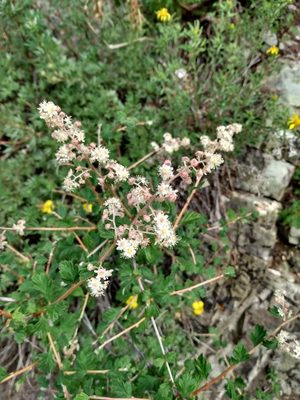
Oceanspray
Holodiscus discolor
Foaming cream plumes in midsummer that dry to tan and stand all winter, on a shrub that takes sun or shade and no water.
- Sun to shade
- Dry–average
- 6–12 ft
- Blooms Jun–Jul
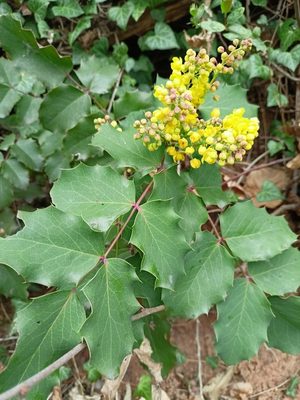
Oregon Grape
Berberis aquifolium
Holly-like evergreen leaves, fragrant yellow spring flowers, and blue berries. It is Oregon's state flower.
- Sun to shade
- Dry–average
- 3–6 ft
- Blooms Mar–Apr