- Home
- Collections
- Drought-tolerant
Drought-Tolerant Native Plants
Deep-rooted native plants that shrug off heat and dry spells and rarely need watering once they are established.
The phrase hides a condition
Every drought-tolerant plant description carries the words "once established," and they do the heavy lifting.
A prairie perennial's drought tolerance comes from a root system that can run six to fifteen feet down. A compass plant root reaches fifteen feet. Big bluestem roots go six to ten. A nursery plant arrives with a root ball six inches across and none of that.
Building it takes one to three seasons, and during that time the plant needs water like anything else. Gardeners who plant a drought-tolerant species and water it once lose it, and conclude the plant was oversold.
How to water so the roots go down
Deep and infrequent, not light and often.
A long slow soak that wets the soil to a foot or more, every seven to ten days through the first season, drives roots downward looking for the water. Daily light sprinkling keeps moisture in the top two inches and produces a shallow root system that then depends on you permanently.
Second season: taper to every two or three weeks in dry spells. After that, in most of the country, stop entirely.
Fall planting is the single best decision you can make with these species, because roots grow through the cool wet months while the top is dormant, and the plant faces its first summer with real reserves.
The western exception, which is the opposite rule
Across most of the country, watering an established drought-tolerant plant is merely unnecessary. In the summer-dry West it is actively lethal.
California and Pacific Northwest natives such as ceanothus, manzanita, and toyon evolved with wet winters and bone-dry summers. Summer irrigation encourages soil pathogens that kill the roots, and this is the standard way a healthy-looking native shrub dies in a western garden.
Plant them away from lawns and irrigated beds, water through establishment, then stop completely.
Drainage is usually the real killer
Most plants sold as drought tolerant are also intolerant of wet feet, and in practice more of them die in winter from soggy soil than in summer from dry soil.
If your ground stays wet after rain, raise the planting: a mound, a slope, or a gravel bed. Do not amend a clay hole with compost and drop a dry-country plant into it, which produces a bathtub that holds water around the crown.
Skip fertilizer entirely. Lean soil is what these plants are adapted to, and feeding them produces soft growth that flops and dies back.
Sources: Lady Bird Johnson Wildflower Center, University of Texas at Austin (species profiles and establishment guidance); US Department of Agriculture Natural Resources Conservation Service (root depth data for prairie species); California Native Plant Society (summer water intolerance in western natives).
66 native species in this collection.
Drought-tough natives earn their reputation with deep roots, so the secret is patience: water them through the first season while those roots reach down, then taper off and let them fend for themselves. Plant in fall or early spring, give them sharp drainage and full sun, and resist the urge to coddle, because overwatering kills more of these than any heat wave.
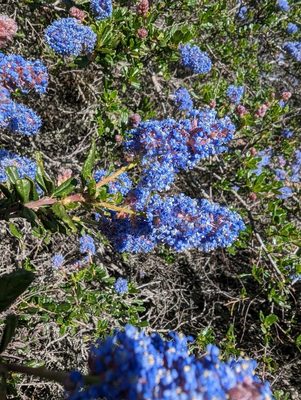
California Lilac
Ceanothus thyrsiflorus
Sheets of true-blue spring flowers on an evergreen shrub that hums with bees on the West Coast.
- Full sun
- Dry
- 6–20 ft
- Blooms Mar–May
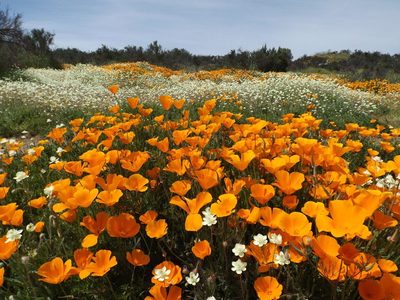
California Poppy
Eschscholzia californica
The silken orange state flower of California, painting dry hillsides every spring.
- Full sun
- Dry
- 8–18 in
- Blooms Mar–Jun
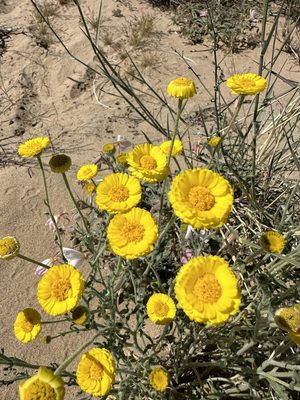
Desert Marigold
Baileya multiradiata
A silver-leaved desert daisy that blooms almost year-round on rainfall alone.
- Full sun
- Dry
- 12–18 in
- Blooms Mar–Oct
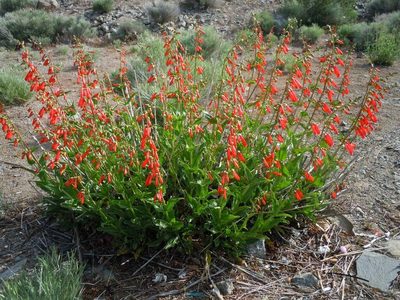
Firecracker Penstemon
Penstemon eatonii
Scarlet tubular flowers timed to the spring hummingbird migration through the desert Southwest.
- Full sun
- Dry
- 1.5–3 ft
- Blooms Mar–May
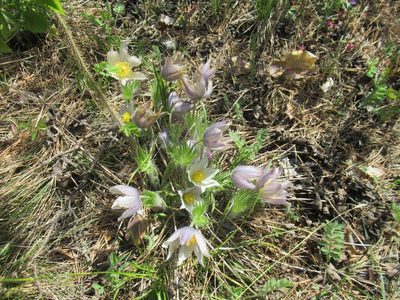
Pasque Flower
Pulsatilla patens
One of the very first prairie flowers, silky purple cups pushing up through cold early-spring ground.
- Full sun
- Dry
- 6–12 in
- Blooms Mar–Apr
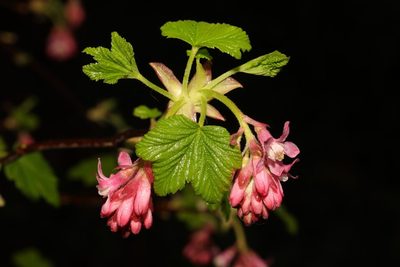
Red-Flowering Currant
Ribes sanguineum
Cascades of rose-pink tassels timed exactly to the return of the rufous hummingbird each spring.
- Full–part sun
- Dry–average
- 5–9 ft
- Blooms Mar–Apr
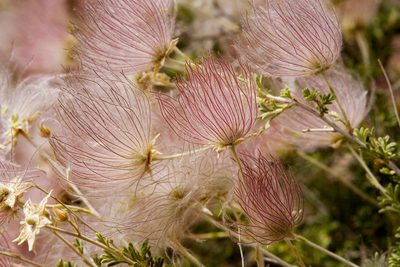
Apache Plume
Fallugia paradoxa
White rose-like flowers and feathery pink seed plumes together on one airy desert shrub.
- Full sun
- Dry
- 3–6 ft
- Blooms Apr–Sep
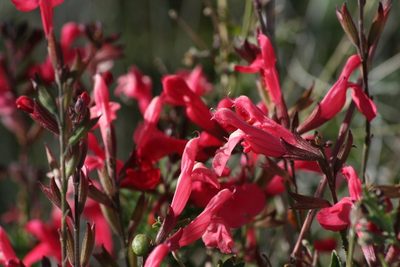
Autumn Sage
Salvia greggii
A tough little evergreen sage that feeds hummingbirds from spring to frost in Texas and the Southwest.
- Full–part sun
- Dry
- 2–3 ft
- Blooms Apr–Oct
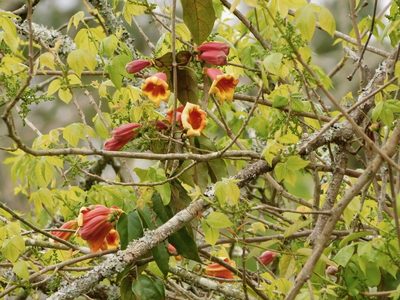
Crossvine
Bignonia capreolata
A vigorous, semi-evergreen climber that smothers a fence in orange-red trumpets each spring.
- Full–part sun
- Dry–average
- 25–50 ft
- Blooms Apr–May

Prairie Smoke
Geum triflorum
Nodding pink spring bells that turn into smoky, feathered seed plumes, the show after the flower.
- Full–part sun
- Dry
- 6–16 in
- Blooms Apr–May

Saskatoon Serviceberry
Amelanchier alnifolia
White flowers before the leaves, then fruit that tastes like a sweet blueberry, then orange fall color.
- Full–part sun
- Dry–average
- 6–15 ft
- Blooms Apr–May
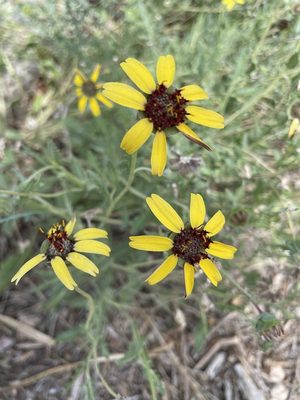
Chocolate Flower
Berlandiera lyrata
Yellow daisies that genuinely smell of chocolate each morning, and bloom all summer in heat.
- Full sun
- Dry
- 1–2 ft
- Blooms May–Sep

Common Yarrow
Achillea millefolium
A near-continental native with flat flower heads that feed tiny beneficial insects, tough as a weed.
- Full sun
- Dry–average
- 1.5–3 ft
- Blooms May–Aug
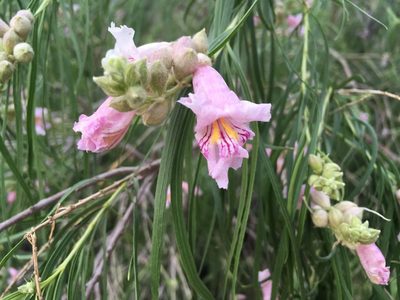
Desert Willow
Chilopsis linearis
A graceful desert tree hung with orchid-like trumpets all summer, fueled by nothing but heat.
- Full sun
- Dry
- 15–25 ft
- Blooms May–Sep
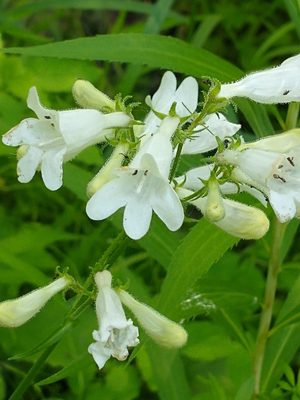
Foxglove Beardtongue
Penstemon digitalis
Airy white bells in early summer, a bridge bloom between spring ephemerals and the summer prairie.
- Full–part sun
- Dry–average
- 2–4 ft
- Blooms May–Jun
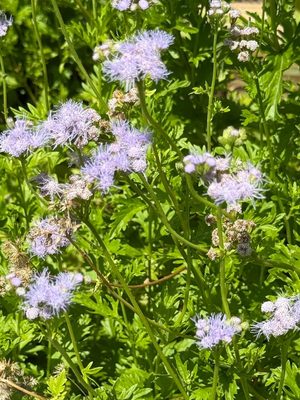
Gregg's Mistflower
Conoclinium greggii
Fuzzy blue flowers that act like a magnet for queen and monarch butterflies in the Southwest.
- Full–part sun
- Dry–average
- 1–2 ft
- Blooms May–Oct
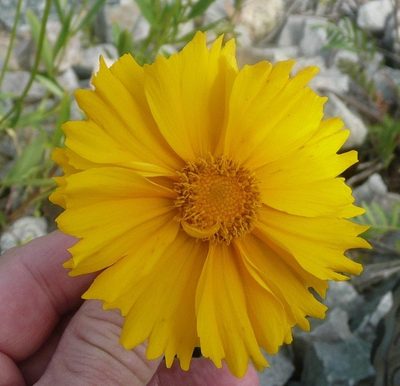
Lanceleaf Coreopsis
Coreopsis lanceolata
Sunny gold daisies for weeks in early summer on the leanest, driest soil you can offer.
- Full sun
- Dry–average
- 1.5–2 ft
- Blooms May–Jul
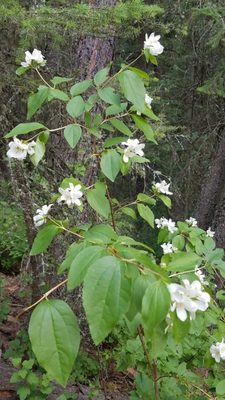
Lewis's Mock Orange
Philadelphus lewisii
Two weeks in early summer when the whole shrub smells of orange blossom, and the rest of the year asking for nothing.
- Full–part sun
- Dry–average
- 5–10 ft
- Blooms May–Jun
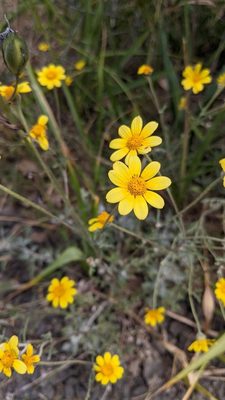
Oregon Sunshine
Eriophyllum lanatum
Silver-woolly foliage under golden daisies, on a plant that treats a hot dry summer as normal weather.
- Full sun
- Dry
- 0.7–2 ft
- Blooms May–Jul
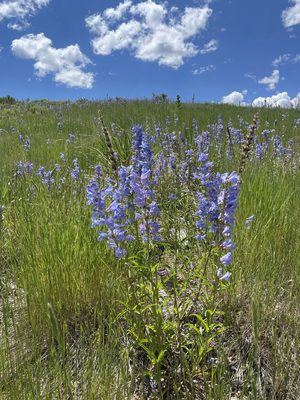
Rocky Mountain Penstemon
Penstemon strictus
Spires of glossy blue tubes built for bumblebees, and one of the easiest western penstemons to grow.
- Full sun
- Dry
- 1.5–2.5 ft
- Blooms May–Jul
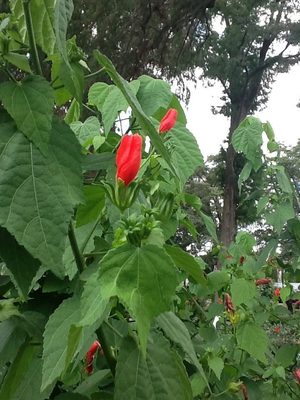
Turk's Cap
Malvaviscus arboreus var. drummondii
One of the few natives that pours out hummingbird-red flowers in dry shade all season long.
- Sun to shade
- Dry–average
- 2–5 ft
- Blooms May–Oct
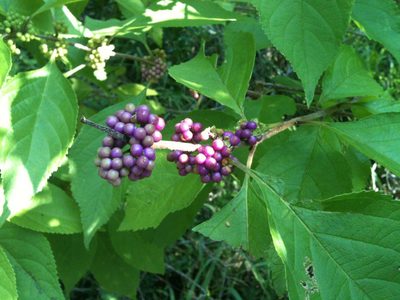
American Beautyberry
Callicarpa americana
Unreal clusters of metallic-purple berries hug the stems in fall and feed dozens of bird species.
- Full–part sun
- Dry–average
- 4–7 ft
- Blooms Jun–Jul
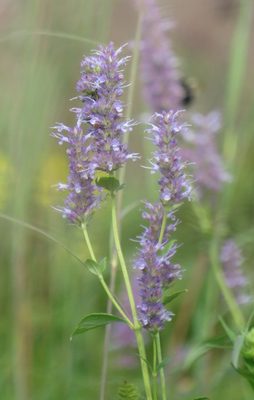
Anise Hyssop
Agastache foeniculum
Months of lavender spikes over licorice-scented foliage, mobbed by bees from dawn to dusk.
- Full–part sun
- Dry–average
- 2–4 ft
- Blooms Jun–Sep
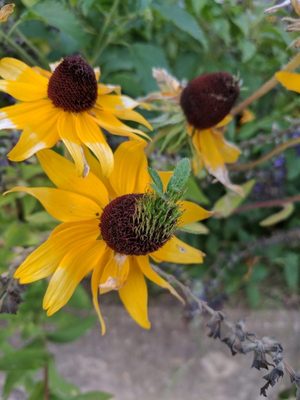
Black-Eyed Susan
Rudbeckia hirta
A cheerful, unkillable starter native that blooms its first year and seeds itself politely around.
- Full–part sun
- Dry–average
- 1.5–3 ft
- Blooms Jun–Sep
Drought-tolerant, near you.
Whether a species belongs in your yard depends on where you garden. These state guides cover it.
Where to find drought-tolerant plants
Some links here are affiliate links and we may earn a small commission at no extra cost to you.
What a first-year Drought-tolerant planting needs, from a pH kit to mulch.