- Home
- Plant guide
- Prairie Smoke

Alan Covington (CC BY)
Prairie Smoke
Geum triflorum
Nodding pink spring bells that turn into smoky, feathered seed plumes, the show after the flower.
Native to: the Midwest · the Great Plains · the Mountain West · the Great Basin · the Pacific Northwest
Growing Prairie Smoke
A low, early native for sharp-drained, sunny ground and rock gardens. The wispy pink seed heads are the real spectacle.
Where it belongs
Prairie smoke is native to the upper Midwest, northern Plains, Mountain West, Great Basin, and inland Pacific Northwest, growing on dry prairie, gravel hills, rocky slopes, and open mountain meadows.
It is a low plant with a two-part show, and the second part is the reason to grow it. In April it produces nodding, half-closed pink bells that never open fully and look permanently about to bloom. Then the seed heads turn upward and each seed extends a long feathered tail, so the plant carries a haze of smoky pink filaments a hand's width across, for weeks.
Growing it
Full sun to part sun, dry soil, in rocky ground, loam, or sand, zones 3 to 7. Six to sixteen inches.
Sharp drainage and cool summers. It is a northern plant, and in hot humid southern gardens it usually fails regardless of care. Zone 7 is the practical southern limit.
Do not mulch heavily over the crown, and do not plant it in rich, damp, heavily amended soil. A gravel bed, a rock garden, a dry slope, or the front of a lean sunny border all suit it.
The foliage is a low fern-like rosette that stays semi-evergreen, bronzing in winter, so the plant holds a spot rather than disappearing.
It spreads slowly by rhizome into a low patch and can be divided in early spring.
What it feeds
Bloom comes in April and early May, which is genuinely early for a sunny prairie plant, and the timing is what makes it valuable.
The flower stays nearly closed, so getting the nectar takes force. Bumblebee queens are the primary pollinators, working the bells by pushing in or by vibrating them, and those queens are foraging alone at the coldest, leanest part of their year. Small native bees collect pollen.
It offers little to butterflies. Its contribution is early bumblebee forage in open, dry ground, which is a specific gap in most sunny plantings.
Living with it
Deer leave it alone.
Site it where you will walk past it, and where the low afternoon sun can come through the seed plumes from behind. At a distance the effect is a pink mist sitting on the ground; up close the structure is worth stopping for.
There is essentially no maintenance. Do not cut it back in fall, since the rosette is evergreen. Comb out any dead leaves in spring.
Sources: USDA PLANTS Database (native range); Lady Bird Johnson Wildflower Center, University of Texas at Austin (species profile); Xerces Society (early spring bumblebee queen forage).
It’s deer-resistant, drought-tolerant, and showy.Where it grows
Prairie Smoke is native to the Midwest. In the wild you’ll find it across Arizona · Arkansas · California · Colorado · Idaho · Illinois · Indiana · Iowa · Kansas · Kentucky and 21 more states. Always confirm it suits your specific county with your state native plant society before planting.
Regional Garden has written state guides covering Prairie Smoke in 31 of them so far.
Good for
Where to buy Prairie Smoke
Some links here are affiliate links and we may earn a small commission at no extra cost to you.
What a first-year Prairie Smoke planting needs, from a pH kit to mulch.
Companions & kin.
Natives that share Prairie Smoke’s range and conditions.

Common Yarrow
Achillea millefolium
A near-continental native with flat flower heads that feed tiny beneficial insects, tough as a weed.
- Full sun
- Dry–average
- 1.5–3 ft
- Blooms May–Aug
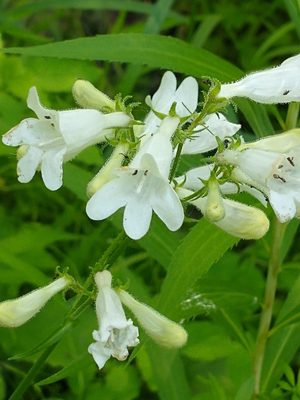
Foxglove Beardtongue
Penstemon digitalis
Airy white bells in early summer, a bridge bloom between spring ephemerals and the summer prairie.
- Full–part sun
- Dry–average
- 2–4 ft
- Blooms May–Jun
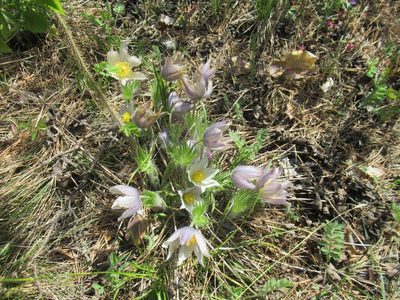
Pasque Flower
Pulsatilla patens
One of the very first prairie flowers, silky purple cups pushing up through cold early-spring ground.
- Full sun
- Dry
- 6–12 in
- Blooms Mar–Apr
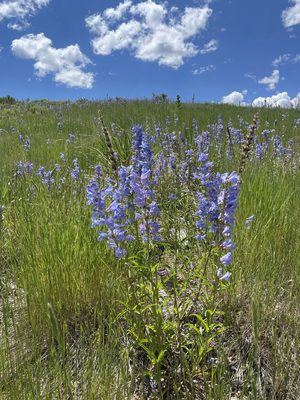
Rocky Mountain Penstemon
Penstemon strictus
Spires of glossy blue tubes built for bumblebees, and one of the easiest western penstemons to grow.
- Full sun
- Dry
- 1.5–2.5 ft
- Blooms May–Jul