- Home
- Collections
- Groundcovers
Native Groundcover Plants
Low, spreading natives that knit together to cover bare ground, smother weeds, and replace thirsty lawn or mulch.
The case against annual mulching
The standard American planting is specimens spaced apart in a field of bark mulch, refreshed every spring. It works, and it costs money and a weekend every year forever, and it supports nothing.
A continuous layer of low plants does what the mulch does: shades the soil, suppresses weed germination, moderates temperature, and slows erosion. It also holds moisture, feeds insects, and gets denser rather than thinner over time.
In natural plant communities there is no bare ground. Something covers every inch, and that is the model worth copying.
Match the plant to the site, not to a list
Groundcovers are the plants most often installed in the wrong conditions, because people treat them as interchangeable.
For dry shade under trees, Pennsylvania sedge, wild ginger, and Christmas fern. For moist shade, foamflower and wild geranium. For a hot dry sunny slope, creeping phlox and the low form of fragrant sumac. For sandy, cold, exposed ground, bearberry. For a large sunny area that needs to look like a meadow rather than a carpet, prairie dropseed or blue grama.
A groundcover in the wrong conditions stays thin and patchy for years, which looks worse than mulch.
Getting to closure
The first two or three years are the whole difficulty. Until plants knit together, the open ground between them grows weeds, and a groundcover planting abandoned during that period fails.
Spacing is a straight tradeoff. Plants at twelve inches close in two years and cost twice what plants at eighteen inches do, which take three or four. Decide which you would rather spend.
Mulch lightly between the plants for the first season only, then let them take over. Weed regularly during establishment, and be prepared to keep at it for about two seasons.
Water through the first year, and choose an appropriate species rather than trying to make a difficult one work.
The invasive alternatives, and why to skip them
English ivy, periwinkle, Japanese pachysandra, and wintercreeper are the four groundcovers most commonly planted in shade, and all four escape into natural areas. English ivy climbs and kills mature trees. Periwinkle forms mats that exclude woodland wildflowers entirely.
The native replacements do the same job at the same scale. They are slower to establish, which is the honest tradeoff, and they do not turn up in the woods behind the neighborhood ten years later.
Sources: Lady Bird Johnson Wildflower Center, University of Texas at Austin (species profiles and cultural requirements); Mt. Cuba Center (groundcover trials on rate of spread and coverage); US National Park Service and state invasive plant councils (invasive groundcover impacts in eastern forests).
15 native species in this collection.
A living native groundcover does everything mulch does and then keeps doing it for free: covering soil, blocking weeds, and feeding wildlife as it goes. Match the spreader to the site (sun or shade, wet or dry), plant on tight centers so they close ranks in a season or two, and weed faithfully that first year while they fill in.
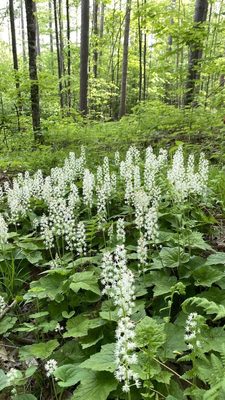
Foamflower
Tiarella cordifolia
Frothy white spring spires over heart-shaped, semi-evergreen foliage in deep shade.
- Part shade
- Average
- 6–12 in
- Blooms Apr–May

Prairie Smoke
Geum triflorum
Nodding pink spring bells that turn into smoky, feathered seed plumes, the show after the flower.
- Full–part sun
- Dry
- 6–16 in
- Blooms Apr–May
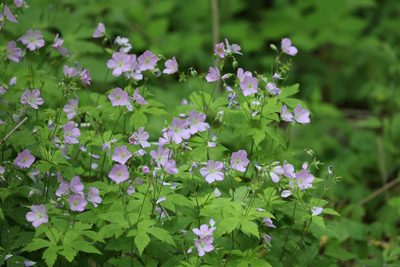
Wild Geranium
Geranium maculatum
A mounding woodland staple with lilac-pink spring flowers and good fall foliage color.
- Part shade
- Average
- 1.5–2 ft
- Blooms Apr–Jun
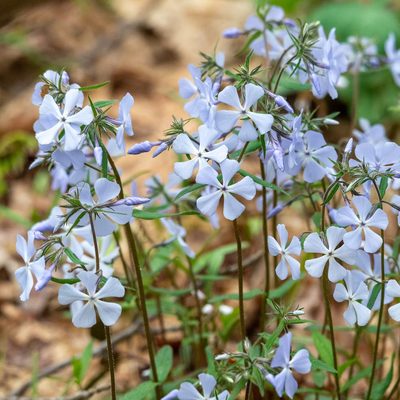
Woodland Phlox
Phlox divaricata
A sweetly fragrant, low spreading phlox that carpets the spring woodland floor in blue.
- Part shade
- Average
- 10–15 in
- Blooms Apr–May

Common Yarrow
Achillea millefolium
A near-continental native with flat flower heads that feed tiny beneficial insects, tough as a weed.
- Full sun
- Dry–average
- 1.5–3 ft
- Blooms May–Aug
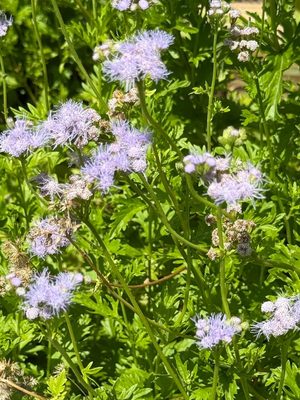
Gregg's Mistflower
Conoclinium greggii
Fuzzy blue flowers that act like a magnet for queen and monarch butterflies in the Southwest.
- Full–part sun
- Dry–average
- 1–2 ft
- Blooms May–Oct
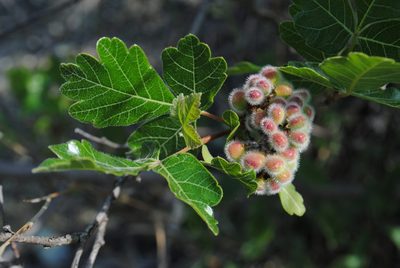
Fragrant Sumac
Rhus aromatica
A low, spreading shrub that blankets dry banks and blazes scarlet and orange in fall.
- Full–part sun
- Dry
- 2–6 ft
- Blooms Mar–Apr
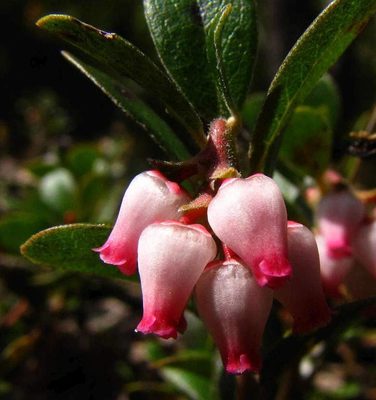
Bearberry
Arctostaphylos uva-ursi
A glossy evergreen mat that grips sandy, sunny banks where nothing else will hold, even by the sea.
- Full–part sun
- Dry
- 4–8 in
- Blooms Apr–May
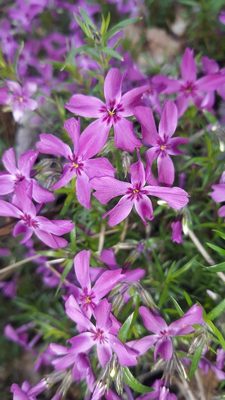
Creeping Phlox
Phlox subulata
A sheet of spring color that spills over walls and stitches a dry, sunny slope together.
- Full–part sun
- Dry–average
- 4–8 in
- Blooms Apr–May
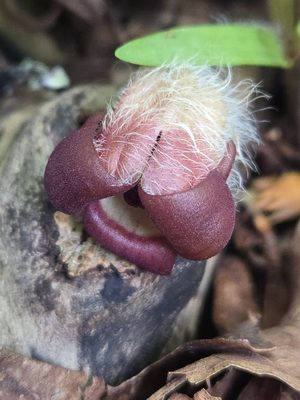
Wild Ginger
Asarum canadense
A lush, heart-leaved carpet for dry shade where lawn and hostas give up.
- Part shade
- Average
- 4–8 in
- Blooms Apr–May
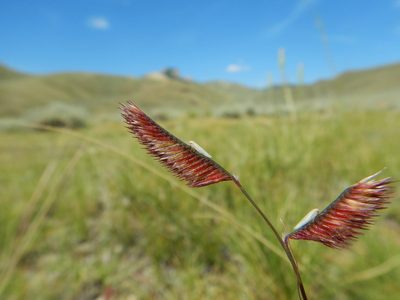
Blue Grama
Bouteloua gracilis
A fine, low prairie grass with quirky horizontal 'eyebrow' seed heads, and a great no-water lawn.
- Full sun
- Dry
- 8–20 in
- Blooms Jun–Aug
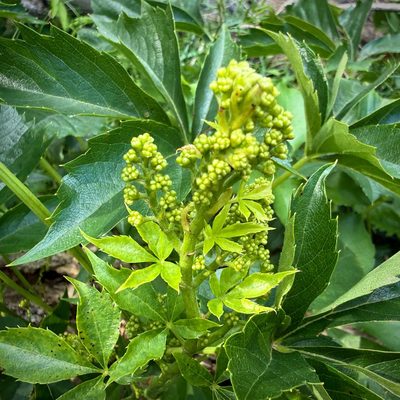
Virginia Creeper
Parthenocissus quinquefolia
A tough native climber grown for spectacular scarlet fall color and berries that 35+ bird species eat.
- Sun to shade
- Dry–average
- 30–50 ft
- Blooms Jun
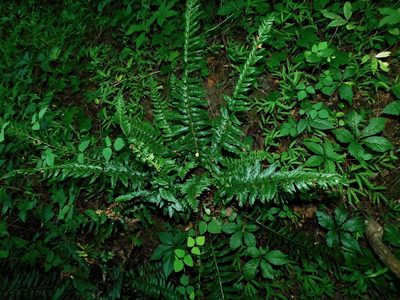
Christmas Fern
Polystichum acrostichoides
A tough evergreen fern that holds its green fronds through winter and grips a shady slope.
- Part shade
- Dry–average
- 1–2 ft
- Evergreen
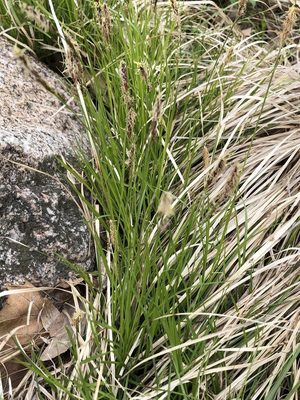
Pennsylvania Sedge
Carex pensylvanica
A soft, fine-textured sedge that makes a no-mow native lawn for dry shade.
- Part shade
- Dry–average
- 6–12 in
- Foliage
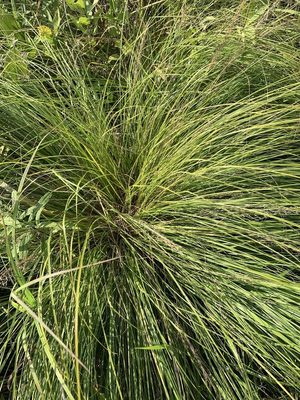
Prairie Dropseed
Sporobolus heterolepis
The most refined native grass: a fountain of fine emerald threads that turn amber in fall.
- Full sun
- Dry–average
- 2–3 ft
- Fall color
Groundcovers, near you.
Whether a species belongs in your yard depends on where you garden. These state guides cover it.
Where to find groundcovers plants
Some links here are affiliate links and we may earn a small commission at no extra cost to you.
What a first-year Groundcovers planting needs, from a pH kit to mulch.