- Home
- Plant guide
- Virginia Creeper
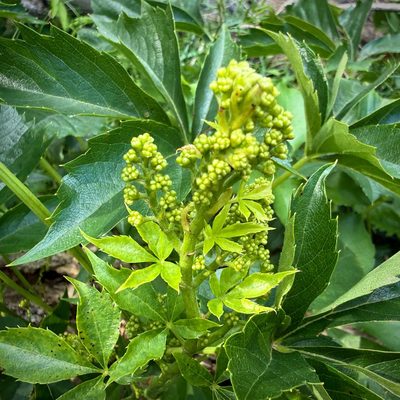
Caroline Kane (CC BY)
Virginia Creeper
Parthenocissus quinquefolia
A tough native climber grown for spectacular scarlet fall color and berries that 35+ bird species eat.
Native to: the Northeast · the Mid-Atlantic · the Southeast · the Midwest · the Great Plains · the South-Central region
Growing Virginia Creeper
Covers walls, fences, and bare banks fast, in sun or full shade. The blue-black berries are a major fall fuel stop for migrating birds, but toxic to people.
Where it belongs
Virginia creeper is native across the East, Midwest, Plains, and Texas, growing in woods, along fencerows, on rock faces, and up the trunks of trees. It is one of the most common native vines in the country.
It climbs by tendrils that end in adhesive pads, gripping brick, stone, wood, and bark without any support. It grows in full sun and in deep shade, in dry soil and in ordinary soil, and it grows fast.
That combination makes it useful and makes it something to place deliberately. This is a vine for a fence, a bare bank, a stone wall, or a dead tree, not for the side of a house you plan to repaint.
Growing it
Full sun, part sun, or shade, dry to medium soil, in loam, clay, or rocky ground, zones 3 to 9. Thirty to fifty feet.
There is nothing to getting it established. It is drought tolerant, shade tolerant, cold hardy, and untroubled by soil type.
It also works as a groundcover on a rough bank, running along the surface and rooting as it goes, which holds soil on ground too steep or dry to plant conventionally.
Cut it back whenever and however you like. It tolerates hard pruning at any time and regrows fast. The realistic maintenance is an annual pass to keep it out of gutters, off shingles, and away from anything you do not want covered.
What it feeds
The flowers in June are small and greenish and nearly invisible, and bees work them.
It is a significant host plant, supporting the caterpillars of several sphinx moths including the Virginia creeper sphinx and the Pandora sphinx, which are large and remarkable insects.
The fruit is the main contribution. Blue-black berries ripen in fall and are high in fat, and more than thirty bird species are documented eating them, including thrushes, woodpeckers, bluebirds, catbirds, and mockingbirds. The timing coincides with fall migration, when high-fat fruit is what a bird needs.
Fall color is the other reason to grow it: a clear brilliant scarlet, often the first strong color in the woods, and it holds for weeks.
Living with it
Deer generally leave it alone.
The berries are toxic to people. They contain oxalate crystals and should never be eaten, which is worth knowing in a yard with children since they look edible.
The leaves have five leaflets, which distinguishes it from poison ivy's three. It is a reliable field mark and worth teaching to anyone who works in the yard. Some people do develop a rash from the sap, so wear gloves when cutting it back.
Sources: USDA PLANTS Database (native range); Lady Bird Johnson Wildflower Center, University of Texas at Austin (species profile); Cornell Lab of Ornithology (fall fruit and migration); National Capital Poison Center (oxalate toxicity of the fruit).
It’s deer-resistant, drought-tolerant, good fall color, easy to grow, and fast-growing.Where it grows
Virginia Creeper is native to the Northeast. In the wild you’ll find it across Alabama · Arkansas · Colorado · Connecticut · Delaware · Florida · Georgia · Illinois · Indiana · Iowa and 32 more states. Always confirm it suits your specific county with your state native plant society before planting.
Regional Garden has written state guides covering Virginia Creeper in 42 of them so far.
Good for
Where to buy Virginia Creeper
Some links here are affiliate links and we may earn a small commission at no extra cost to you.
What a first-year Virginia Creeper planting needs, from a pH kit to mulch.
Companions & kin.
Natives that share Virginia Creeper’s range and conditions.
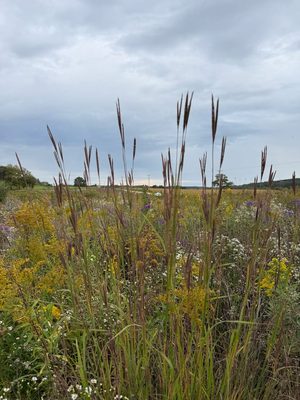
Big Bluestem
Andropogon gerardii
The towering 'turkey-foot' grass that once defined the tallgrass prairie, head-high by fall.
- Full sun
- Dry to wet
- 4–7 ft
- Fall color
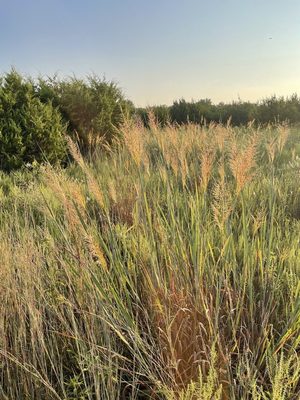
Indian Grass
Sorghastrum nutans
Tall golden plumes catch the autumn light above a classic tallgrass-prairie planting.
- Full sun
- Dry–average
- 4–7 ft
- Fall color
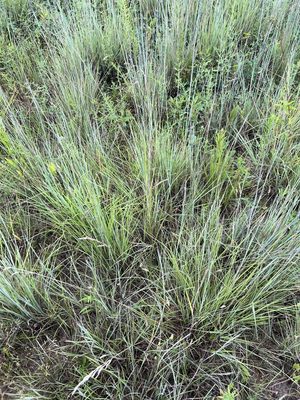
Little Bluestem
Schizachyrium scoparium
The backbone grass of the prairie: blue-green in summer, glowing copper and silver all winter.
- Full sun
- Dry–average
- 2–4 ft
- Fall color
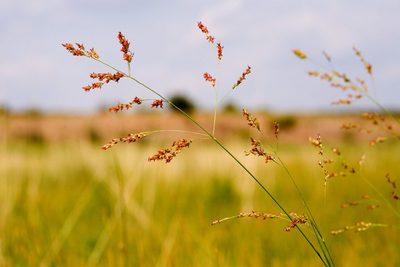
Switchgrass
Panicum virgatum
An upright, clumping grass with a summer haze of pink seed heads and reliable golden fall color.
- Full–part sun
- Dry to wet
- 3–6 ft
- Fall color