- Home
- Plant guide
- Big Bluestem
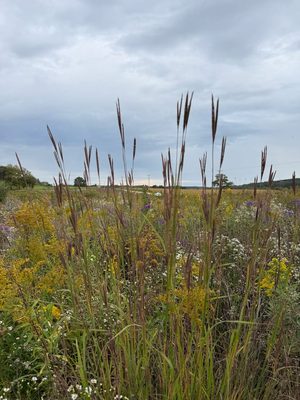
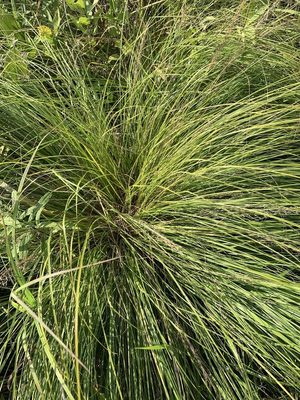
Brandon Corder (CC BY)
Big Bluestem
Andropogon gerardii
The towering 'turkey-foot' grass that once defined the tallgrass prairie, head-high by fall.
Native to: the Northeast · the Mid-Atlantic · the Southeast · the Midwest · the Great Plains · the South-Central region
Growing Big Bluestem
A monumental warm-season grass for big spaces and screening. Its deep roots build soil and never need water once established.
Where it belongs
Big bluestem was the dominant plant across the tallgrass prairie, from Ohio to the eastern Plains and south into Texas. On deep soil it grew tall enough to hide a rider on horseback, and its root mass built the black prairie soils that were later plowed for corn.
That history is the reason to plant it and also the reason to be careful. It is a big plant with a big appetite for space, and it is not a border grass.
Growing it
Full sun, dry to wet soil, in loam, clay, or sand, zones 3 to 9. Four to seven feet by fall, in a clump two to three feet across.
It is a warm-season grass, which changes the calendar. It stays dormant until soil temperatures rise, often not showing meaningful growth until late May, and then it grows fast through the heat of July and August when cool-season grasses have stalled. Most of its height arrives in the second half of summer.
The roots go down six to ten feet. Once established it does not need water, does not need fertilizer, and improves the soil it sits in.
Give it full sun. In shade or in overly rich ground the stems lean and the clump opens in the middle.
What it feeds
The seed head splits into three curved spikes, which is what turkey foot refers to, and it is a reliable identification feature.
Grasses are host plants, and that is their main wildlife role. A range of skippers and moths feed on big bluestem as caterpillars, and several depend heavily on it. Sparrows and juncos take the seed. Standing clumps hold snow and give ground birds winter cover, and the dense base is used for nesting.
The fall color is the ornamental payoff: the whole plant turns bronze, copper, and wine purple, and holds that color through winter.
Living with it
Deer do not bother it.
Plant it where the scale works: as a back layer, a summer screen, a meadow matrix, or on a bank where erosion is a problem. In a small bed, little bluestem or prairie dropseed is the right plant instead, and neither will overwhelm what is next to it.
It seeds itself modestly in open ground. In a mowed setting the mower controls the edges for you.
Leave it standing all winter. Cut it back in late March, before the new growth starts.
Sources: USDA PLANTS Database (native range); Lady Bird Johnson Wildflower Center, University of Texas at Austin (species profile); USDA Natural Resources Conservation Service (plant guide, root depth and conservation use); Xerces Society (skippers and native grasses as host plants).
It’s deer-resistant, drought-tolerant, good fall color, and good for winter interest.Where it grows
Big Bluestem is native to the Northeast. In the wild you’ll find it across Alabama · Arkansas · Colorado · Connecticut · Delaware · Florida · Georgia · Illinois · Indiana · Iowa and 32 more states. Always confirm it suits your specific county with your state native plant society before planting.
Regional Garden has written state guides covering Big Bluestem in 42 of them so far.
Good for
Where to buy Big Bluestem
Some links here are affiliate links and we may earn a small commission at no extra cost to you.
What a first-year Big Bluestem planting needs, from a pH kit to mulch.
Companions & kin.
Natives that share Big Bluestem’s range and conditions.
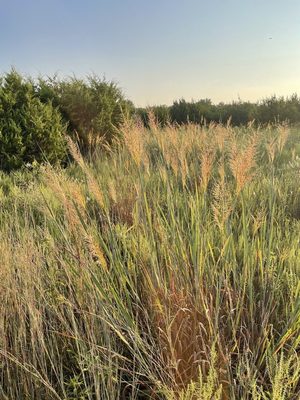
Indian Grass
Sorghastrum nutans
Tall golden plumes catch the autumn light above a classic tallgrass-prairie planting.
- Full sun
- Dry–average
- 4–7 ft
- Fall color
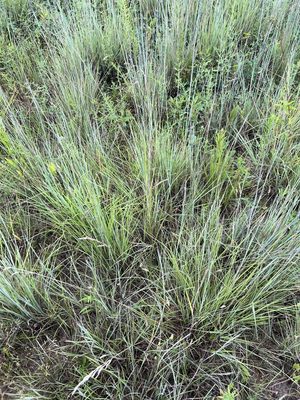
Little Bluestem
Schizachyrium scoparium
The backbone grass of the prairie: blue-green in summer, glowing copper and silver all winter.
- Full sun
- Dry–average
- 2–4 ft
- Fall color
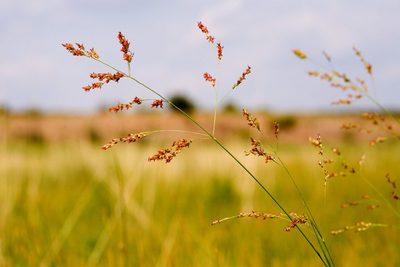
Switchgrass
Panicum virgatum
An upright, clumping grass with a summer haze of pink seed heads and reliable golden fall color.
- Full–part sun
- Dry to wet
- 3–6 ft
- Fall color
Prairie Dropseed
Sporobolus heterolepis
The most refined native grass: a fountain of fine emerald threads that turn amber in fall.
- Full sun
- Dry–average
- 2–3 ft
- Fall color