- Home
- Plant guide
- Prairie Dropseed
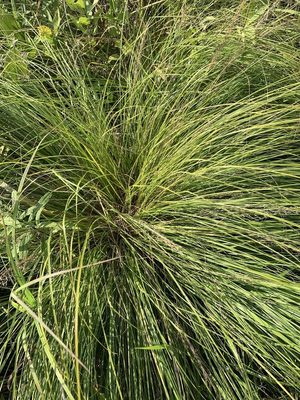
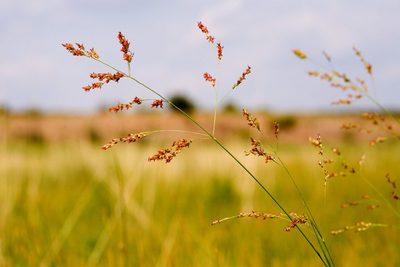
Peter Goodspeed (CC BY)
Prairie Dropseed
Sporobolus heterolepis
The most refined native grass: a fountain of fine emerald threads that turn amber in fall.
Native to: the Midwest · the Great Plains · the Northeast · the Mid-Atlantic · the South-Central region
Growing Prairie Dropseed
The flowers carry a curious scent of coriander or buttered popcorn. Slow to establish but unmatched as an elegant, mounding border grass.
Where it belongs
Prairie dropseed is native to the Midwest, Plains, Texas, and parts of the Northeast and Mid-Atlantic, growing on dry and mesic prairie, on limestone glades, and in gravel hill prairie. It is an indicator of high-quality prairie remnants and is uncommon in disturbed ground.
Among native grasses it is the one designers reach for when the planting has to look refined. The leaves are hair-fine and arch outward into a symmetrical mound, and a row of them along a walk reads as deliberate in a way that a prairie planting usually does not.
Growing it
Full sun, dry to medium soil, in loam, rocky ground, or sand, zones 3 to 8. Two to three feet in flower, with the foliage mound closer to eighteen inches.
Drainage and sun. It is drought tolerant once the roots are down and it dislikes wet feet, particularly in winter.
The one real cost is time. It is notably slow from seed and slow to bulk up, often taking three or four years to reach full size. Buy plants rather than sowing seed unless you are patient, and space them at eighteen to twenty-four inches so the mounds just touch when mature.
It is a clumper. It does not run, does not reseed aggressively, and does not need dividing. Once it is there, it stays put for decades.
What it feeds
The scent is the first thing people notice. The flower panicles, open in late summer, carry a distinct smell usually described as coriander, buttered popcorn, or hot wax. Walk past a planting on a warm August evening and it is unmistakable.
The seeds are small, round, and drop cleanly when ripe, which gives the plant its name. Sparrows, juncos, and finches take them through fall and winter.
Skippers use it as a caterpillar host. The dense mounded base shelters overwintering insects, and bumblebees sometimes nest at the crown.
Living with it
Deer do not eat it.
Fall color runs through gold to a deep pumpkin orange and then to light amber, and the mound holds its shape through winter snow rather than flattening.
It combines well with anything upright: rattlesnake master, blazing star, purple coneflower, and butterfly weed all sit comfortably above the fine texture.
Cut back in early spring, or comb the dead foliage out with your fingers, which is quicker and leaves the shape intact.
Sources: USDA PLANTS Database (native range); Lady Bird Johnson Wildflower Center, University of Texas at Austin (species profile); Xerces Society (native grasses as host plants and overwintering habitat).
It’s deer-resistant, drought-tolerant, fragrant, and good fall color.Where it grows
Prairie Dropseed is native to the Midwest. In the wild you’ll find it across Arkansas · Colorado · Connecticut · Delaware · Illinois · Indiana · Iowa · Kansas · Kentucky · Louisiana and 27 more states. Always confirm it suits your specific county with your state native plant society before planting.
Regional Garden has written state guides covering Prairie Dropseed in 37 of them so far.
Good for
Where to buy Prairie Dropseed
Some links here are affiliate links and we may earn a small commission at no extra cost to you.
What a first-year Prairie Dropseed planting needs, from a pH kit to mulch.
Companions & kin.
Natives that share Prairie Dropseed’s range and conditions.
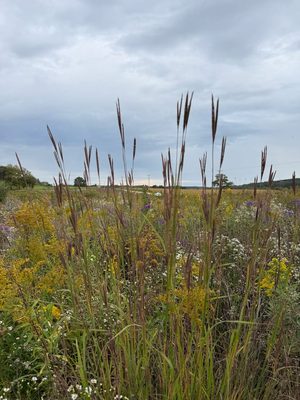
Big Bluestem
Andropogon gerardii
The towering 'turkey-foot' grass that once defined the tallgrass prairie, head-high by fall.
- Full sun
- Dry to wet
- 4–7 ft
- Fall color
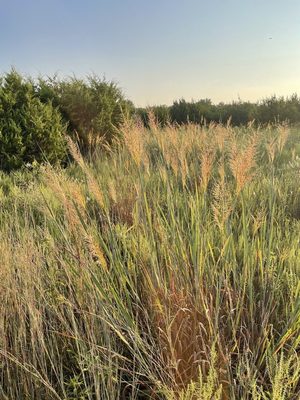
Indian Grass
Sorghastrum nutans
Tall golden plumes catch the autumn light above a classic tallgrass-prairie planting.
- Full sun
- Dry–average
- 4–7 ft
- Fall color
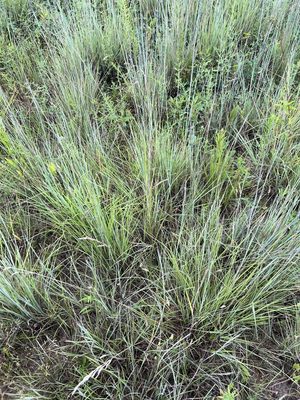
Little Bluestem
Schizachyrium scoparium
The backbone grass of the prairie: blue-green in summer, glowing copper and silver all winter.
- Full sun
- Dry–average
- 2–4 ft
- Fall color
Switchgrass
Panicum virgatum
An upright, clumping grass with a summer haze of pink seed heads and reliable golden fall color.
- Full–part sun
- Dry to wet
- 3–6 ft
- Fall color