- Home
- Plant guide
- Little Bluestem
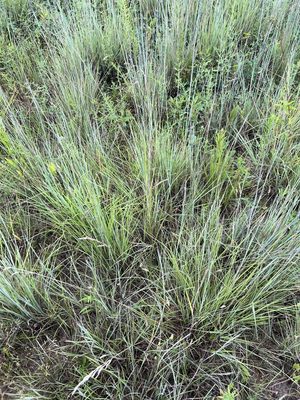
Little Bluestem
Schizachyrium scoparium
The backbone grass of the prairie: blue-green in summer, glowing copper and silver all winter.
Native to: the Northeast · the Mid-Atlantic · the Southeast · the Midwest · the Great Plains · the South-Central region · the Mountain West · the desert Southwest
Growing Little Bluestem
Arguably the single most useful native grass, native to nearly the whole country and host to a dozen skipper butterflies. Wants sun and drainage; flops in rich, wet soil.
Where it belongs
Little bluestem is native to nearly the whole of the lower forty-eight, which is close to unique among the plants in this guide. It was a dominant grass of the tallgrass, mixedgrass, and shortgrass prairie alike, and it persists on dry banks, glades, sandhills, and rocky ground across an enormous range.
For a gardener that range means it is almost certainly native where you live, and that it is adapted to lean, dry, well-drained ground rather than to a fertile border.
Growing it
Full sun and drainage. That is the whole requirement.
The failure mode is fertility. On rich, moist, fed soil it grows tall, soft, and falls open in the middle by late summer, which people read as the plant being badly behaved. It is not: it is a dry-prairie grass being overfed. On poor gravelly ground it stands upright all winter through snow and wind.
It is a warm-season grass, so it starts late and does most of its growing in the heat of summer when cool-season grasses stall. Do not judge it in May.
Cut back in late spring rather than autumn. The winter color is the best thing about it, and the standing clump shelters insects and holds snow.
What it feeds
Grasses do quiet work that flowering plants get credit for. Little bluestem is a larval host for several skipper butterflies, its seed feeds sparrows and juncos through winter, and the dense base is used for nesting material and for cover by small birds and overwintering bumblebee queens.
It also does structural work in a planting. A meadow of only flowers falls over; the grasses are what hold it upright, which is how prairie is actually built.
Living with it
Long-lived, drought-proof once established, and needs nothing. It self-sows modestly on bare ground and not at all into a closed planting.
Named selections exist that are shorter or bluer or more upright. They are fine plants, but a seed-grown local population has more genetic variation and holds up better across a range of conditions, which matters more in a meadow than in a border.
Sources: USDA PLANTS Database (native status and range); Lady Bird Johnson Wildflower Center, University of Texas at Austin (species profile); Xerces Society for Invertebrate Conservation (grasses as larval hosts and winter cover).
It’s deer-resistant, drought-tolerant, good fall color, good for winter interest, and easy to grow.Where it grows
Little Bluestem is native to the Northeast. In the wild you’ll find it across Alabama · Arizona · Arkansas · California · Colorado · Connecticut · Delaware · Florida · Georgia · Idaho and 37 more states. Always confirm it suits your specific county with your state native plant society before planting.
Regional Garden has written state guides covering Little Bluestem in 47 of them so far.
Good for
Where to buy Little Bluestem
Some links here are affiliate links and we may earn a small commission at no extra cost to you.
What a first-year Little Bluestem planting needs, from a pH kit to mulch.
Companions & kin.
Natives that share Little Bluestem’s range and conditions.
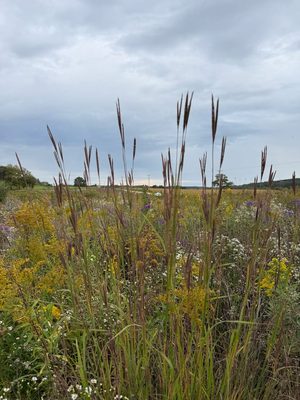
Big Bluestem
Andropogon gerardii
The towering 'turkey-foot' grass that once defined the tallgrass prairie, head-high by fall.
- Full sun
- Dry to wet
- 4–7 ft
- Fall color
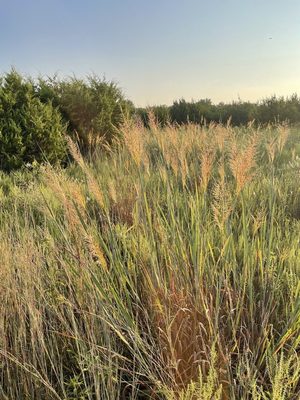
Indian Grass
Sorghastrum nutans
Tall golden plumes catch the autumn light above a classic tallgrass-prairie planting.
- Full sun
- Dry–average
- 4–7 ft
- Fall color
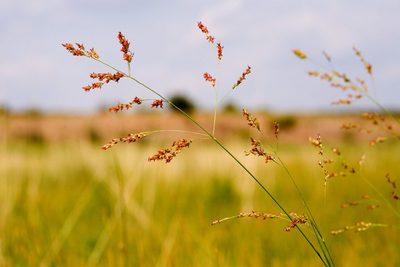
Switchgrass
Panicum virgatum
An upright, clumping grass with a summer haze of pink seed heads and reliable golden fall color.
- Full–part sun
- Dry to wet
- 3–6 ft
- Fall color
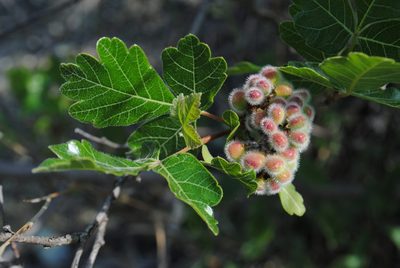
Fragrant Sumac
Rhus aromatica
A low, spreading shrub that blankets dry banks and blazes scarlet and orange in fall.
- Full–part sun
- Dry
- 2–6 ft
- Blooms Mar–Apr