- Home
- Plant guide
- Switchgrass
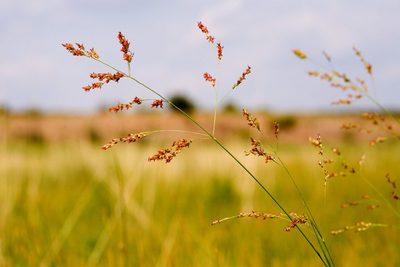
Switchgrass
Panicum virgatum
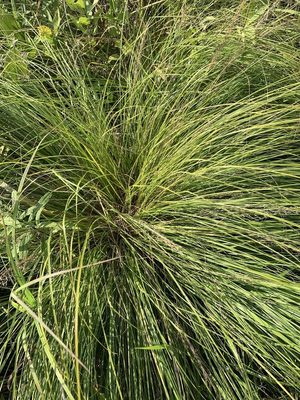
An upright, clumping grass with a summer haze of pink seed heads and reliable golden fall color.
Native to: the Northeast · the Mid-Atlantic · the Southeast · the Midwest · the Great Plains · the South-Central region
Growing Switchgrass
Endlessly adaptable to wet or dry, clay or sand, even road salt. Cultivars like 'Northwind' stay strictly vertical for a hedge-like screen.
Where it belongs
Switchgrass is native across the East, Midwest, Plains, and Texas, growing in prairie, on dunes, in wet meadows, and along shorelines and roadsides.
Its defining quality is range of tolerance. Very few plants accept both standing water and drought, both heavy clay and pure sand, and salt spray on top of that. That is why it turns up in rain gardens, on highway banks, in coastal plantings, and in ordinary borders, and why it is the native grass to reach for when the site is difficult in a way you cannot fix.
Growing it
Full sun to part sun, dry to wet soil, in loam, clay, or sand, zones 4 to 9. Three to six feet.
A warm-season grass, so it starts late and does most of its growing in high summer. Do not judge it in May.
Habit varies enormously by selection, and this is the practical decision when buying. The straight species is often loose and can flop in rich soil. Selections such as Northwind and Shenandoah were chosen for strictly upright growth and hold a vertical line all season, which makes them usable as a hedge or a screen. Blue-leaved and red-tinted forms exist as well.
Do not fertilize and do not plant it in improved soil. Lean ground is what keeps it upright.
Divide clumps in spring if the center dies out after many years.
What it feeds
The flower panicle is airy and fine, and in a mass it reads as a pink-gold haze above the foliage in late summer, catching low light.
Sparrows, juncos, and finches eat the seed heavily and use the standing clumps for winter cover. Ground-nesting birds nest in it in larger plantings. Skippers and moths use it as a caterpillar host.
It is planted at scale for erosion control and streambank stabilization, and the deep root mass is what does that work.
Living with it
Deer leave it alone.
In fall it turns clear yellow and then a warm tan, holding through winter without collapsing.
It self-sows in open ground, sometimes freely, which is worth knowing in a small tidy garden. Named selections tend to seed less true and less abundantly.
Cut it back in late winter or early spring, before new growth begins.
Sources: USDA PLANTS Database (native range); Lady Bird Johnson Wildflower Center, University of Texas at Austin (species profile); USDA Natural Resources Conservation Service (plant guide, erosion control and salt tolerance).
It’s deer-resistant, drought-tolerant, salt-tolerant, good fall color, and good for winter interest.Where it grows
Switchgrass is native to the Northeast. In the wild you’ll find it across Alabama · Arkansas · Colorado · Connecticut · Delaware · Florida · Georgia · Illinois · Indiana · Iowa and 32 more states. Always confirm it suits your specific county with your state native plant society before planting.
Regional Garden has written state guides covering Switchgrass in 42 of them so far.
Good for
Where to buy Switchgrass
Some links here are affiliate links and we may earn a small commission at no extra cost to you.
What a first-year Switchgrass planting needs, from a pH kit to mulch.
Companions & kin.
Natives that share Switchgrass’s range and conditions.
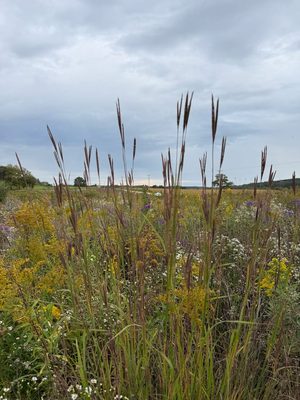
Big Bluestem
Andropogon gerardii
The towering 'turkey-foot' grass that once defined the tallgrass prairie, head-high by fall.
- Full sun
- Dry to wet
- 4–7 ft
- Fall color
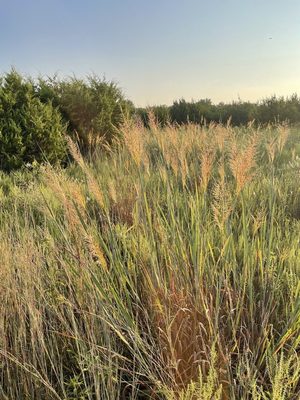
Indian Grass
Sorghastrum nutans
Tall golden plumes catch the autumn light above a classic tallgrass-prairie planting.
- Full sun
- Dry–average
- 4–7 ft
- Fall color
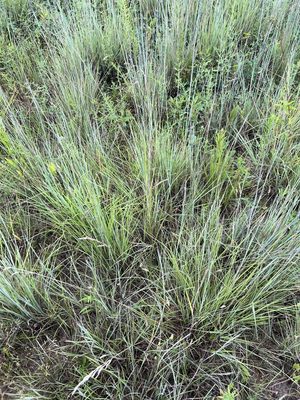
Little Bluestem
Schizachyrium scoparium
The backbone grass of the prairie: blue-green in summer, glowing copper and silver all winter.
- Full sun
- Dry–average
- 2–4 ft
- Fall color
Prairie Dropseed
Sporobolus heterolepis
The most refined native grass: a fountain of fine emerald threads that turn amber in fall.
- Full sun
- Dry–average
- 2–3 ft
- Fall color