- Home
- Collections
- For shade
Native Plants for Shade
Woodland wildflowers, ferns, and groundcovers that thrive in the dappled and full shade under trees and on the north side of the house.
Diagnose the shade first
Shade is not one condition, and treating it as one is why so many shade plantings disappoint.
Moist shade is the rich woodland floor: dappled light through a high canopy, deep leaf litter, soil that holds water. Virginia bluebells, foamflower, cinnamon fern, and woodland phlox come from there and want it.
Dry shade is the harder and far more common suburban condition: under a mature maple, beech, or conifer, or along a north foundation where the roof sheds water away. The tree takes the water and the roots take the space. Christmas fern, wild ginger, Pennsylvania sedge, wild columbine, and Oregon grape in the West handle it. Most of the woodland plants people reach for first do not.
Deep shade against a north wall with no tree competition is a third case, and it is easier than dry shade because at least the water stays.
Dig a hole in July before you plant anything. What you find tells you which list applies.
Working with tree roots instead of against them
Do not till under a tree. Cutting the fine feeder roots in the top foot of soil damages the tree and does not create a bed.
Do not raise the grade either. Adding several inches of soil over a mature tree's root zone suffocates it, and the damage shows up years later.
Plant small instead: plugs and quart pots slipped between roots rather than gallon containers requiring big holes. Add an inch or two of leaf compost across the surface and let earthworms take it down. Accept that the plants will establish more slowly here than anywhere else in the yard, and water them through their first two summers.
What a shade planting is actually for
Flowers in shade come early. Nearly all the woodland species bloom between March and May, in the window before the canopy closes, and after that the display is over.
That means a shade garden is a foliage composition for four fifths of the year, and it should be designed as one. Contrast the fine texture of ferns and sedges against the broad leaves of wild ginger and the mounded form of wild geranium. Foamflower and Christmas fern hold through winter and carry the bed when nothing else does.
The other thing to plan is the ephemeral gap. Virginia bluebells vanish completely by July. Interplant so something expands into the hole.
Do not fight for lawn under a tree
Turf and mature trees are in direct competition and the tree wins. Reseeding a bare patch under a maple every spring is an annual defeat.
Pennsylvania sedge is the practical replacement in the East, forming a soft low carpet in exactly those conditions. Wild ginger, foamflower, and Christmas fern fill the same ground more decoratively.
Sources: Lady Bird Johnson Wildflower Center, University of Texas at Austin (woodland species profiles); Mt. Cuba Center (shade perennial and groundcover trials); International Society of Arboriculture (root zone protection and grade change guidance).
21 native species in this collection.
Shade is an opportunity, not a problem. The eastern woodland flora is one of the richest in the world. Most shade natives evolved under a deciduous canopy, so they do their growing in cool, moist spring soil and want a yearly mulch of fallen leaves rather than bare, raked dirt. Match the depth of shade to the plant, and a bare patch under a maple becomes the loveliest part of the garden.
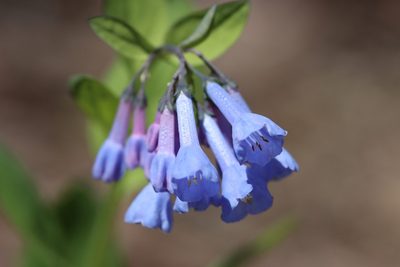
Virginia Bluebells
Mertensia virginica
Pink buds opening to drifts of sky-blue bells, then vanishing underground by summer.
- Part shade
- Average–wet
- 1–2 ft
- Blooms Mar–May
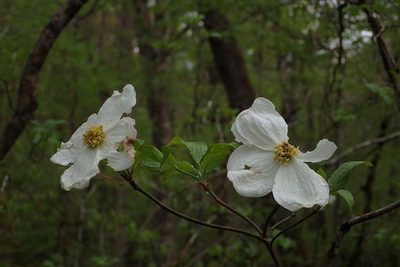
Flowering Dogwood
Cornus florida
The classic understory tree of the eastern woods, with white spring bracts and crimson fall leaves.
- Part shade
- Average
- 15–25 ft
- Blooms Apr–May
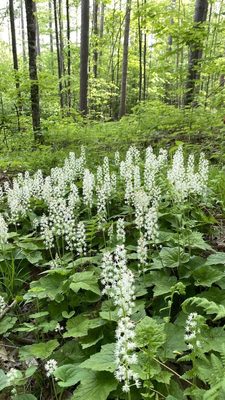
Foamflower
Tiarella cordifolia
Frothy white spring spires over heart-shaped, semi-evergreen foliage in deep shade.
- Part shade
- Average
- 6–12 in
- Blooms Apr–May
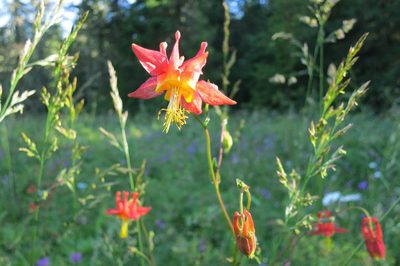
Western Columbine
Aquilegia formosa
The West's nodding red-and-gold columbine, the first big hummingbird draw of the mountain spring.
- Part shade
- Average
- 1.5–3 ft
- Blooms Apr–Jul
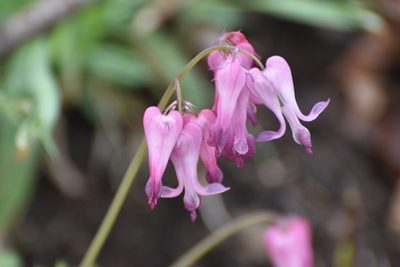
Wild Bleeding Heart
Dicentra eximia
Ferny mounds that drip with pink hearts from spring straight through summer in shade.
- Part shade
- Average
- 12–18 in
- Blooms Apr–Aug
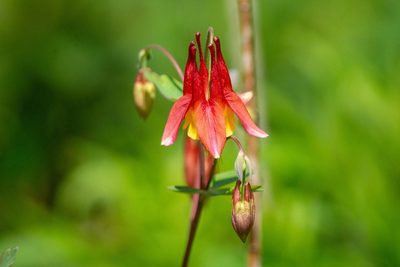
Wild Columbine
Aquilegia canadensis
Nodding red-and-gold lanterns that greet the first spring hummingbirds at a woodland edge.
- Part shade
- Dry–average
- 1–2.5 ft
- Blooms Apr–Jun
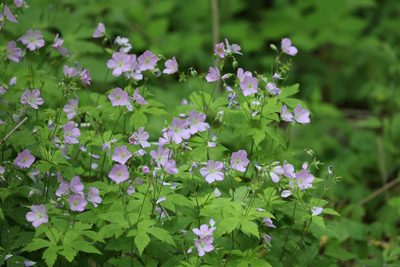
Wild Geranium
Geranium maculatum
A mounding woodland staple with lilac-pink spring flowers and good fall foliage color.
- Part shade
- Average
- 1.5–2 ft
- Blooms Apr–Jun
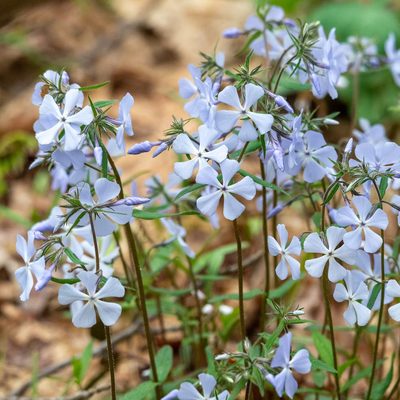
Woodland Phlox
Phlox divaricata
A sweetly fragrant, low spreading phlox that carpets the spring woodland floor in blue.
- Part shade
- Average
- 10–15 in
- Blooms Apr–May

Arrowwood Viburnum
Viburnum dentatum
A bulletproof hedge shrub with white spring flowers, blue fall berries, and burgundy autumn leaves.
- Sun to shade
- Average–wet
- 6–10 ft
- Blooms May–Jun
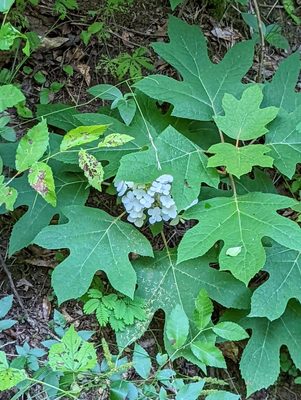
Oakleaf Hydrangea
Hydrangea quercifolia
A four-season southeastern shrub: white flower cones, wine-red fall leaves, cinnamon peeling bark.
- Part shade
- Average
- 4–8 ft
- Blooms May–Jul
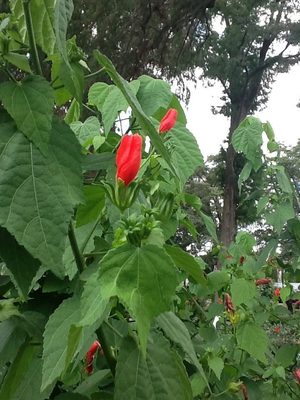
Turk's Cap
Malvaviscus arboreus var. drummondii
One of the few natives that pours out hummingbird-red flowers in dry shade all season long.
- Sun to shade
- Dry–average
- 2–5 ft
- Blooms May–Oct
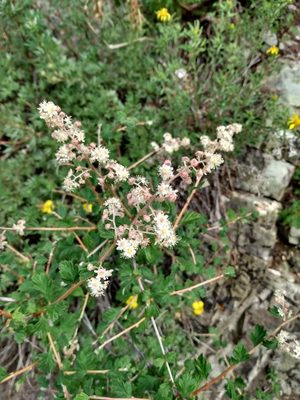
Oceanspray
Holodiscus discolor
Foaming cream plumes in midsummer that dry to tan and stand all winter, on a shrub that takes sun or shade and no water.
- Sun to shade
- Dry–average
- 6–12 ft
- Blooms Jun–Jul
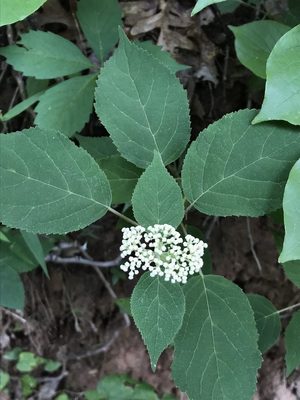
Smooth Hydrangea
Hydrangea arborescens
The native parent of the 'Annabelle' hydrangea, with white summer domes for shade.
- Part shade
- Average
- 3–5 ft
- Blooms Jun–Aug
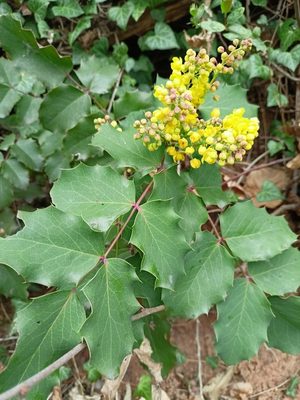
Oregon Grape
Berberis aquifolium
Holly-like evergreen leaves, fragrant yellow spring flowers, and blue berries. It is Oregon's state flower.
- Sun to shade
- Dry–average
- 3–6 ft
- Blooms Mar–Apr
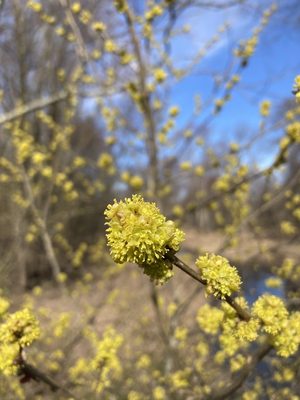
Spicebush
Lindera benzoin
An early-blooming shade shrub, host to the spicebush swallowtail, with butter-yellow fall color.
- Part shade
- Average–wet
- 6–12 ft
- Blooms Mar–Apr
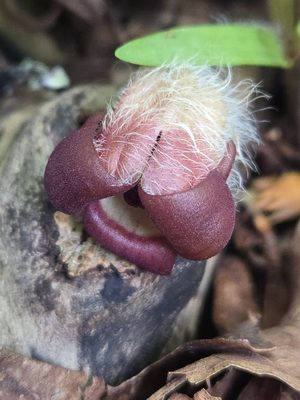
Wild Ginger
Asarum canadense
A lush, heart-leaved carpet for dry shade where lawn and hostas give up.
- Part shade
- Average
- 4–8 in
- Blooms Apr–May
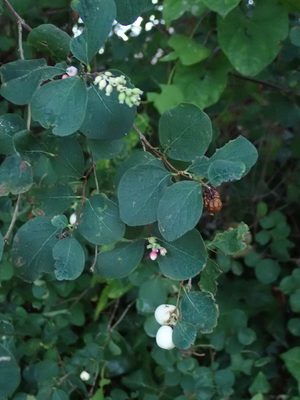
Common Snowberry
Symphoricarpos albus
The shrub that will grow where nothing else will, and hangs white berries on bare stems all winter.
- Sun to shade
- Dry–average
- 3–6 ft
- Blooms Jun–Jul
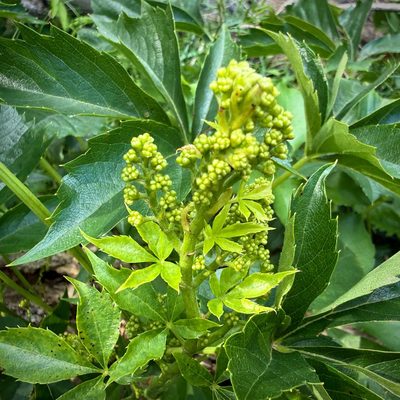
Virginia Creeper
Parthenocissus quinquefolia
A tough native climber grown for spectacular scarlet fall color and berries that 35+ bird species eat.
- Sun to shade
- Dry–average
- 30–50 ft
- Blooms Jun
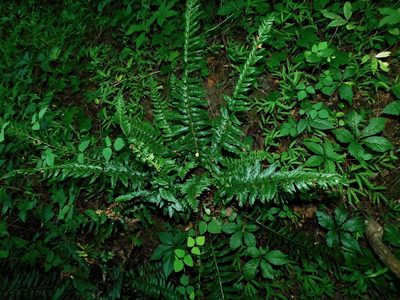
Christmas Fern
Polystichum acrostichoides
A tough evergreen fern that holds its green fronds through winter and grips a shady slope.
- Part shade
- Dry–average
- 1–2 ft
- Evergreen
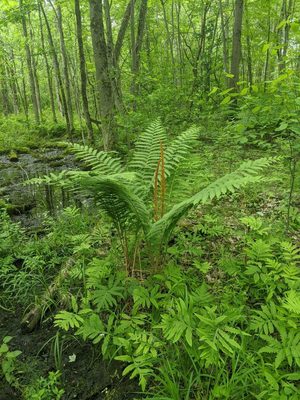
Cinnamon Fern
Osmundastrum cinnamomeum
A bold architectural fern for wet shade, with cinnamon-colored fertile fronds in spring.
- Part shade
- Average–wet
- 2–4 ft
- Foliage
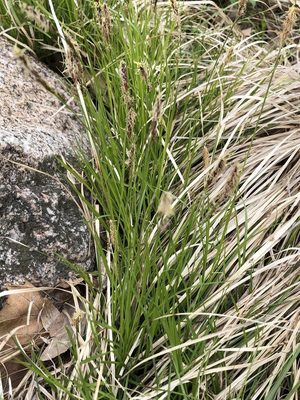
Pennsylvania Sedge
Carex pensylvanica
A soft, fine-textured sedge that makes a no-mow native lawn for dry shade.
- Part shade
- Dry–average
- 6–12 in
- Foliage
For shade, near you.
Whether a species belongs in your yard depends on where you garden. These state guides cover it.
Where to find for shade plants
Some links here are affiliate links and we may earn a small commission at no extra cost to you.
What a first-year For shade planting needs, from a pH kit to mulch.