- Home
- Plant guide
- Oceanspray
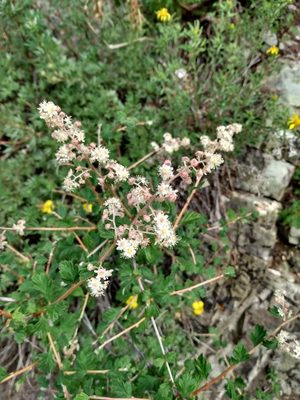
John Powers (CC BY)
Oceanspray
Holodiscus discolor
Foaming cream plumes in midsummer that dry to tan and stand all winter, on a shrub that takes sun or shade and no water.
Native to: the Pacific Northwest · the Mountain West · California
Growing Oceanspray
One of the most adaptable Northwest shrubs: it grows in dry shade under conifers and in full sun on a road cut. The spent flower heads are the winter interest, so leave them.
Where it belongs
Oceanspray grows from British Columbia to Southern California and east into the northern Rockies, on dry slopes, forest edges, road cuts and open woodland. It is one of the most adaptable shrubs in the Northwest: the same species grows in dry shade under Douglas fir and in full sun on an exposed bank.
In midsummer it carries large drooping plumes of tiny cream flowers, thousands to a spray, which is where the name comes from. The plumes dry to tan and stay on the shrub through winter.
Growing it
It is a big, loose, arching shrub, commonly six to twelve feet, and it wants room. Given it, there is almost nothing to do.
It takes full sun, part shade or fairly deep shade, and dry ground once established. Ordinary soil, rocky soil and thin road-cut fill all suit it. It does not want standing water.
The wood is famously hard and was used for digging sticks, arrow shafts and pegs by peoples throughout its range, which is worth knowing when you prune: old stems are tough going. Take out whole stems at the base in late winter rather than shearing the outline.
Leave the dried plumes. They are the winter interest and cutting them off in fall removes the reason to have planted it.
What it feeds
The flower plumes are shallow and open, which suits small native bees, syrphid flies, beetles and butterflies that cannot use deep flowers. On a warm July day a mature shrub is loud with insects.
It is a larval host for the spring azure and several other butterflies and moths, and the dense branching gives small birds nesting cover.
Living with it
It is a screening and background shrub rather than a specimen: a property line, a bank, the edge of woodland, the far side of a driveway.
In dry shade under conifers, where most flowering shrubs fail, it is one of the few native options that flowers well and needs no summer water.
It’s drought-tolerant, deer-resistant, showy, good for winter interest, and easy to grow.Where it grows
Oceanspray is native to the Pacific Northwest. In the wild you’ll find it across Arizona · California · Colorado · Idaho · Montana · Nevada · New Mexico · Oregon · Utah · Washington and 1 more states. Always confirm it suits your specific county with your state native plant society before planting.
Regional Garden has written state guides covering Oceanspray in 11 of them so far.
Good for
Where to buy Oceanspray
Some links here are affiliate links and we may earn a small commission at no extra cost to you.
What a first-year Oceanspray planting needs, from a pH kit to mulch.
Companions & kin.
Natives that share Oceanspray’s range and conditions.

Blue Elderberry
Sambucus cerulea
Fast, big, and covered in flat cream flower heads, then dusty blue fruit that draws every fruit-eating bird in the county.
- Full–part sun
- Average–wet
- 8–20 ft
- Blooms Jun–Jul

Golden Currant
Ribes aureum
Yellow spring flowers that smell of cloves, black fruit birds strip in a week, and red foliage in the fall.
- Full–part sun
- Dry–average
- 4–8 ft
- Blooms Apr–May

Saskatoon Serviceberry
Amelanchier alnifolia
White flowers before the leaves, then fruit that tastes like a sweet blueberry, then orange fall color.
- Full–part sun
- Dry–average
- 6–15 ft
- Blooms Apr–May
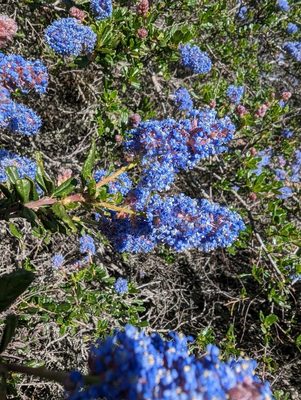
California Lilac
Ceanothus thyrsiflorus
Sheets of true-blue spring flowers on an evergreen shrub that hums with bees on the West Coast.
- Full sun
- Dry
- 6–20 ft
- Blooms Mar–May