- Home
- Plant guide
- Cinnamon Fern
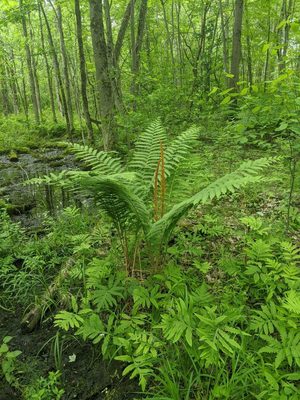
Cinnamon Fern
Osmundastrum cinnamomeum
A bold architectural fern for wet shade, with cinnamon-colored fertile fronds in spring.
Native to: the Northeast · the Mid-Atlantic · the Southeast · the Midwest
Growing Cinnamon Fern
Forms majestic vase-shaped clumps along streams and in bog gardens. Birds line nests with the cinnamon fibers.
Where it belongs
Cinnamon fern grows across the Northeast, Mid-Atlantic, Southeast, and Midwest, in swamps, seeps, wooded wetlands, and along shaded stream banks. It is a plant of ground that stays wet.
It is the largest fern most eastern gardeners will grow, forming a symmetrical vase three to four feet tall and as wide. Where Christmas fern is a low evergreen groundcover for dry shade, this is a bold seasonal specimen for wet shade. The two are not substitutes for each other in any situation.
Growing it
Part sun to shade, wet to medium soil, in loam or clay, zones 3 to 9.
Moisture is the requirement, and it is not negotiable. In a bog garden, at a pond edge, in a rain garden that stays damp, or in a low wooded spot, it thrives. In ordinary garden soil that dries in July, the fronds brown at the edges and the plant stays small.
With enough water it will take considerably more sun than most ferns, which widens where it can be used.
It forms a slowly enlarging crown rather than running, and old clumps build a raised base of root mass over decades. It is long-lived and essentially permanent once sited correctly.
What it feeds
The spring feature is the fertile fronds: separate stalks in the center of the clump, covered in spore cases, that ripen from green to a deep rust brown and stand upright like cinnamon sticks. They give the plant its name.
Birds strip the woolly fibers from the emerging fiddleheads and from the fertile stalks and use them as nest lining. Hummingbirds do this too, and their tiny nests are often built largely of soft plant down of this kind.
The clumps themselves provide dense cover at ground level in wet areas, which frogs, salamanders, and ground-nesting birds use.
Living with it
Deer leave it alone.
Fiddleheads of this species are not the edible kind. Ostrich fern fiddleheads are the ones harvested for food, and confusing them is a real risk. Do not eat fiddleheads from this plant.
The fronds turn a clear yellow in fall and then collapse with frost. Leave the material in place over winter and clear it in early spring if you want a tidy crown, before the new fiddleheads rise.
Sources: USDA PLANTS Database (native range and nomenclature); Lady Bird Johnson Wildflower Center, University of Texas at Austin (species profile); Cornell Lab of Ornithology (nesting material use).
It’s deer-resistant.Where it grows
Cinnamon Fern is native to the Northeast. In the wild you’ll find it across Alabama · Arkansas · Connecticut · Delaware · Florida · Georgia · Illinois · Indiana · Iowa · Kentucky and 24 more states. Always confirm it suits your specific county with your state native plant society before planting.
Regional Garden has written state guides covering Cinnamon Fern in 34 of them so far.
Good for
Where to buy Cinnamon Fern
Some links here are affiliate links and we may earn a small commission at no extra cost to you.
What a first-year Cinnamon Fern planting needs, from a pH kit to mulch.
Companions & kin.
Natives that share Cinnamon Fern’s range and conditions.
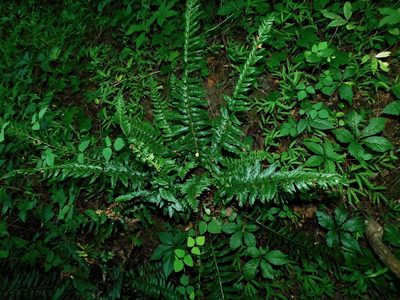
Christmas Fern
Polystichum acrostichoides
A tough evergreen fern that holds its green fronds through winter and grips a shady slope.
- Part shade
- Dry–average
- 1–2 ft
- Evergreen
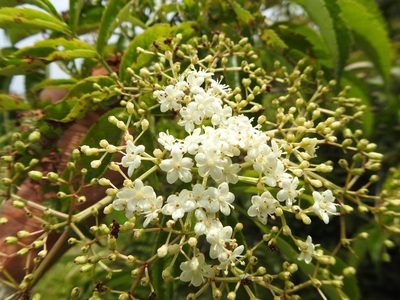
American Elderberry
Sambucus canadensis
Big lacy flower heads in summer give way to purple-black berries for both birds and your kitchen.
- Full–part sun
- Average–wet
- 6–12 ft
- Blooms Jun–Jul

Arrowwood Viburnum
Viburnum dentatum
A bulletproof hedge shrub with white spring flowers, blue fall berries, and burgundy autumn leaves.
- Sun to shade
- Average–wet
- 6–10 ft
- Blooms May–Jun
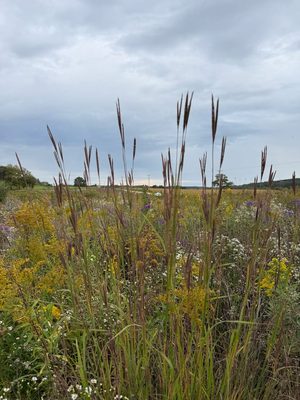
Big Bluestem
Andropogon gerardii
The towering 'turkey-foot' grass that once defined the tallgrass prairie, head-high by fall.
- Full sun
- Dry to wet
- 4–7 ft
- Fall color