- Home
- Plant guide
- Pennsylvania Sedge
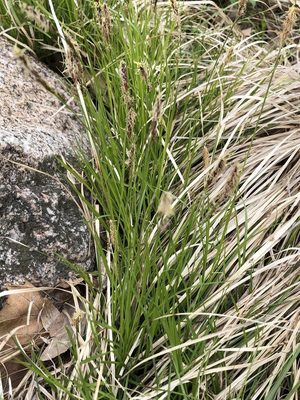
Andrea Grover (CC BY)
Pennsylvania Sedge
Carex pensylvanica
A soft, fine-textured sedge that makes a no-mow native lawn for dry shade.
Native to: the Northeast · the Mid-Atlantic · the Southeast · the Midwest
Growing Pennsylvania Sedge
Spreads into a flowing green carpet under trees where turf fails. Mow once or twice a year, or never, for a meadowy look.
Where it belongs
Pennsylvania sedge is native across the Northeast, Mid-Atlantic, Southeast, and Midwest, growing in dry oak woods, on wooded slopes, and in open savanna. In much of the East it is the dominant plant of the woodland floor, forming continuous soft green swards under the canopy.
Its garden use follows directly from that. The thin, dry, shaded ground under a mature tree is where turf grass fails permanently, and where homeowners spend years reseeding, dethatching, and eventually giving up. This is the plant that grows there naturally.
Growing it
Shade to part sun, dry to medium soil, in loam or rocky ground, zones 3 to 8. Six to twelve inches, arching over to look shorter.
It is drought tolerant once established and it does not want rich, wet soil. Dry shade is its preference, not its tolerance.
It spreads by short rhizomes into a knitted mat. Filling an area takes time. Plugs set nine to twelve inches apart typically close in two to three seasons, and closer spacing buys speed at proportional cost. Weeding during that first period is the real work; after it closes, the mat suppresses most weeds itself.
Mowing is optional. Cut it once in early spring at three or four inches for a lawn-like look, or leave it entirely for a flowing meadow texture under the trees. It does not tolerate frequent low mowing or foot traffic the way turf does, so it is a lawn to look at rather than a lawn to play on.
What it feeds
Sedges are the quiet foundation of a habitat planting, and their contribution is easy to miss.
They are host plants for a substantial number of butterflies and moths, particularly skippers, whose caterpillars feed on sedge and grass foliage. A garden full of nectar flowers and no host grasses supports the adults and not the next generation.
Birds take the seed, and ground-foraging species work the litter layer beneath the mat. Bumblebees and other insects nest in and under it.
Living with it
Deer do not eat it.
Buy sedges from a nursery that grows the actual species. Carex is a huge and confusing genus, and several sedges sold for shade are non-native or want entirely different conditions, particularly moisture.
There is no fall cleanup. It goes semi-dormant in winter, greens up early, and carries on.
Sources: USDA PLANTS Database (native range); Lady Bird Johnson Wildflower Center, University of Texas at Austin (species profile); Xerces Society and Mt. Cuba Center (sedges as lepidoptera host plants and lawn alternatives).
It’s deer-resistant, drought-tolerant, and easy to grow.Where it grows
Pennsylvania Sedge is native to the Northeast. In the wild you’ll find it across Alabama · Arkansas · Connecticut · Delaware · Florida · Georgia · Illinois · Indiana · Iowa · Kentucky and 24 more states. Always confirm it suits your specific county with your state native plant society before planting.
Regional Garden has written state guides covering Pennsylvania Sedge in 34 of them so far.
Good for
Where to buy Pennsylvania Sedge
Some links here are affiliate links and we may earn a small commission at no extra cost to you.
What a first-year Pennsylvania Sedge planting needs, from a pH kit to mulch.
Companions & kin.
Natives that share Pennsylvania Sedge’s range and conditions.
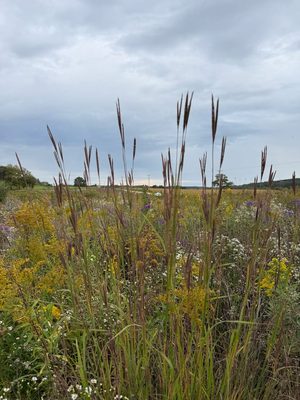
Big Bluestem
Andropogon gerardii
The towering 'turkey-foot' grass that once defined the tallgrass prairie, head-high by fall.
- Full sun
- Dry to wet
- 4–7 ft
- Fall color
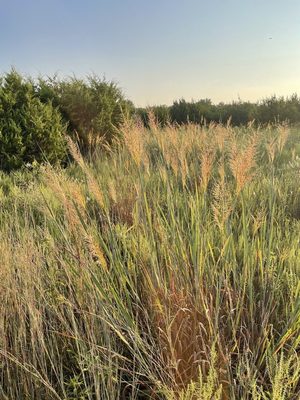
Indian Grass
Sorghastrum nutans
Tall golden plumes catch the autumn light above a classic tallgrass-prairie planting.
- Full sun
- Dry–average
- 4–7 ft
- Fall color
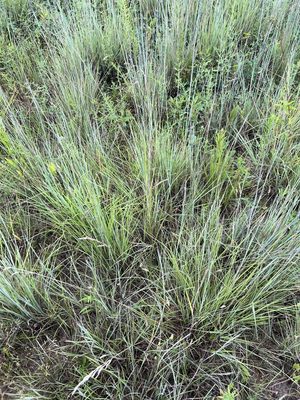
Little Bluestem
Schizachyrium scoparium
The backbone grass of the prairie: blue-green in summer, glowing copper and silver all winter.
- Full sun
- Dry–average
- 2–4 ft
- Fall color
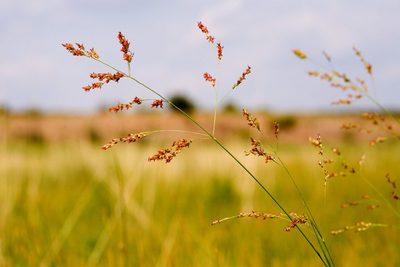
Switchgrass
Panicum virgatum
An upright, clumping grass with a summer haze of pink seed heads and reliable golden fall color.
- Full–part sun
- Dry to wet
- 3–6 ft
- Fall color