- Home
- Plant guide
- Smooth Hydrangea
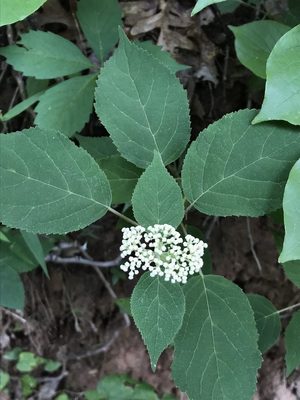
Mark Eanes (CC BY)
Smooth Hydrangea
Hydrangea arborescens
The native parent of the 'Annabelle' hydrangea, with white summer domes for shade.
Native to: the Northeast · the Mid-Atlantic · the Southeast · the Midwest
Growing Smooth Hydrangea
Wild lacecap forms feed far more pollinators than the big sterile mophead cultivars. Blooms on new wood, so it flowers reliably even after a hard winter.
Where it belongs
Smooth hydrangea is native to the Northeast, Mid-Atlantic, Southeast, and Midwest, growing on shaded rocky slopes, along stream banks, and in ravines, usually in the understory.
Almost everyone has seen its descendant. Annabelle, with the enormous white snowball flower heads, is one of the most planted shrubs in America and is a selection of this species. The wild plant looks different: a flat lacecap head of small fertile flowers ringed by a few showy sterile ones.
That difference is not only cosmetic, and it is the most useful thing to understand about this plant.
Growing it
Part sun to shade, medium moisture, in loam or clay, zones 3 to 9. Three to five feet tall and as wide.
Shade to part shade, and soil that does not dry out. It wilts dramatically in afternoon sun and recovers overnight, which is alarming the first time.
It flowers on new wood. That is a practical advantage over bigleaf hydrangea, which sets buds in fall and loses them in a hard winter. This one can be cut to the ground in late winter and will flower the same summer, reliably, every year.
It suckers modestly and can be divided. It is easy, forgiving, and long-lived.
What it feeds
Here is the distinction that matters. The big round mophead flower heads are made almost entirely of sterile showy flowers. They have no useful nectar and no pollen. A mophead hydrangea in full bloom is, from an insect's point of view, an empty display.
The wild lacecap form is the opposite arrangement: a flat center of small fertile flowers that do produce nectar and pollen, with a ring of showy sterile flowers around the edge acting as an advertisement.
Bees, flower flies, small wasps, and beetles work the fertile centers through June, July, and August. If the goal is habitat, buy the straight species or a lacecap selection such as Haas Halo, not a mophead.
Several moths use it as a host plant, and the dried flower heads shelter insects over winter.
Living with it
Deer will browse it.
The stems are not strong, and large flower heads flop after rain, particularly on the mophead selections. Cutting back to about eighteen inches rather than to the ground produces a sturdier framework.
Leave the dried heads through winter. They hold snow well and shelter insects. Cut back in late winter.
Sources: USDA PLANTS Database (native range); Lady Bird Johnson Wildflower Center, University of Texas at Austin (species profile); Mt. Cuba Center (Hydrangea arborescens trial results comparing pollinator visits to lacecap and mophead forms).
It’s easy to grow, and showy.Where it grows
Smooth Hydrangea is native to the Northeast. In the wild you’ll find it across Alabama · Arkansas · Connecticut · Delaware · Florida · Georgia · Illinois · Indiana · Iowa · Kentucky and 24 more states. Always confirm it suits your specific county with your state native plant society before planting.
Regional Garden has written state guides covering Smooth Hydrangea in 34 of them so far.
Good for
Where to buy Smooth Hydrangea
Some links here are affiliate links and we may earn a small commission at no extra cost to you.
What a first-year Smooth Hydrangea planting needs, from a pH kit to mulch.
Companions & kin.
Natives that share Smooth Hydrangea’s range and conditions.
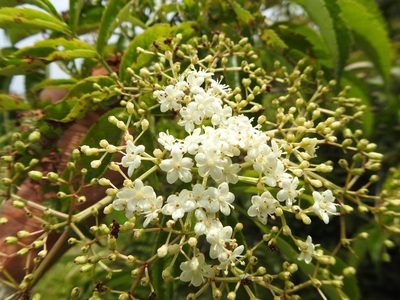
American Elderberry
Sambucus canadensis
Big lacy flower heads in summer give way to purple-black berries for both birds and your kitchen.
- Full–part sun
- Average–wet
- 6–12 ft
- Blooms Jun–Jul

Arrowwood Viburnum
Viburnum dentatum
A bulletproof hedge shrub with white spring flowers, blue fall berries, and burgundy autumn leaves.
- Sun to shade
- Average–wet
- 6–10 ft
- Blooms May–Jun

Buttonbush
Cephalanthus occidentalis
Spherical white 'pincushion' flowers over standing water, swarmed by butterflies and bees.
- Full–part sun
- Average–wet
- 5–10 ft
- Blooms Jun–Aug
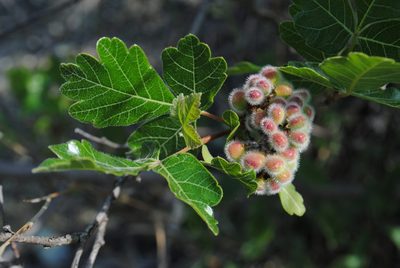
Fragrant Sumac
Rhus aromatica
A low, spreading shrub that blankets dry banks and blazes scarlet and orange in fall.
- Full–part sun
- Dry
- 2–6 ft
- Blooms Mar–Apr