- Home
- Collections
- Flowering shrubs
Native Flowering Shrubs
Native shrubs that flower for pollinators, fruit for birds, and give the garden its year-round backbone and structure.
The missing middle
Look at a typical suburban yard in section: mown turf at the bottom, a few tree canopies at the top, and nothing between.
Look at a woodland edge and there are four layers: ground, herbaceous, shrub, and canopy. The shrub layer is where a large share of songbirds nest, where small animals move under cover, and where much of the fruit is produced.
Adding shrubs does more for a yard's habitat value per plant than almost anything else, and it also solves the design problem of a garden that looks flat in winter.
Buy them for what they do in four seasons
A shrub occupies its space permanently, so evaluating it on two weeks of flower is the wrong basis.
Arrowwood viburnum flowers in May, fruits blue-black in fall, and turns burgundy. Ninebark flowers, holds red seed heads, and peels its bark for winter. Oakleaf hydrangea flowers, colors deep wine, and exposes cinnamon bark. Winterberry does its best work in January. Red-twig dogwood is grown almost entirely for what it looks like in February.
Ask what a shrub is doing in each season before deciding where it goes.
The buying details that decide whether it works
Three things are worth knowing before you spend the money.
Some species are dioecious, meaning individual plants are male or female and only females fruit. Winterberry, inkberry, and spicebush all are, and a planting of all females produces nothing. Winterberry additionally needs a male whose bloom time matches.
Other species are not dioecious but fruit far better with cross-pollination, including arrowwood viburnum and American beautyberry. Plant two or more, and preferably not two copies of the same named clone.
And pruning timing depends on where flower buds form. Species that flower on old wood, such as oakleaf hydrangea and crossvine, set next year's buds this summer, so a late-winter cutback removes the whole display. Species that flower on new wood, such as smooth hydrangea and American beautyberry, can be cut hard in late winter with no loss.
Cultivars, and where to be careful
Named selections are convenient and often better behaved than wild forms. Two cautions.
Fully sterile flower forms, particularly mophead hydrangeas, produce no usable pollen or nectar. They are decoration rather than habitat.
Purple- and gold-leaved selections of native shrubs have in several studies been measurably less usable to leaf-feeding insects than the green wild type, which matters given that caterpillars are what nesting birds feed their young.
Where a shrub is meant to work rather than only to look good, the straight species is the safer purchase.
Sources: Doug Tallamy and University of Delaware research on native woody plants, cultivars, and caterpillar use; Mt. Cuba Center (native shrub trials including Physocarpus, Hydrangea, and Ilex); Lady Bird Johnson Wildflower Center, University of Texas at Austin (species profiles and pollination requirements); Cornell Lab of Ornithology (nesting habitat structure).
32 native species in this collection.
Shrubs are the bones of a garden. They hold their shape through winter, screen what you would rather not see, and pack flowers, berries, and fall color into a single long-lived plant. Give them room to reach full size rather than shearing them into boxes, plant in fall for the best root establishment, and choose species suited to your light and moisture so they thrive on near-zero care.
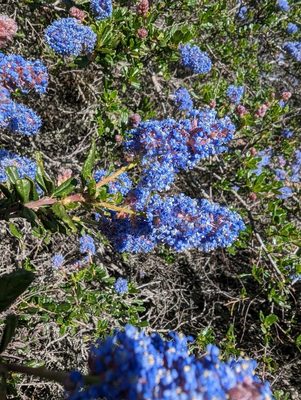
California Lilac
Ceanothus thyrsiflorus
Sheets of true-blue spring flowers on an evergreen shrub that hums with bees on the West Coast.
- Full sun
- Dry
- 6–20 ft
- Blooms Mar–May
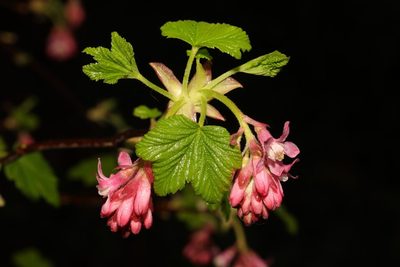
Red-Flowering Currant
Ribes sanguineum
Cascades of rose-pink tassels timed exactly to the return of the rufous hummingbird each spring.
- Full–part sun
- Dry–average
- 5–9 ft
- Blooms Mar–Apr
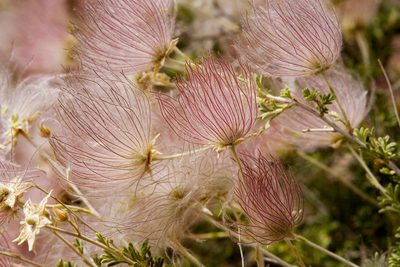
Apache Plume
Fallugia paradoxa
White rose-like flowers and feathery pink seed plumes together on one airy desert shrub.
- Full sun
- Dry
- 3–6 ft
- Blooms Apr–Sep
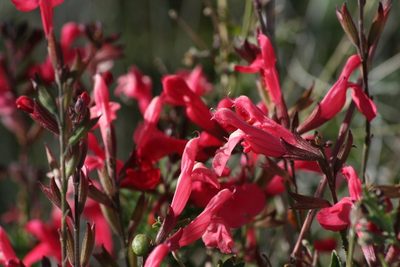
Autumn Sage
Salvia greggii
A tough little evergreen sage that feeds hummingbirds from spring to frost in Texas and the Southwest.
- Full–part sun
- Dry
- 2–3 ft
- Blooms Apr–Oct

Saskatoon Serviceberry
Amelanchier alnifolia
White flowers before the leaves, then fruit that tastes like a sweet blueberry, then orange fall color.
- Full–part sun
- Dry–average
- 6–15 ft
- Blooms Apr–May
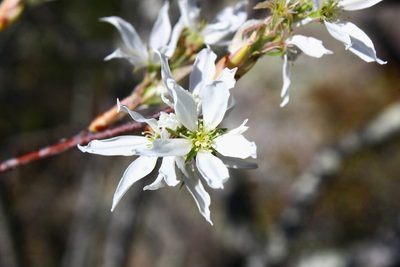
Serviceberry
Amelanchier canadensis
A small four-season tree: white spring flowers, June berries for the birds, and fiery fall color.
- Full–part sun
- Average–wet
- 15–25 ft
- Blooms Apr–May

Arrowwood Viburnum
Viburnum dentatum
A bulletproof hedge shrub with white spring flowers, blue fall berries, and burgundy autumn leaves.
- Sun to shade
- Average–wet
- 6–10 ft
- Blooms May–Jun
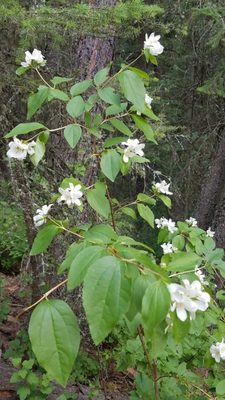
Lewis's Mock Orange
Philadelphus lewisii
Two weeks in early summer when the whole shrub smells of orange blossom, and the rest of the year asking for nothing.
- Full–part sun
- Dry–average
- 5–10 ft
- Blooms May–Jun
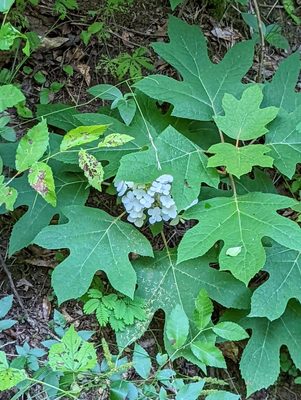
Oakleaf Hydrangea
Hydrangea quercifolia
A four-season southeastern shrub: white flower cones, wine-red fall leaves, cinnamon peeling bark.
- Part shade
- Average
- 4–8 ft
- Blooms May–Jul
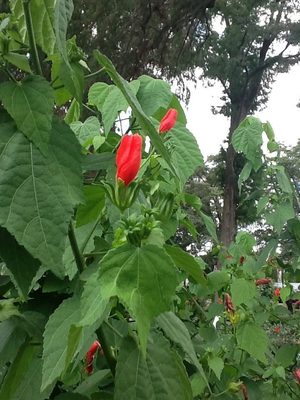
Turk's Cap
Malvaviscus arboreus var. drummondii
One of the few natives that pours out hummingbird-red flowers in dry shade all season long.
- Sun to shade
- Dry–average
- 2–5 ft
- Blooms May–Oct
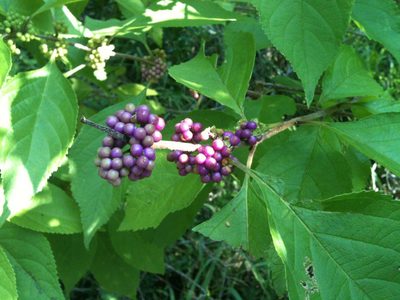
American Beautyberry
Callicarpa americana
Unreal clusters of metallic-purple berries hug the stems in fall and feed dozens of bird species.
- Full–part sun
- Dry–average
- 4–7 ft
- Blooms Jun–Jul

Blue Elderberry
Sambucus cerulea
Fast, big, and covered in flat cream flower heads, then dusty blue fruit that draws every fruit-eating bird in the county.
- Full–part sun
- Average–wet
- 8–20 ft
- Blooms Jun–Jul

Buttonbush
Cephalanthus occidentalis
Spherical white 'pincushion' flowers over standing water, swarmed by butterflies and bees.
- Full–part sun
- Average–wet
- 5–10 ft
- Blooms Jun–Aug
Flame Acanthus
Anisacanthus quadrifidus var. wrightii
A heat-loving shrub covered in tubular orange flowers through the hottest, driest weeks of summer.
- Full sun
- Dry
- 2–4 ft
- Blooms Jun–Oct
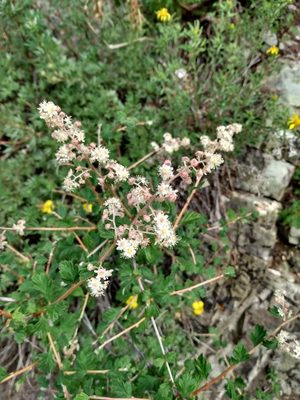
Oceanspray
Holodiscus discolor
Foaming cream plumes in midsummer that dry to tan and stand all winter, on a shrub that takes sun or shade and no water.
- Sun to shade
- Dry–average
- 6–12 ft
- Blooms Jun–Jul
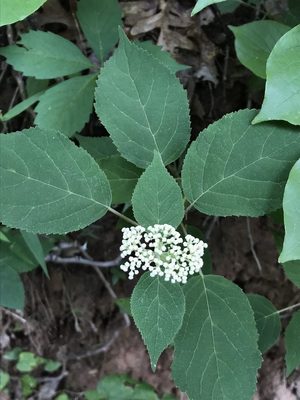
Smooth Hydrangea
Hydrangea arborescens
The native parent of the 'Annabelle' hydrangea, with white summer domes for shade.
- Part shade
- Average
- 3–5 ft
- Blooms Jun–Aug
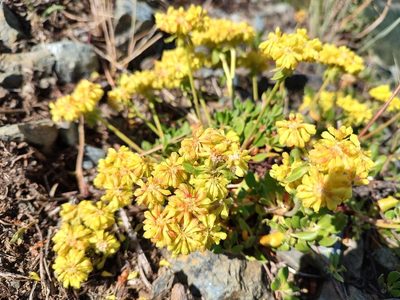
Sulphur-Flower Buckwheat
Eriogonum umbellatum
A low evergreen mat that turns sulphur yellow in midsummer, then rust, and feeds more butterflies than almost anything else on dry ground.
- Full sun
- Dry
- 6–18 in
- Blooms Jun–Aug
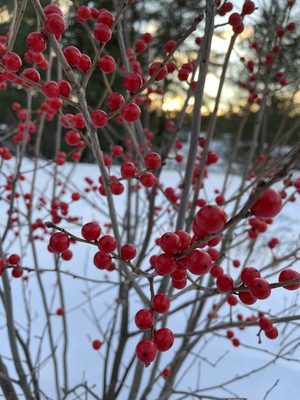
Winterberry
Ilex verticillata
A deciduous holly that drops its leaves to reveal branches packed with brilliant red winter berries.
- Full–part sun
- Average–wet
- 5–10 ft
- Blooms Jun–Jul
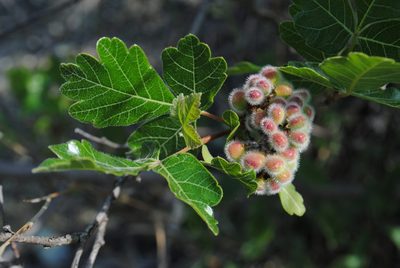
Fragrant Sumac
Rhus aromatica
A low, spreading shrub that blankets dry banks and blazes scarlet and orange in fall.
- Full–part sun
- Dry
- 2–6 ft
- Blooms Mar–Apr
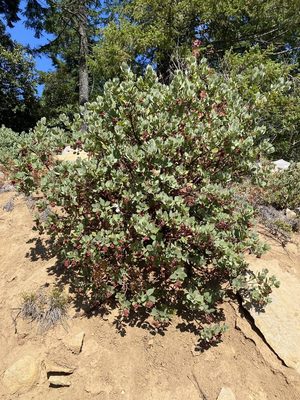
Hairy Manzanita
Arctostaphylos columbiana
Sculptural mahogany bark and early urn-shaped flowers that feed the West Coast's first bees of spring.
- Full–part sun
- Dry
- 3–9 ft
- Blooms Mar–May
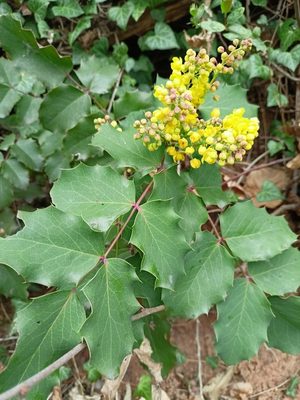
Oregon Grape
Berberis aquifolium
Holly-like evergreen leaves, fragrant yellow spring flowers, and blue berries. It is Oregon's state flower.
- Sun to shade
- Dry–average
- 3–6 ft
- Blooms Mar–Apr
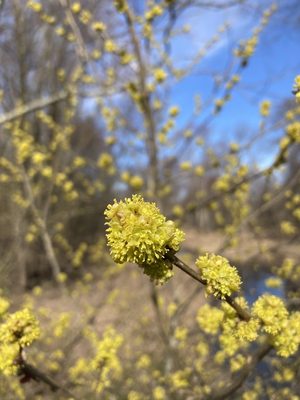
Spicebush
Lindera benzoin
An early-blooming shade shrub, host to the spicebush swallowtail, with butter-yellow fall color.
- Part shade
- Average–wet
- 6–12 ft
- Blooms Mar–Apr
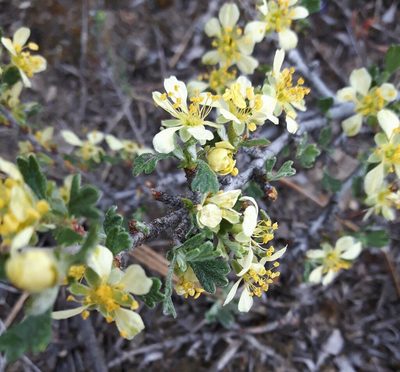
Antelope Bitterbrush
Purshia tridentata
A sagebrush-country shrub that fixes its own nitrogen, feeds native bees in spring, and never wants watering.
- Full sun
- Dry
- 3–8 ft
- Blooms Apr–Jun

Golden Currant
Ribes aureum
Yellow spring flowers that smell of cloves, black fruit birds strip in a week, and red foliage in the fall.
- Full–part sun
- Dry–average
- 4–8 ft
- Blooms Apr–May
Flowering shrubs, near you.
Whether a species belongs in your yard depends on where you garden. These state guides cover it.
Where to find flowering shrubs plants
Some links here are affiliate links and we may earn a small commission at no extra cost to you.
What a first-year Flowering shrubs planting needs, from a pH kit to mulch.