- Home
- Plant guide
- Oakleaf Hydrangea
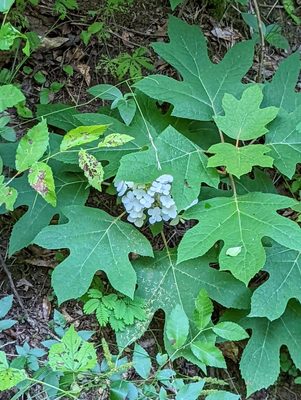
Oakleaf Hydrangea
Hydrangea quercifolia
A four-season southeastern shrub: white flower cones, wine-red fall leaves, cinnamon peeling bark.
Native to: the Southeast · the Mid-Atlantic
Growing Oakleaf Hydrangea
The most ornamental native hydrangea, handsome in every season. Takes more shade than most flowering shrubs.
Where it belongs
Oakleaf hydrangea is native to a relatively small area of the Southeast, from Georgia and Alabama into Mississippi and the Florida panhandle, growing on shaded bluffs, ravine slopes, and along streams in hardwood forest.
Its natural range is narrow and its garden range is wide, and it performs well through zone 5. That is a legitimate garden choice; it is simply not a local native for most of the country.
It is the most ornamental hydrangea native to North America, and the argument for it is that it does something in all four seasons rather than flowering for three weeks.
Growing it
Part sun to shade, medium moisture, in loam, zones 5 to 9. Four to eight feet tall and as wide, sometimes larger with age.
Shade or morning sun, with soil that drains well and stays evenly moist. Unlike smooth hydrangea it does not tolerate wet feet, and root rot in heavy soil is the usual failure.
The important pruning fact: it flowers on old wood. Buds for next summer form this summer, so a late-winter cutback removes the entire year's flowers. Prune right after flowering if at all, and mostly do not.
In the colder end of its range a hard winter can kill the flower buds while the plant survives, giving a season with foliage and no bloom.
Give it space. It grows slowly and then becomes large, and it looks wrong crowded against a wall.
What it feeds
The flower cones are panicles up to a foot long, holding both small fertile flowers and large showy sterile ones. Because the fertile flowers are present, the plant does feed insects, unlike a fully sterile mophead.
Native bees, flower flies, and small wasps work the fertile flowers in May through July. Butterflies visit. It hosts the hydrangea sphinx moth.
The flowers age slowly from white to pink to a dry papery tan and stay on the plant for months, which extends the display well past the useful bloom.
Living with it
Deer will browse it, sometimes heavily.
The four seasons are real. Large lobed leaves shaped like an oak's turn deep wine red, burgundy, and bronze in fall, and they hold late. In winter, mature stems peel to expose cinnamon-brown bark.
Fully double-flowered selections such as Snowflake are dramatic and carry proportionally fewer fertile flowers. Snow Queen and the straight species are the better habitat choices.
Leave the dried cones through winter and prune only to remove dead wood.
Sources: USDA PLANTS Database (native range); Lady Bird Johnson Wildflower Center, University of Texas at Austin (species profile); University of Georgia Extension (culture and pruning timing); Mt. Cuba Center (native hydrangea trials).
It’s showy, good fall color, and good for winter interest.Where it grows
Oakleaf Hydrangea is native to the Southeast. In the wild you’ll find it across Alabama · Arkansas · Delaware · Florida · Georgia · Kentucky · Louisiana · Maryland · Mississippi · Missouri and 11 more states. Always confirm it suits your specific county with your state native plant society before planting.
Regional Garden has written state guides covering Oakleaf Hydrangea in 21 of them so far.
Good for
Where to buy Oakleaf Hydrangea
Some links here are affiliate links and we may earn a small commission at no extra cost to you.
What a first-year Oakleaf Hydrangea planting needs, from a pH kit to mulch.
Companions & kin.
Natives that share Oakleaf Hydrangea’s range and conditions.
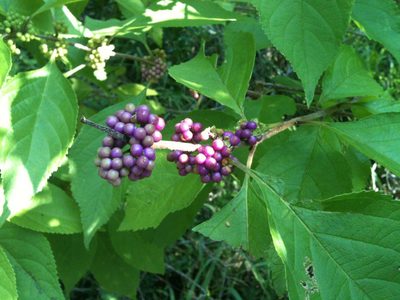
American Beautyberry
Callicarpa americana
Unreal clusters of metallic-purple berries hug the stems in fall and feed dozens of bird species.
- Full–part sun
- Dry–average
- 4–7 ft
- Blooms Jun–Jul
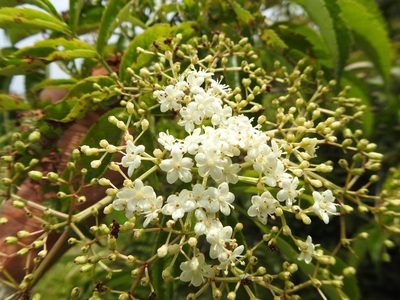
American Elderberry
Sambucus canadensis
Big lacy flower heads in summer give way to purple-black berries for both birds and your kitchen.
- Full–part sun
- Average–wet
- 6–12 ft
- Blooms Jun–Jul

Arrowwood Viburnum
Viburnum dentatum
A bulletproof hedge shrub with white spring flowers, blue fall berries, and burgundy autumn leaves.
- Sun to shade
- Average–wet
- 6–10 ft
- Blooms May–Jun

Buttonbush
Cephalanthus occidentalis
Spherical white 'pincushion' flowers over standing water, swarmed by butterflies and bees.
- Full–part sun
- Average–wet
- 5–10 ft
- Blooms Jun–Aug