- Home
- Plant guide
- American Beautyberry
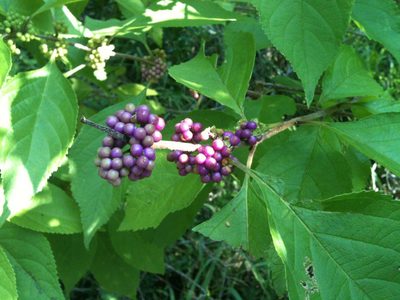
botanygirl (CC BY)
American Beautyberry
Callicarpa americana
Unreal clusters of metallic-purple berries hug the stems in fall and feed dozens of bird species.
Native to: the Southeast · the South-Central region · the Mid-Atlantic
Growing American Beautyberry
The electric-violet fruit is one of the South's great autumn sights. Cut to the ground in late winter for the biggest berry display.
Where it belongs
American beautyberry is native to the Southeast, Texas, and the southern Mid-Atlantic, growing in the understory of pine and hardwood forest, along woodland edges, and in old fields.
The fruit is the reason it is grown. In September and October the berries ripen to a saturated metallic magenta-violet, packed in dense clusters that encircle the stem at each leaf node. There is no other native fruit that color, and people consistently assume it has been dyed.
Growing it
Full sun to part sun, dry to medium soil, in loam, sand, or clay, zones 6 to 10. Four to seven feet tall and as wide.
Undemanding. It takes poor soil, drought once established, and considerable shade, though the heaviest fruit set comes with more sun.
The habit is loose and arching and can look untidy by late summer. The standard treatment is to cut the whole plant back hard, to about a foot, in late winter. It flowers and fruits on new wood, so this costs nothing and produces a denser, better shaped shrub with heavier fruiting.
It leafs out late. Do not conclude it has died in April.
Berries need cross-pollination for the heaviest set, so two or more plants fruit better than one.
What it feeds
The flowers in June and July are small and pale pink, held in the same tight clusters the fruit will occupy, and they are easy to overlook. Native bees and small flies work them.
The fruit is what matters. Dozens of bird species eat beautyberry, including mockingbirds, catbirds, thrashers, cardinals, robins, and bobwhite quail. Deer and raccoons eat it too, and in the Southeast it is a significant wildlife food in fall and early winter.
The berries hang on well after the leaves drop, so they feed birds into a period when other fruit has been stripped.
Living with it
Deer browse the foliage where pressure is high, though the plant is generally listed as resistant.
The berries are edible to people and are used for jelly, though raw they are astringent and thin-tasting.
There is a piece of folklore worth mentioning because it turns out to have something behind it: crushed leaves were rubbed on skin as an insect repellent, and USDA researchers later identified compounds in the plant with mosquito repellent activity. That is a laboratory finding about isolated compounds, not a recommendation to rely on crushed leaves.
Sources: USDA PLANTS Database (native range); Lady Bird Johnson Wildflower Center, University of Texas at Austin (species profile); USDA Agricultural Research Service (callicarpenal mosquito repellent research); University of Florida IFAS Extension (culture and wildlife value).
It’s deer-resistant, drought-tolerant, showy, and easy to grow.Where it grows
American Beautyberry is native to the Southeast. In the wild you’ll find it across Alabama · Arkansas · Delaware · Florida · Georgia · Kentucky · Louisiana · Maryland · Mississippi · Missouri and 11 more states. Always confirm it suits your specific county with your state native plant society before planting.
Regional Garden has written state guides covering American Beautyberry in 21 of them so far.
Good for
Where to buy American Beautyberry
Some links here are affiliate links and we may earn a small commission at no extra cost to you.
What a first-year American Beautyberry planting needs, from a pH kit to mulch.
Companions & kin.
Natives that share American Beautyberry’s range and conditions.
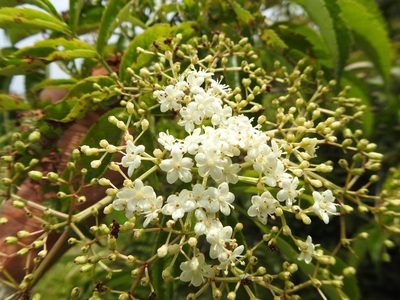
American Elderberry
Sambucus canadensis
Big lacy flower heads in summer give way to purple-black berries for both birds and your kitchen.
- Full–part sun
- Average–wet
- 6–12 ft
- Blooms Jun–Jul

Arrowwood Viburnum
Viburnum dentatum
A bulletproof hedge shrub with white spring flowers, blue fall berries, and burgundy autumn leaves.
- Sun to shade
- Average–wet
- 6–10 ft
- Blooms May–Jun

Buttonbush
Cephalanthus occidentalis
Spherical white 'pincushion' flowers over standing water, swarmed by butterflies and bees.
- Full–part sun
- Average–wet
- 5–10 ft
- Blooms Jun–Aug
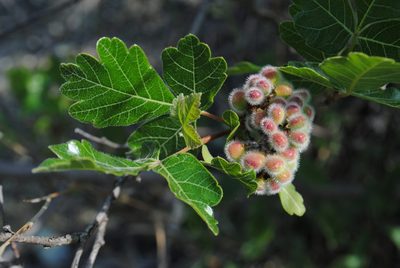
Fragrant Sumac
Rhus aromatica
A low, spreading shrub that blankets dry banks and blazes scarlet and orange in fall.
- Full–part sun
- Dry
- 2–6 ft
- Blooms Mar–Apr