- Home
- Plant guide
- Flame Acanthus
Flame Acanthus
Anisacanthus quadrifidus var. wrightii
A heat-loving shrub covered in tubular orange flowers through the hottest, driest weeks of summer.
Native to: the desert Southwest
Growing Flame Acanthus
Blooms hardest exactly when the garden is most stressed by heat. A hummingbird favorite and host to the Texas crescent butterfly.
Where it belongs
Flame acanthus is native to west and central Texas and adjacent northern Mexico, growing on limestone slopes, in dry canyons, and along gravel washes in the Chihuahuan Desert region.
Its distinction is timing. Most gardens have a hole in late July and August, when spring perennials have finished and fall has not started, and in Texas that hole coincides with the hardest heat and driest weeks of the year. This shrub starts flowering in June and continues through October, and it flowers most heavily during exactly the stretch when the rest of the garden stalls.
Growing it
Full sun, dry soil, in rocky ground, loam, or sand, zones 7 to 10. Two to four feet tall and three to four feet wide.
Heat, sun, and drainage. It is drought tolerant to an unusual degree and does not want irrigation once established. Wet clay is the way to lose it.
The habit is loose and twiggy rather than dense, with small leaves and pale peeling bark, so it reads as airy rather than solid. Some people find it scruffy in winter; it can be cut back hard in late winter to renew it, and it responds well.
It dies back in a hard freeze in the colder end of its range and returns from the base.
It self-sows lightly, and seedlings are easy to move while small.
What it feeds
The flowers are narrow orange-red tubes about an inch and a half long, held along the stems, and hummingbirds work them continuously. In central Texas it is one of the standard plants for holding hummingbirds through late summer and into fall migration.
It is also a host plant. Texas crescent butterflies lay on the foliage, and the caterpillars feed on it, so chewed leaves are the plant working rather than failing. Several other butterflies use it as a nectar source, and it is a known larval host for the crimson patch in parts of its range.
Bees take nectar as well.
Living with it
Deer generally leave it alone, which matters in Hill Country gardens where deer pressure eliminates most flowering shrubs.
Combine it with autumn sage and Gregg's mistflower for a small dry planting that carries hummingbirds and butterflies from spring through October.
Prune in late winter, not in fall. Cutting it back before winter removes the cover that protects the crown in a cold snap.
Sources: USDA PLANTS Database (native range and nomenclature); Lady Bird Johnson Wildflower Center, University of Texas at Austin (species profile and host plant records); Texas Parks and Wildlife (hummingbird garden plants).
It’s deer-resistant, drought-tolerant, and long-blooming.Where it grows
Flame Acanthus is native to the desert Southwest. In the wild you’ll find it across Arizona · California · Nevada · New Mexico · Texas · Utah. Always confirm it suits your specific county with your state native plant society before planting.
Regional Garden has written state guides covering Flame Acanthus in 6 of them so far.
Good for
Where to buy Flame Acanthus
Some links here are affiliate links and we may earn a small commission at no extra cost to you.
What a first-year Flame Acanthus planting needs, from a pH kit to mulch.
Companions & kin.
Natives that share Flame Acanthus’s range and conditions.
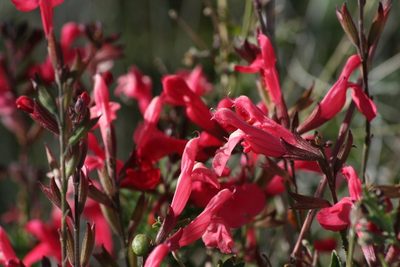
Autumn Sage
Salvia greggii
A tough little evergreen sage that feeds hummingbirds from spring to frost in Texas and the Southwest.
- Full–part sun
- Dry
- 2–3 ft
- Blooms Apr–Oct
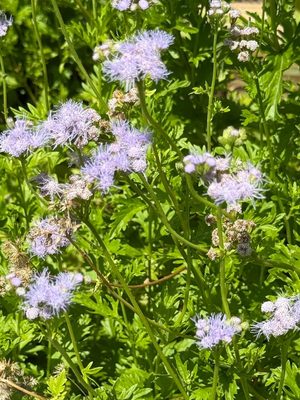
Gregg's Mistflower
Conoclinium greggii
Fuzzy blue flowers that act like a magnet for queen and monarch butterflies in the Southwest.
- Full–part sun
- Dry–average
- 1–2 ft
- Blooms May–Oct

Blue Elderberry
Sambucus cerulea
Fast, big, and covered in flat cream flower heads, then dusty blue fruit that draws every fruit-eating bird in the county.
- Full–part sun
- Average–wet
- 8–20 ft
- Blooms Jun–Jul
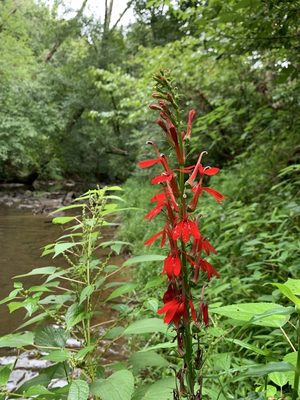
Cardinal Flower
Lobelia cardinalis
The most intense red in the native flora, built for the hummingbirds that pollinate it.
- Full–part sun
- Average–wet
- 2–4 ft
- Blooms Jul–Sep