- Home
- Plant guide
- Gregg's Mistflower
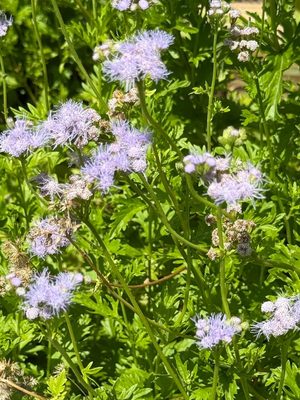
Jane Weeden (CC BY)
Gregg's Mistflower
Conoclinium greggii
Fuzzy blue flowers that act like a magnet for queen and monarch butterflies in the Southwest.
Native to: the desert Southwest
Growing Gregg's Mistflower
Few plants pull in as many butterflies in late summer. Spreads by rhizome into a low blue drift; cut back if it wanders too far.
Where it belongs
Gregg's mistflower is native to the Southwest, from west Texas across southern New Mexico and Arizona, growing along dry washes, on rocky slopes, and in gravelly floodplains where occasional water runs.
It is planted well beyond that range across Texas and the Gulf states, where it performs well and where its reputation was made. That reputation is specific: in September and October it can hold more butterflies at once than anything else in the garden.
Growing it
Full sun to part sun, dry to medium soil, in loam, rocky ground, or sand, zones 7 to 10. One to two feet tall, spreading to three feet or more.
Drainage and heat suit it. It takes occasional water and does not need much.
It spreads by rhizome into a low blue drift, and it is vigorous enough that it will move through a bed if the conditions please it. That is easy to manage by pulling the edges each spring, and in a large planting it is exactly what you want. In a small bed with slow-growing neighbors, give it its own space.
The foliage is soft, gray-green, and finely toothed, and the plant stays low enough to work at the front of a border or as a groundcover under taller plantings.
It dies back in winter in the colder part of its range and returns from the root.
What it feeds
The flowers are fuzzy powder-blue buttons with no petals, made entirely of protruding stamens, and they are held in flat clusters.
Butterflies dominate. Queen butterflies in particular are drawn to it in large numbers, along with monarchs during fall migration, and a flowering drift in October in south Texas can carry dozens at once. Sulphurs, skippers, and painted ladies work it as well.
There is a chemical explanation for part of it. Plants in this group contain compounds that male queen and monarch butterflies collect and convert into pheromones used in courtship, so the males are drawn to the plant for something beyond nectar.
Bees visit as well.
Living with it
Deer generally avoid it.
Cut it back hard in late winter. Shearing it lightly in midsummer keeps it dense and improves the fall display, which is the display that matters.
It is often confused with blue mistflower, an eastern species with similar flowers that wants moist ground. Match the species to your rainfall.
Sources: USDA PLANTS Database (native range and nomenclature); Lady Bird Johnson Wildflower Center, University of Texas at Austin (species profile); Texas Parks and Wildlife (fall butterfly nectar plantings and monarch migration corridor).
It’s deer-resistant, drought-tolerant, and long-blooming.Where it grows
Gregg's Mistflower is native to the desert Southwest. In the wild you’ll find it across Arizona · California · Nevada · New Mexico · Texas · Utah. Always confirm it suits your specific county with your state native plant society before planting.
Regional Garden has written state guides covering Gregg's Mistflower in 6 of them so far.
Good for
Where to buy Gregg's Mistflower
Some links here are affiliate links and we may earn a small commission at no extra cost to you.
What a first-year Gregg's Mistflower planting needs, from a pH kit to mulch.
Companions & kin.
Natives that share Gregg's Mistflower’s range and conditions.
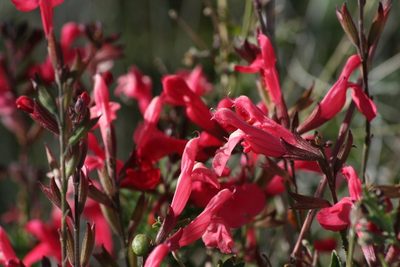
Autumn Sage
Salvia greggii
A tough little evergreen sage that feeds hummingbirds from spring to frost in Texas and the Southwest.
- Full–part sun
- Dry
- 2–3 ft
- Blooms Apr–Oct
Flame Acanthus
Anisacanthus quadrifidus var. wrightii
A heat-loving shrub covered in tubular orange flowers through the hottest, driest weeks of summer.
- Full sun
- Dry
- 2–4 ft
- Blooms Jun–Oct
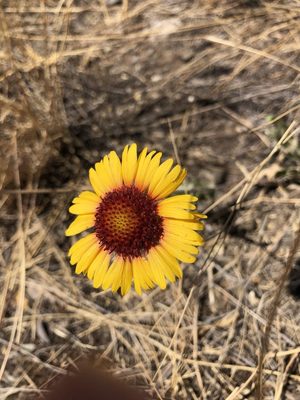
Blanketflower
Gaillardia aristata
Fiery red-and-gold wheels that bloom nonstop all summer on hot, dry, sandy ground.
- Full sun
- Dry
- 1–2.5 ft
- Blooms Jun–Sep

Blue Elderberry
Sambucus cerulea
Fast, big, and covered in flat cream flower heads, then dusty blue fruit that draws every fruit-eating bird in the county.
- Full–part sun
- Average–wet
- 8–20 ft
- Blooms Jun–Jul