- Home
- Plant guide
- Antelope Bitterbrush
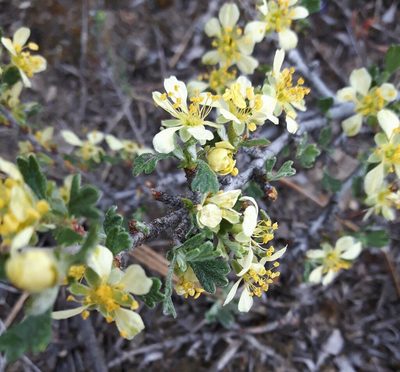
Peter L Achuff (CC BY)
Antelope Bitterbrush
Purshia tridentata
A sagebrush-country shrub that fixes its own nitrogen, feeds native bees in spring, and never wants watering.
Native to: the Pacific Northwest · the Great Basin · the Mountain West
Growing Antelope Bitterbrush
It cannot cope with summer irrigation and will die in a watered bed, so give it the driest ground you own. Establishment is slow; after that it outlives the gardener.
Where it belongs
Bitterbrush grows through the sagebrush steppe and dry pine country of the interior West, from eastern Washington and Oregon across the Great Basin and into the Rockies. It shares ground with big sagebrush and bunchgrasses on sandy and gravelly soils that get twelve inches of rain a year or less.
It is a stiff, open, gray-green shrub with small three-lobed leaves, and in spring it covers itself in small cream to pale yellow flowers that smell faintly sweet. It is one of the most important browse plants in the West for mule deer and pronghorn, which is where the name comes from.
Growing it
The instruction that matters is the one people ignore: do not irrigate it.
Bitterbrush is adapted to deep, fast-draining, infertile soil and to summers with no rain at all. Planted in a watered bed, or in clay, it declines and dies, usually in the second or third year. Give it the driest, poorest, sandiest ground on the property and it will outlive you.
Establishment is slow. Water a new plant occasionally through its first summer only, then stop entirely.
It fixes nitrogen through root associations, so it improves the ground it grows in rather than needing feeding. Fertilizer is actively harmful.
What it feeds
The spring flowers come early in dry country and are worked by a long list of native bees, including several specialists tied to the genus.
The seed is cached by kangaroo rats and chipmunks, and forgotten caches are how the shrub regenerates, so the animals eating it are also planting it. Deer and pronghorn browse the foliage heavily in winter, which is worth knowing before siting it: this is a plant deer seek out rather than avoid.
Living with it
Use it where a garden gives way to open country, on a dry slope, or as the structural shrub in a gravel planting with buckwheat and bunchgrass around it.
It is not a plant for a mixed irrigated border, and there is no way to make it one. Matching it to genuinely dry ground is the whole of the skill.
It’s drought-tolerant, a nitrogen-fixer, fragrant, and evergreen.Where it grows
Antelope Bitterbrush is native to the Pacific Northwest. In the wild you’ll find it across Arizona · California · Colorado · Idaho · Montana · Nevada · New Mexico · Oregon · Utah · Washington and 1 more states. Always confirm it suits your specific county with your state native plant society before planting.
Regional Garden has written state guides covering Antelope Bitterbrush in 11 of them so far.
Good for
Where to buy Antelope Bitterbrush
Some links here are affiliate links and we may earn a small commission at no extra cost to you.
What a first-year Antelope Bitterbrush planting needs, from a pH kit to mulch.
Companions & kin.
Natives that share Antelope Bitterbrush’s range and conditions.

Blue Elderberry
Sambucus cerulea
Fast, big, and covered in flat cream flower heads, then dusty blue fruit that draws every fruit-eating bird in the county.
- Full–part sun
- Average–wet
- 8–20 ft
- Blooms Jun–Jul
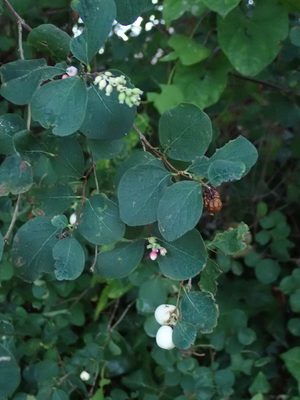
Common Snowberry
Symphoricarpos albus
The shrub that will grow where nothing else will, and hangs white berries on bare stems all winter.
- Sun to shade
- Dry–average
- 3–6 ft
- Blooms Jun–Jul

Golden Currant
Ribes aureum
Yellow spring flowers that smell of cloves, black fruit birds strip in a week, and red foliage in the fall.
- Full–part sun
- Dry–average
- 4–8 ft
- Blooms Apr–May
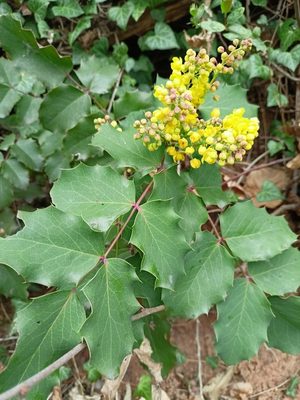
Oregon Grape
Berberis aquifolium
Holly-like evergreen leaves, fragrant yellow spring flowers, and blue berries. It is Oregon's state flower.
- Sun to shade
- Dry–average
- 3–6 ft
- Blooms Mar–Apr