- Home
- Plant guide
- Wild Geranium
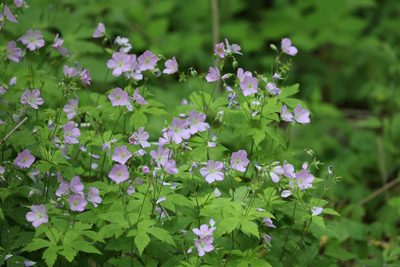
Wild Geranium
Geranium maculatum
A mounding woodland staple with lilac-pink spring flowers and good fall foliage color.
Native to: the Northeast · the Mid-Atlantic · the Southeast · the Midwest
Growing Wild Geranium
One of the easiest natives for dappled shade, forming a tidy clump that needs no attention. Feeds early specialist bees that depend on it.
Where it belongs
Wild geranium is native across the Northeast, Mid-Atlantic, Southeast, and Midwest, growing in deciduous woods, along shaded roadsides, and at woodland edges.
It is not the geranium sold in flats for window boxes. Those are pelargoniums from South Africa, and the shared common name causes constant confusion at garden centers. This is a true hardy geranium and a woodland perennial.
If you are planting shade for the first time, this is the least demanding place to start.
Growing it
Part sun to shade, medium moisture, in loam, zones 3 to 8. Eighteen inches to two feet, forming a rounded clump about as wide.
It wants what most eastern woodland soil already provides: leaf litter, dappled light, and moisture that does not disappear entirely in summer. Deep dry shade under a maple is harder for it than the lighter shade at a woodland edge.
It does not run, does not need dividing, and does not collapse after flowering. The deeply cut leaves stay presentable through the season and color red and orange in fall, which is unusual for a perennial.
Established clumps handle a dry spell by going quiet and coming back.
What it feeds
The flowers open in April through June, overlapping the ephemerals and running past them.
Small native bees are the main visitors, and several mining bees are specialists tied to this genus, emerging in spring timed to its bloom. Bumblebee queens work it, along with flower flies and small butterflies. In shade, where flowering plants are scarce, that early forage carries weight.
The seed dispersal is worth watching for. Each pod dries under tension and then springs open, flinging seed a surprising distance. On a hot afternoon a patch audibly ticks.
Living with it
Deer generally leave it alone.
It works as a matrix plant: set it among Virginia bluebells and it fills the gap those leave when they go dormant, and it sits comfortably under shrubs or with woodland phlox and foamflower.
Volunteers appear at a modest rate and are easy to move in early spring.
There is nothing to cut back if you do not want to. The foliage collapses over winter and disappears into the leaf litter, which is exactly what it does in the woods.
Sources: USDA PLANTS Database (native range and nomenclature); Lady Bird Johnson Wildflower Center, University of Texas at Austin (species profile); Xerces Society (spring specialist bees).
It’s deer-resistant, easy to grow, and showy.Where it grows
Wild Geranium is native to the Northeast. In the wild you’ll find it across Alabama · Arkansas · Connecticut · Delaware · Florida · Georgia · Illinois · Indiana · Iowa · Kentucky and 24 more states. Always confirm it suits your specific county with your state native plant society before planting.
Regional Garden has written state guides covering Wild Geranium in 34 of them so far.
Good for
Where to buy Wild Geranium
Some links here are affiliate links and we may earn a small commission at no extra cost to you.
What a first-year Wild Geranium planting needs, from a pH kit to mulch.
Companions & kin.
Natives that share Wild Geranium’s range and conditions.
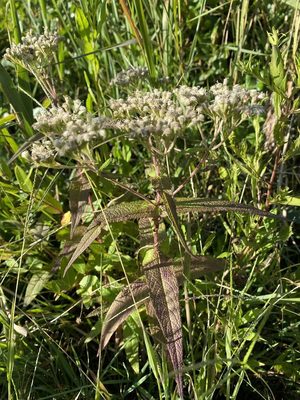
Common Boneset
Eupatorium perfoliatum
Frothy white heads alive with small native bees and wasps, for ground that stays damp.
- Full–part sun
- Average–wet
- 3–5 ft
- Blooms Aug–Sep
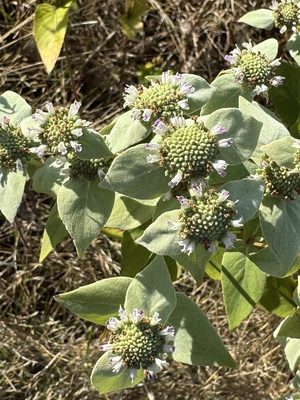
Short-Toothed Mountain Mint
Pycnanthemum muticum
Trial after trial names it the single most attractive plant to pollinators, and deer won't touch it.
- Full–part sun
- Dry–average
- 2–3 ft
- Blooms Jul–Sep
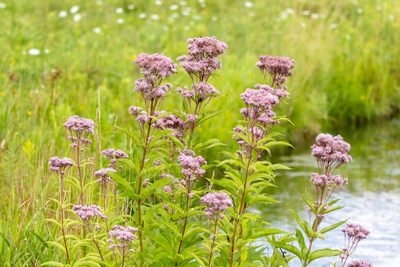
Spotted Joe-Pye Weed
Eutrochium maculatum
Statuesque domes of vanilla-scented mauve that swallowtails and monarchs cover in late summer.
- Full–part sun
- Average–wet
- 4–7 ft
- Blooms Jul–Sep

Wild Bergamot
Monarda fistulosa
Ragged lavender crowns that hum with bees, hummingbirds, and clearwing moths; foliage smells of oregano.
- Full–part sun
- Dry–average
- 2–4 ft
- Blooms Jun–Aug